












With the Earth warming at a record rate, the list of locales that could reliably host a Winter Games will shrink substantially in the coming years.
Italian snowmaking expert Davide Cerato will play a major role in skiing and snowboarding events at the upcoming Olympics.
 ADVERTISEMENT
ADVERTISEMENT
ADVERTISEMENT
He is responsible for perfecting several of the courses that will feature in the 2026 Milano Cortina Winter Games, and he takes his job seriously.
“It’s the most important race of their life,” says Cerato. “Our duty is to give them the best, to deliver the best courses where they can perform their best after training so hard.”
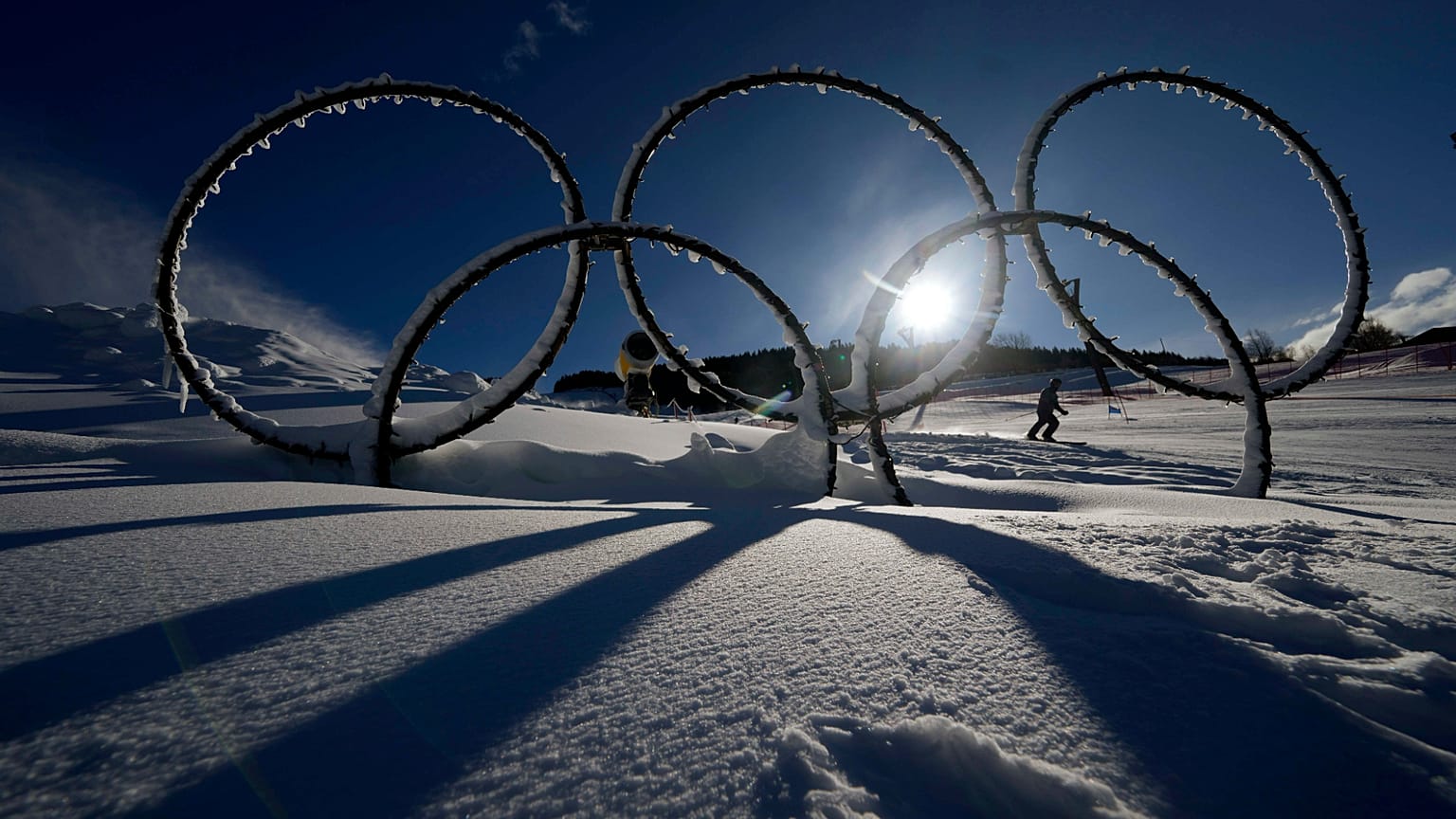
These days, manufactured snow - “technical snow” as Cerato calls it - is a way of life in ski racing, so much so that Olympic athletes don’t think twice about competing on it.
Above all else, they want a course that will hold up over multiple training runs and the races themselves without becoming too mushy or rutted.
Mother Nature can’t always provide for that, and with climate change affecting winter sports in particular, snowmaking has become essential.
1.6 million cubic metres of fake snow ready for the Olympics
Cerato oversees operations at venues where new snowmaking systems were installed, including in Bormio for Alpine ski racing and ski mountaineering, and in Livigno for freestyle skiing and snowboarding events.
He has been working with the International Ski and Snowboard Federation and the International Olympic Committee since the 2014 Sochi Olympics.
The organising committee said on Friday that it has produced nearly 1.6 million cubic metres of technical snow for all the venues, which is less than forecasted. Cerato oversaw the work to carve out new high-elevation water reservoirs to store water for snowmaking.
At the Livigno Snow Park, they built a basin capable of holding about 200 million litres of water. It's now one of the biggest reservoirs on the Italian side of the Alps, Cerato said. They added more than 50 snow guns there to produce about 800 million litres of snow in roughly 300 hours.
In Bormio, Cerato says they constructed a lake at an elevation of 2,300 metres to hold 88 million litres of water. They also added 75 snow guns for Alpine skiing and ski mountaineering.
“We brought the Bormio slope to a new level,” he says, comparing it to a “Ferrari with new gears.”
Why winter sports are increasingly relying on artificial snow
By making snow, organisers can control a slope's quality and hardness, preparing it according to FIS requirements and ensuring consistent conditions, Cerato explains.
He says it's easier to work with technical snow because it's compact and is safer because it doesn't deteriorate as quickly, whereas natural snow requires more work. They can inject water deep into the snowpack, which will freeze and create a more stable race surface.
But climate change is also making artificial snow indispensable. Warming temperatures continue to melt the Dolomites, where most of the events will take place.
In the last five years, Italy has lost a reported 265 ski resorts to rising temperatures, while a major analysis published last year found that global warming is hitting mountain regions, including the Alps, “more intensely” than lowland areas.
What’s more, with the Earth warming at a record rate, the list of locales that could reliably host a Winter Games will shrink substantially in the coming years, according to researchers.
Out of 93 mountain locations that currently have the winter sports infrastructure to host elite competition, only 52 should have the snow depth and sufficiently cold temperatures to be able to host a Winter Olympics in the 2050s, according to research conducted by University of Waterloo professor Daniel Scott and University of Innsbruck associate professor Robert Steiger.
The number could drop to as low as 30 by the 2080s, depending on how much the world curbs carbon dioxide pollution.
The situation is even more bleak for the Paralympic Winter Games, which are typically held at the same venues two weeks after the Winter Olympics conclude.
Their research also found that there are almost no locations that could reliably host the snow sports without snowmaking by mid-century.
But even that is not a solution. “Snow production… only constitutes relative and transitory protection against the effects of climate change,” the Cour des Comptes (French Court of Auditors) warned in a report released in 2024.
While its emissions may be marginal, artificial snowmaking is a money, energy and water-intensive process, which may soon put excessive strain on local resources.