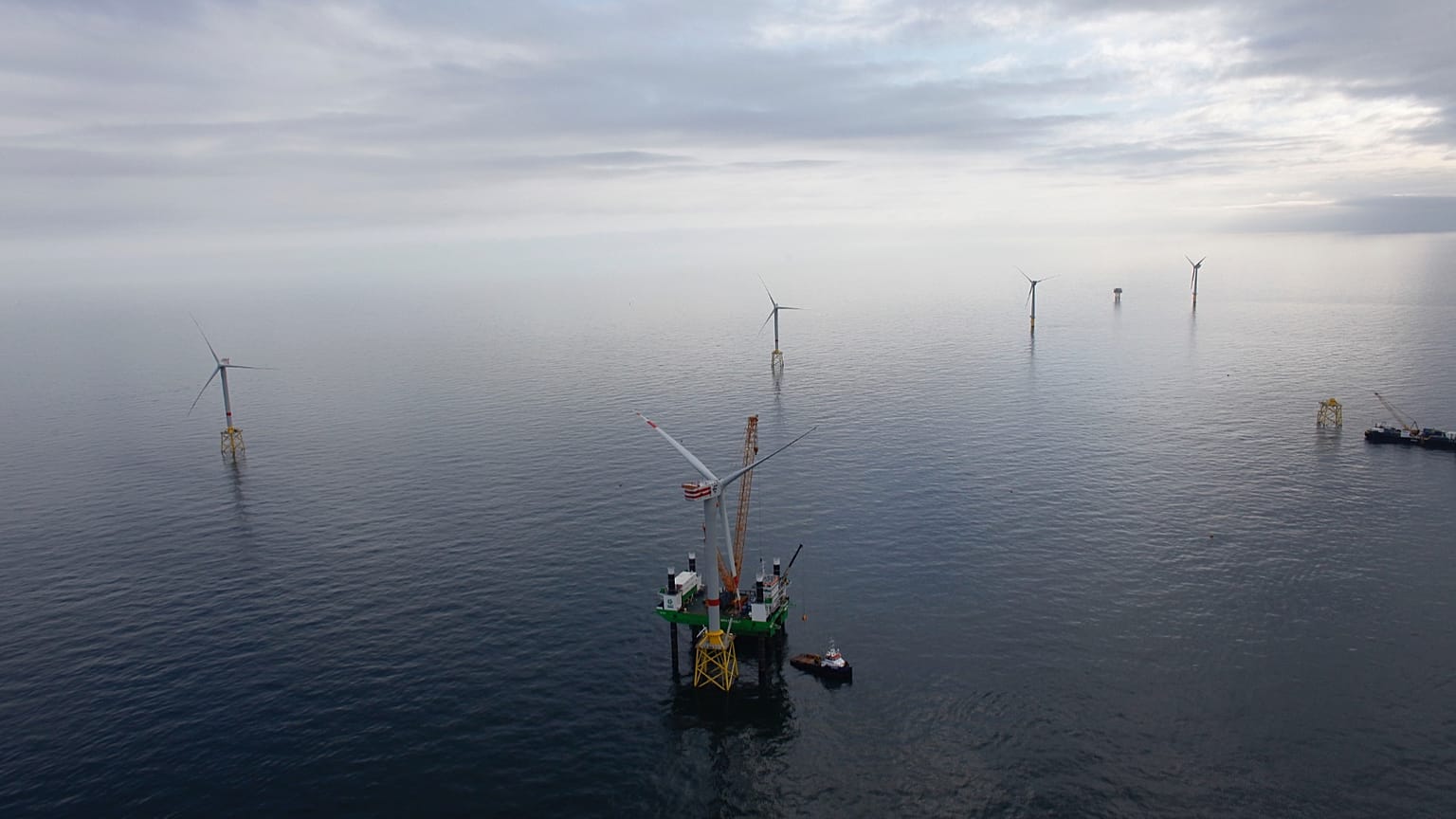













At-sea wind farms will soon be connected to multiple countries across Europe, thanks to a landmark declaration.
Almost a dozen countries have rallied together to get off the “fossil fuel rollercoaster” and transform the wind energy sector.
 ADVERTISEMENT
ADVERTISEMENT
ADVERTISEMENT
Belgium, Denmark, France, Germany, Iceland, Ireland, Luxembourg, the Netherlands, Norway and the UK will today (26 January) sign the Hamburg Declaration – a landmark commitment to deliver 100GW of joint offshore wind projects across shared North Sea waters by 2050. This is enough electricity to power around 143 million homes.
The €9.5 billion pact aims to turn the North Sea into the world’s “largest clean energy reservoir” and mobilise €1 trillion of capital in Europe. It is also expected to create more than 90,000 jobs and reduce power production costs by 30 per cent in the next 15 years.
The Hamburg Declaration comes just days after Donald Trump dubbed countries investing in wind power as “losers”.
How the North Sea will become a haven for wind power
Three years ago, North Sea nations pledged to build 300GW of offshore wind in the North Sea by 2050 in response to Putin’s illegal invasion of Ukraine and “weaponisation” of Europe’s energy supplies.
A third of that is now slated to come from joint clean-energy projects. These will include new offshore wind “hybrid assets” – wind farms at sea that are directly connected to more than one country through multi-purpose interconnectors (MPIs).
There is already a network of undersea cables that connect the electricity grids of European countries, but the Hamburg Declaration marks the first time that wind farms will be directly linked to multiple nations.
In a joint statement, industry body RenewableUK and National Grid Ventures – the commercial development arm of the UK’s National Grid – say using MPIs would reduce the amount of infrastructure needed to transport electricity, slashing the impact on coastal communities and the environment.
However, interconnectors have proved controversial in Norway following concerns that power generated from MPIs could be sold to foreign countries. This stops energy bills from going down for residents and reduces their energy supplies.
To prevent this from happening, governments have started to bring in strict new rules banning electricity exports when domestic supply could be at risk.
Getting off the ‘fossil fuel rollercoaster’
“We’re standing up for our national interest by driving for clean energy, which can get the UK off the fossil fuel rollercoaster and give us energy sovereignty and abundance,” says UK Energy Secretary Ed Miliband.
“After our record renewables auction, we today went further by signing a clean energy security pact with European allies to ensure we maximise the clean energy potential for the North Sea.”
Germany’s economy minister Katherina Reiche says the pact provides “reliable perspectives” for the offshore sector, helping to future-proof jobs and secure “creation of value in Europe”.
Last year, solar and wind generated more EU electricity than fossil fuels for the first time. While the milestone has been praised by energy experts, many still believe the EU’s “outdated” grid is holding back progress.