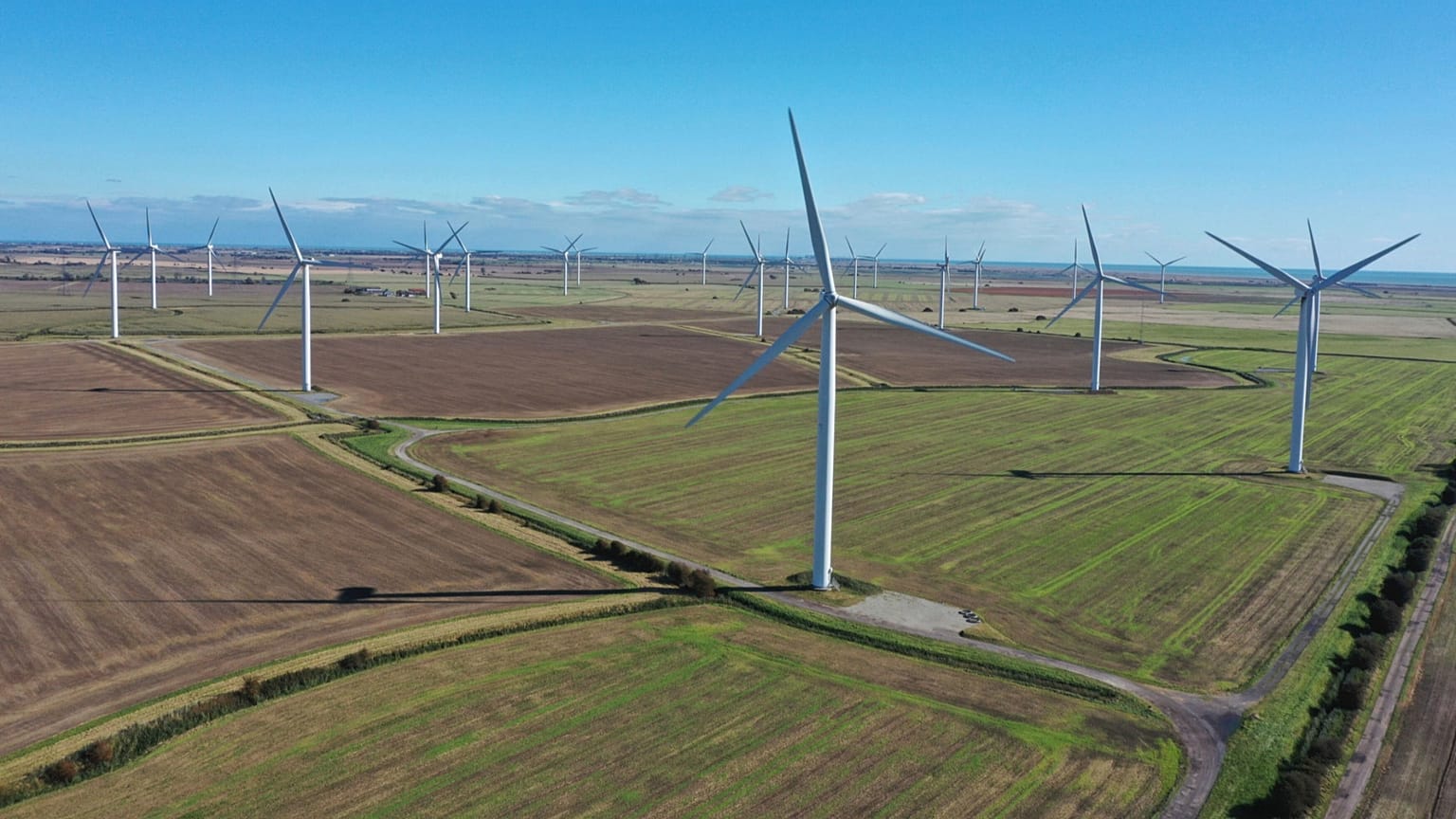













Wind power has surged across Europe, sparking concern that billions are being wasted due to "insufficient" grid investment.
Last year was a huge victory for the UK’s renewable sector, with project approvals hitting an all-time high and offshore wind farms providing nearly 17 per cent of national electricity output.
 ADVERTISEMENT
ADVERTISEMENT
ADVERTISEMENT
On 5 December 2025, wind generated a record-breaking 23,825 megawatts of electricity – enough to power more than 23 million homes. However, Octopus Energy, one of the UK’s biggest energy suppliers, has created The Wasted Wind methodology to highlight the squandered costs of wind power.
It warns that last year Britain wasted a staggering £1.47 billion (approximately €1.67 billion) by turning down wind turbines (curtailment) and paying gas plants to switch on.
To date, total wasted wind costs in the country have surpassed £3 billion (€3.44 billion). This works out at 24,643 MWh of green electrons: enough to power Scotland for a day.
Why wind turbines are switched off
When the winds are too strong, Britain’s electricity grid is filled with more clean energy than it needs.
“This creates rush hour traffic on the grid and the energy can’t get to where it’s needed,” Octopus Energy states. “As a result, we pay to make it again - often with dirty fossil fuels- as well as paying to switch the wind off.”
The firm argues that making energy cheaper where supply is strong could help cut down the waste and is a “better use of these abundant green electrons”.
Energy costs have spiralled in Britain over recent years, fuelled by the pandemic and Russia’s full-scale invasion of Ukraine. From 1 January 2026, a household using a “typical” amount of gas and electricity (11,500 kWh and 2,700 kWh, respectively) will pay £1,758 a year (€2,016).
Scottish Energy Secretary Gillian Martin describes the UK’s current energy system as “not fit for purpose”, adding: “In an energy-rich country like Scotland, nobody should be struggling to pay their bills or living in fuel poverty.”
A €32 billion solution to Britain’s energy crisis
Octopus Energy says that improvements to the grid (aka the country’s power network) will help reduce wasted electricity, but warns this is an “expensive and complicated” solution.
Britain’s grid was mostly built around coal. When the country transitioned towards gas, many power stations were built on the site of former coal-fires power stations, exploiting their grid connections.
However, as the sources of electricity move from very large, centrally located plants to wind – which tend to be spread throughout the country and offshore – Britain is struggling to transport the electricity they produce.
In layman terms, the issue isn’t just producing green energy. It’s getting it onto the grid to be transported to people’s homes and businesses. However, a €32.12 billion investment could change that.
Britain’s energy regulator Ofgem revealed the boost last month, allocating £17.8 billion (€20.30 billion) for maintaining Britain’s gas networks, “keeping them among the safest, most secure and resilient in the world”.
£10.3 billion (€11.82 billion) will be invested in the electricity transmission network (which transports energy over long distances from power plants to local substations) to improve reliability and expand capacity.
Ofgem says this £28 billion (€32.14 billion) commitment will rise to an estimated £90 billion (€103 billion) by 2031 across both gas and electricity networks.
Is Europe also at risk of wasting wind power?
Europe isn’t immune to this costly issue, with a recent analysis warning the continent's “insufficient” grid investment is delaying progress toward electrification.
The report, titled The State of European Power Grids: A Meta-Analysis, calls for rapid grid expansion to tackle rising connection queues, increasing congestion and limited cross-border capacity.
It found that achieving Net Zero (where human-produced emissions are balanced by the amount absorbed from the atmosphere) by 2050 will require a three-fold increase in solar and wind capacity and more than 70 per cent growth in power demand.
According to the report, congestion management costs in Europe neared €9 billion in 2024, while 72TWh of mainly renewable energy was curtailed due to bottlenecks. This is roughly equivalent to Austria’s annual electricity consumption.
While grid investment in Europe has increased by 47 per cent over the past five years to around €70 billion annually, experts warn it still falls short of what’s required.
Gerhard Salge, chief technology officer at Hitachi Energy, says it is therefore “imperative” that Europe focuses on expanding the grid.
“As we integrate and interconnect, we must pay due attention to the capacity and complexity challenges to ensure a secure, affordable, and sustainable grid,” he adds.
“The technologies are available; we now need to deploy them at speed and scale.”