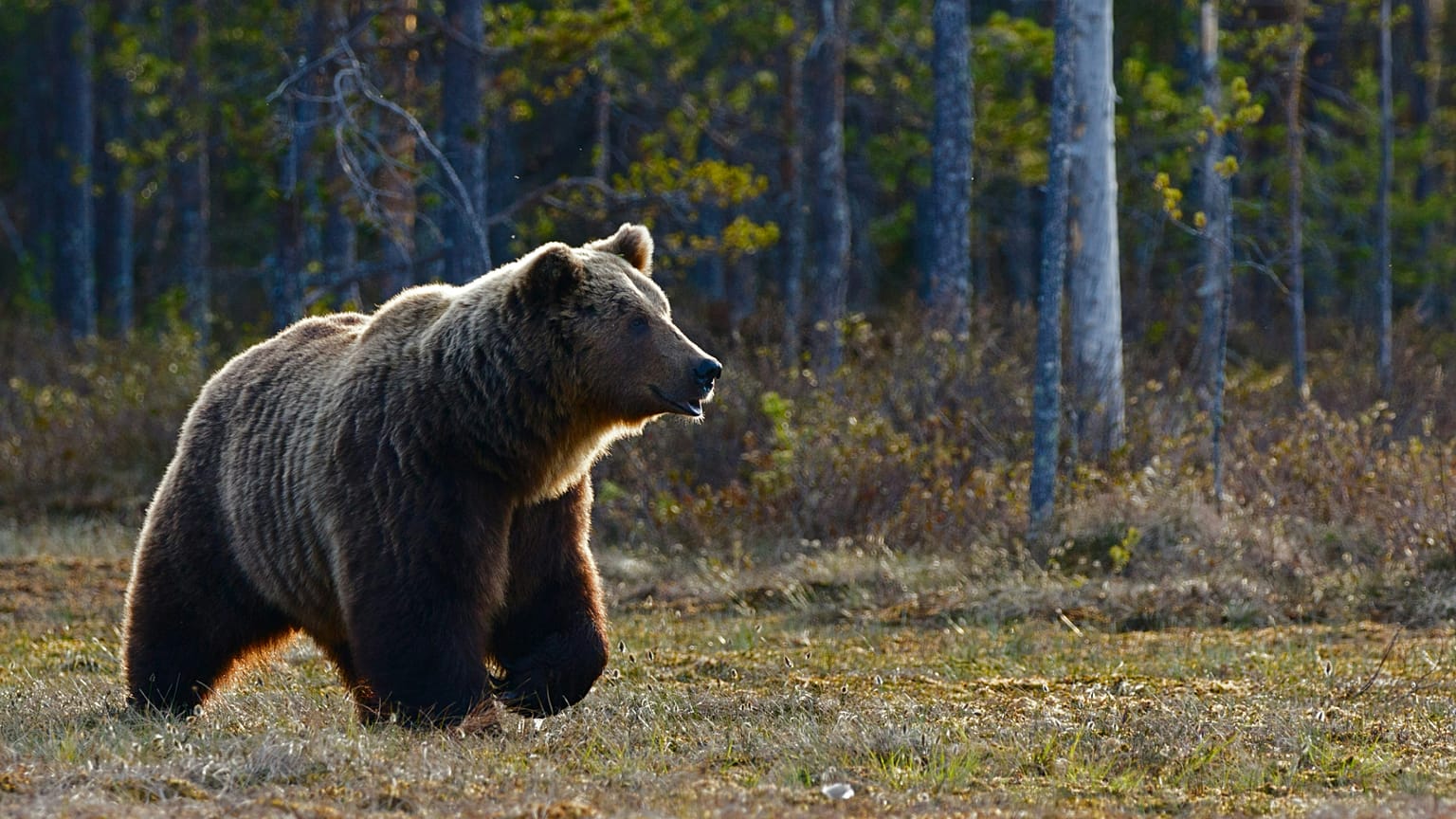













The research comes as communities in Italy and around Europe struggle with the rebound of bear populations due to conservation efforts.
Italian bears living in close proximity to villages have evolved to be smaller and less aggressive, a new study has found.
 ADVERTISEMENT
ADVERTISEMENT
ADVERTISEMENT
Published in Molecular Biology and Evolution, the paper examined the Apennine brown bear, which exists only as a small and isolated population in central Italy.
Around 2,000 to 3,000 years ago, this population diverged from other European brown bears as a result of its interactions with humans.
The research comes as communities in Italy and around Europe struggle with the rebound of bear populations due to conservation efforts.
Apennine brown bears have evolved to be smaller and less aggressive
The Apennine brown bear has remained isolated in the mountains of central Italy since Roman times.
"One major cause of decline and isolation was probably forest clearance associated with the spread of agriculture and increasing human population density in central Italy," said the paper's lead author, Andrea Benazzo.
Today, Apennine brown bears show distinct phenotypic differences compared with other brown bear populations, according to the study.
They have smaller bodies, unique head and facial features, and less aggressive behaviour than European, North American and Asian brown bear populations.
Italian brown bears' behavioural changes driven by interaction with humans
The new research focused on how these evolutionary changes were driven by close contact with humans.
The scientists generated a high-quality chromosome-level reference genome and re-sequenced whole genomes from a sample of individuals.
Scientists compared the Apennine brown bear genome with those from a larger European population in Slovakia, as well as previously published genomes of American brownbears.
The researchers then characterised genomic diversity and identified adaptation signals distinctive to this population. Apennine brown bears exhibited reduced genomic diversity and higher inbreeding compared to other brown bears.
"More interestingly, however, we showed that Apennine brown bears also possess selective signatures at genes associated with reduced aggressiveness," added Giulia Fabbri, another author of the study.
The researchers say their results support the hypothesis that human-induced selection has promoted behavioural changes even in small and long-isolated populations.
This has reduced conflicts and contributed to the long-term persistence of a large mammal species and its coexistence with humans.
Communities struggle with rebounding bear populations
While the interaction with humans resulted in genomic erosion in Apennine brown bears, increasing their risk of extinction, it also led to behavioural changes that made coexistence easier.
"The general implications of our findings are clear. Human-wildlife interactions are often dangerous for the survival of a species, but may also favour the evolution of traits that reduce conflict," said Giorgio Bertorelle, another researcher involved in the study.
“This means that even populations that have been heavily and negatively affected by human activities may harbour genetic variants that should not be diluted, for example, by restocking."
In northern Italy, authorities have been battling with animal rights activists over what to do with the growing Alpine brown bear population. The species was once nearly extinct but has rebounded thanks to a European Union-funded project.
While it’s positive news for conservation efforts, it has meant more bears coming into contact with humans, sometimes with tragic results.
In 2023, a 17-year-old female, identified as JJ4, killed a runner. She had already injured a father and son out walking in the region in 2020.
It’s a similar story in parts of northwestern Greece, where bears have rebounded following a hunting ban.
Farmers and residents of rural areas say they now fear for their livelihoods and, in some cases, their safety.