















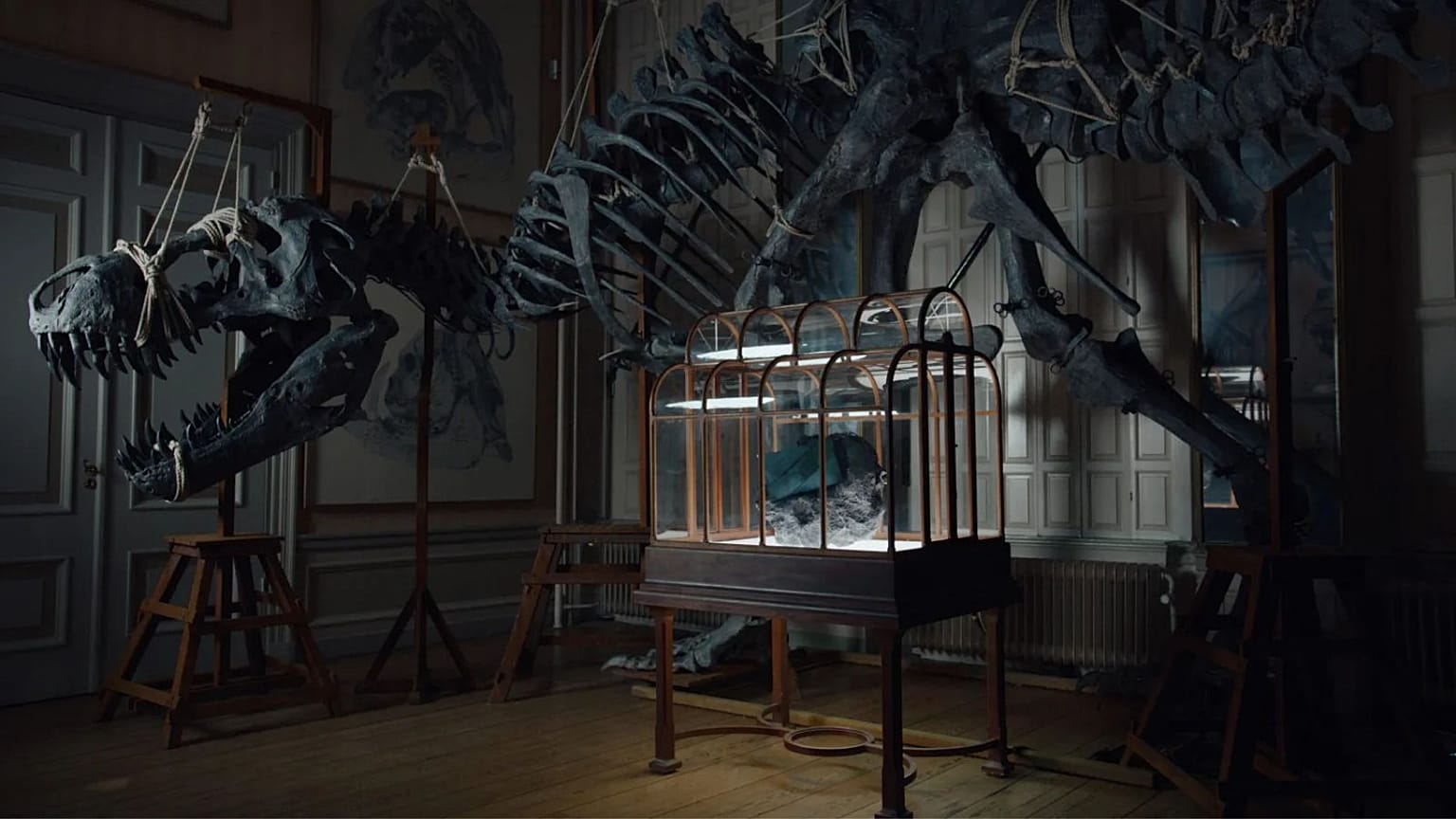














To create the leather, scientists started with fragments of fossilised T-Rex collagen, then used AI and computational biology to reconstruct the missing genetic code.
What if luxury leather didn’t come from animals at all - but from a creature that went extinct 68 million years ago?
 ADVERTISEMENT
ADVERTISEMENT
ADVERTISEMENT
Euronews Culture met Dimitri Guerassimov, the Global Chief Creative Officer at VML, at this year's Cannes Lions International Festival of Creativity, where the team behind T-Rex Leather picked up four major awards, including Gold, Silver and Bronze Lions across PR, innovation and B2B categories.
T-Rex Leather is a world-first biomaterial project developed by Lab-Grown Leather Ltd in collaboration with VML and partners, using reconstructed dinosaur collagen and advanced biotechnology to create a lab-grown leather alternative.
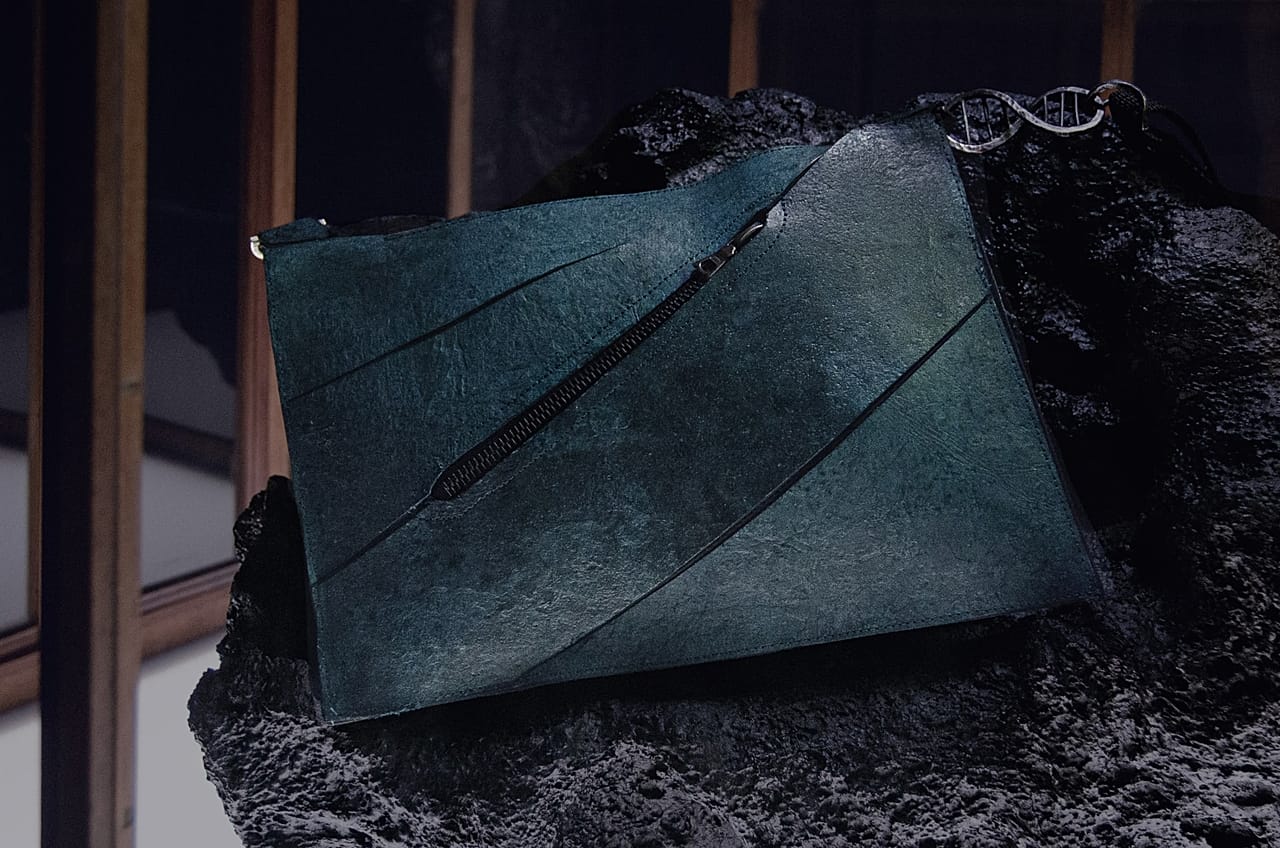
The first creation using the material is a one-of-a-kind luxury handbag.
We spoke to Dimitri about the idea behind the project, the role of AI and synthetic biology in reconstructing prehistoric proteins, and why the team believes this breakthrough could define the future of design.

Euronews Culture: Tell us about this T-Rex leather. It sounds very intriguing.
Dimitri Guerassimov: We managed to create a leather made of T-Rex collagen, recovered from the remains of the first T-Rex that was found in Montana. It was a long process, like a two-year process, involving a mix of AI and genetic engineering to recreate it because we had some information that exists and some information that was missing. We needed to reconstitute the missing information.
From this collagen, lab-grown leather is born, and we made a first materialisation of that with a bag that was revealed in Amsterdam in April.
Wow. It all sounds incredibly fascinating and Jurassic as well. What was the inspiration behind this? And, out of all the things you could do, why a handbag?
I mean, we are selling stuff as an industry, but also we try to have a conscience. Sometimes there are personal fights that we have, and VML, of course within WPP, sometimes has an approach to different problems and different industries that we try to solve through more sustainable approaches and things like that.
Here, the opportunity presented itself because the lab-grown leather industry is facing a struggle to grow because it's compared to cow leather and is felt to be a sub-product versus being something on its own. So ee decided to create a leather that is completely outside comparison, completely a thing of its own, enriched on one side with science and on the other with storytelling.
So we actually created a precious leather versus a sub-product. Now, actually, the company that makes it, Lab-Grown Leather, is switching completely to T-Rex Leather, abandoning all the other ventures because, after what we did, the pipeline of possible clients and collaborations is so big that they're going to focus on that. We're going to scale, and it's going to be a really, really big thing. So we're quite happy with that.
What role then did artificial intelligence have in that process?
Actually, it's very key because it's basically a data-driven innovation. To reconstitute the missing parts of the collagen, you need AI as part of it. There's some stuff on top of that that I'm not qualified to explain, but part of it is AI guessing and reconstituting what's missing, and doing so in the way that's closest possible to what the real thing was.
That was the main barrier - otherwise it wouldn't have been possible. Actually, this idea predates this year by quite a lot. The AI was not yet there for us to do it properly, so we did another project in the meantime. And now, finally, we've been able to release it.
Everybody, of course, is now faced with the challenge - some take it as a threat - of artificial intelligence. As a content creator you're right in the crosshairs of that. How is that affecting what you do on a day-to-day basis?
Most of the tools we use, that are called AI, are really predictive algorithms that are very good with what's already existing. It's like a search engine plus other things. What it absolutely doesn't replace is what we as content creators are doing. It's actually a great tool, a great simplifier. A lot of things can be imagined and used in ways that amplify what we're doing, rather than feeling like it's an enemy or whatever.
So, for now, it's more of an exciting tool, while we're waiting to know what the limits are. And, for now, humans are humans, and it's great to have humans imagining content for humans. I believe in that. Maybe it's wishful thinking, but for now, I don't see any signs of the contrary.