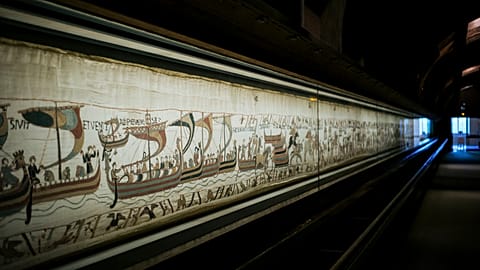





























Nearly 1,000 years after it was made, the Bayeux Tapestry is back in England – and UK schoolchildren are being asked to imagine its missing final scene.
For some British schoolchildren, history homework this autumn is going considerably further than a worksheet on the year 1066.
 ADVERTISEMENT
ADVERTISEMENT
ADVERTISEMENT
A new competition is asking primary students across the UK to design and stitch a new final panel for the Bayeux Tapestry, a 70-metre-long embroidered account of the Norman conquest of England with a famously missing final section.
Nobody knows exactly what it originally showed. Rather than trying to reconstruct the lost scenes, however, the children are being asked to imagine what might have come after the conquest, picturing a “better tomorrow” rather than another battle.
What is the Bayeux Tapestry?
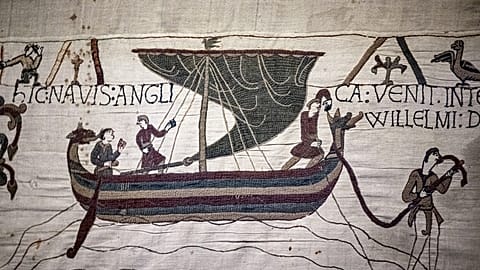
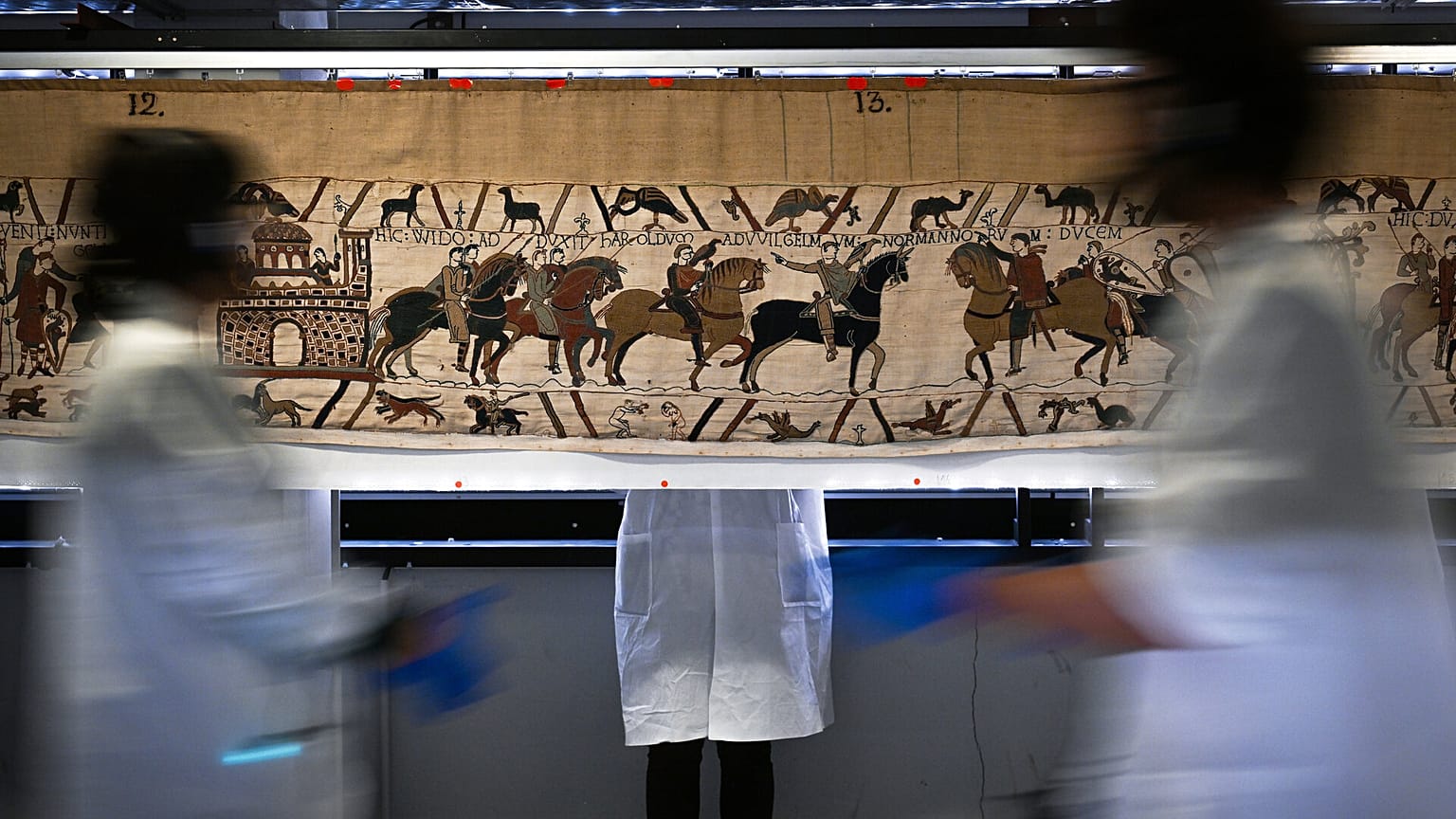
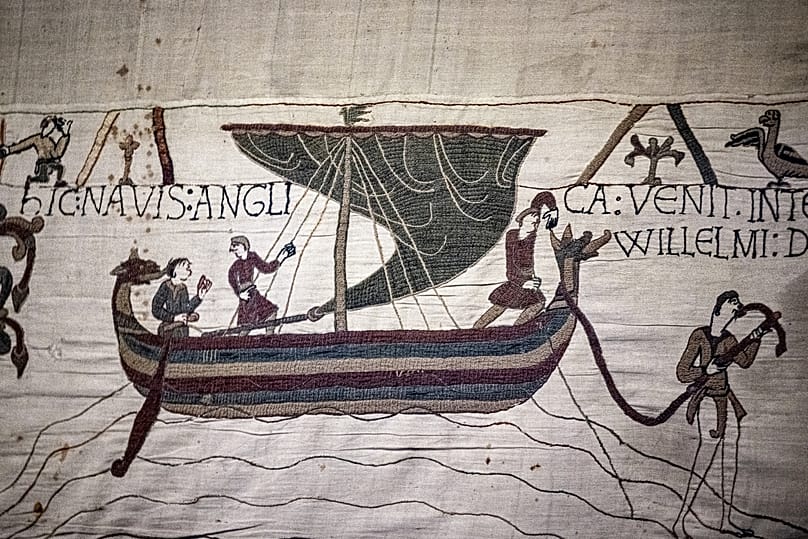
Despite its name, the Bayeux Tapestry is an embroidery made of coloured yarn stitched onto linen rather than a woven tapestry.
Semantics aside, its scenes recount the events leading up to William of Normandy’s invasion of England, culminating in his victory at the Battle of Hastings in 1066.
It was likely made in England in the 1070s and may have been commissioned by Bishop Odo of Bayeux, William’s half-brother, to decorate the new cathedral in Bayeux, which helps explain the name.
Unlike much of the surviving art from the period, it’s not religious. It instead offers an unusually detailed glimpse of 11th-century life, depicting ships, weapons, horses, buildings, clothing and food alongside its account of the conquest.
The tapestry’s final section has been missing for centuries. No one knows when it disappeared, nor exactly what it showed, although scholars believe it probably depicted William the Conqueror’s coronation.
Finishing the ‘unfinished’ story
Now it’s up to British students to create a new future from ancient history.
The free UK-wide competition, called Beyond the Battle, is open to key stage 2 pupils – roughly aged 7 to 11 – who will work as a class to design and stitch their panels.
Run by Art Explora UK in partnership with English Heritage, the competition will begin in late September this year.
The winning classes will receive a fully funded trip to London to see the original tapestry, as well as a visit to the 1066 Battle of Hastings Abbey and Battlefield, or to another Norman site managed by English Heritage.
Their work will also go on display in a special exhibition, while each winning class will receive a bespoke textile made by artist Jessica Grady.
Runners-up will receive a funded visit to their nearest English Heritage Norman site.
A long journey back to England
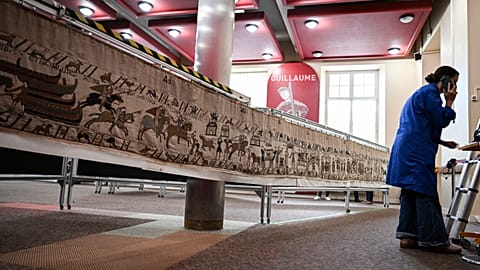
The tapestry normally hangs at the Musée de la Tapisserie de Bayeux in Normandy, but the museum closed in September 2025 for a two-year renovation. Its temporary closure paved the way for the historic loan agreement between France and the UK.
The Bayeux Tapestry will be on display at London’s British Museum from 10 September 2026 until 11 July 2027, in Room 30 of the Sainsbury Exhibitions Gallery. It’s the first time the tapestry has been displayed in the UK since it was made nearly 1,000 years ago.
While it’s in London, objects such as the Sutton Hoo treasures and Lewis chess pieces will travel from the British Museum to museums in Normandy.
Apart from the historic return to England, there’s another historical hook.
Next year marks 1,000 years since William the Conqueror was born in Falaise, and European officials are organising the ‘Year of the Normans’ around the anniversary.
Nearly 1,000 events are being planned across Normandy and seven European territories with a Norman legacy: the UK, Ireland, the Channel Islands, Flanders, southern Italy, Norway and Denmark. The programme will include exhibitions, concerts and medieval-themed festivals – as well as a new tapestry depicting the missing section.
The 25-square-metre tapestry was designed by French artist Hélène Delprat and will be woven by Atelier Tapisserie Guillot d’Aubusson. It depicts William’s coronation and will be shown at Westminster Abbey in 2027 before moving to Falaise.