




























Mountain melodies, centuries-old instruments and traditional rhythms are being digitally preserved through a new open-access music platform. The archive aims to reconnect contemporary creators with sounds that had remained outside global audio libraries for decades.
A thin, breathy note escapes from a bone flute. A surnay cuts sharply through the air, while layered percussion echoes like distant footsteps across mountain villages.
 ADVERTISEMENT
ADVERTISEMENT
ADVERTISEMENT
Sounds once carried by shepherds, wedding processions and remote communities are now being recorded, digitised and brought into the online world through a new cultural platform in Uzbekistan.
A new initiative called “Ohang” aims to preserve and catalogue rare musical traditions by recording instruments and melodies that have long remained outside global audio libraries.
As contemporary music producers increasingly draw on traditional motifs and folk instruments for pop, hip-hop and electronic tracks, many of the original sounds remain undocumented or disconnected from their cultural origins.
According to the project team, this creates a gap in access and knowledge. “Non-specialists often confuse local motifs with Arabic, Azerbaijani, or Turkmen music,” said Uktam Khakimov, an expert in intangible cultural heritage. “When searching on music stock platforms using queries like ‘Uzbek music,’ relevant results are often missing, or platforms suggest unrelated tracks.”
The platform is designed as a free digital catalogue of Uzbekistan’s traditional music, bringing together core melodies, instrument recordings, and sound samples in one place for open use by creators.
“Our goal is to bring together the key traditional Uzbek melodies and make them accessible,” said representative of Uzbektelecom, the supporting company of the project. “We want to share the musical culture of Uzbekistan and promote it among the younger generation.”
Field research and rare recordings
The project began with field expeditions in Tashkent and the surrounding region. Researchers visited workshops, remote villages, and studios in search of traditional performers and instrument makers.
“We conducted our first expeditions in December,” project coordinator Maftuna Abdugafurova explains. “We searched for musicians performing traditional music, as well as craftsmen creating traditional instruments.”
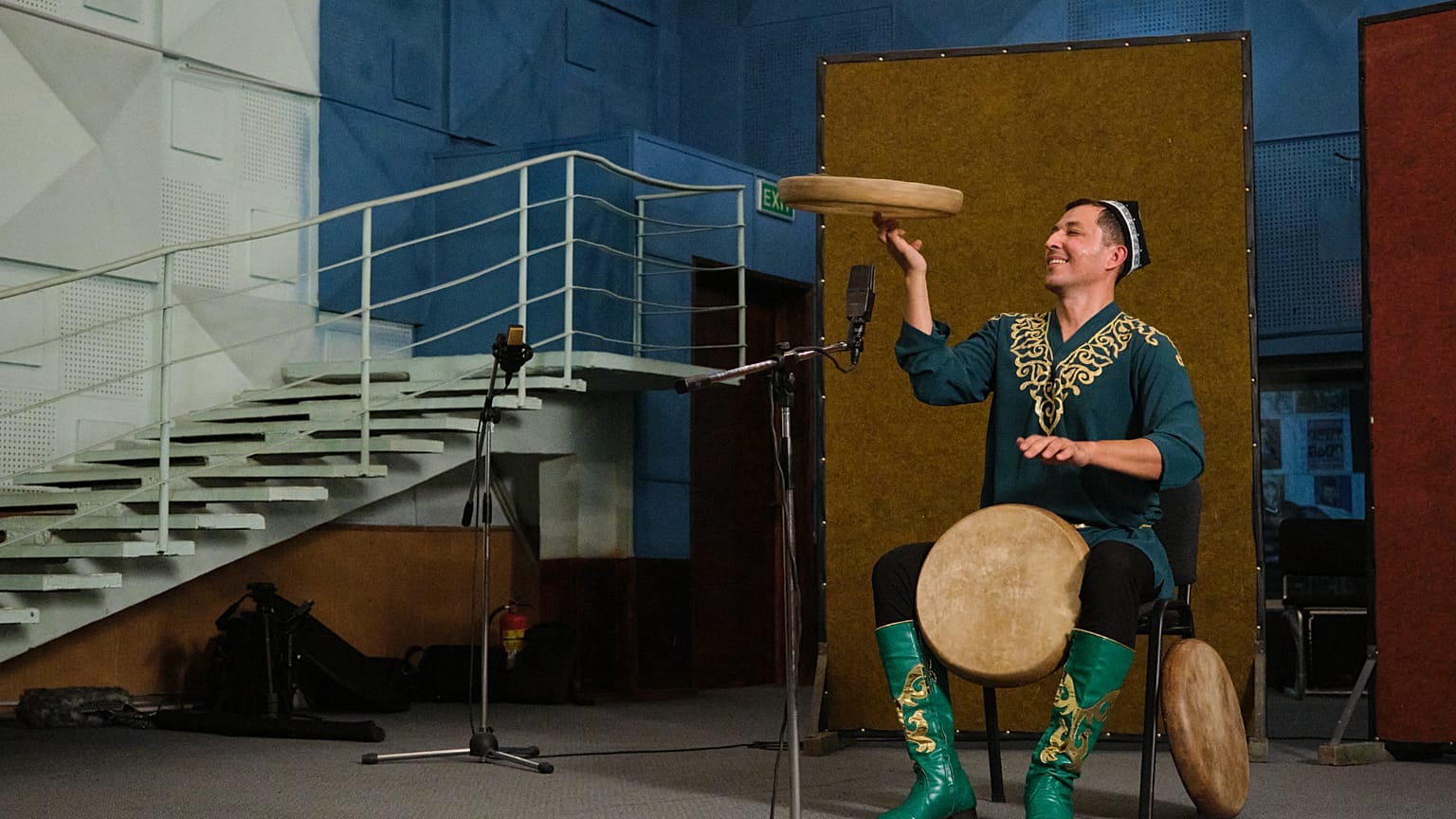
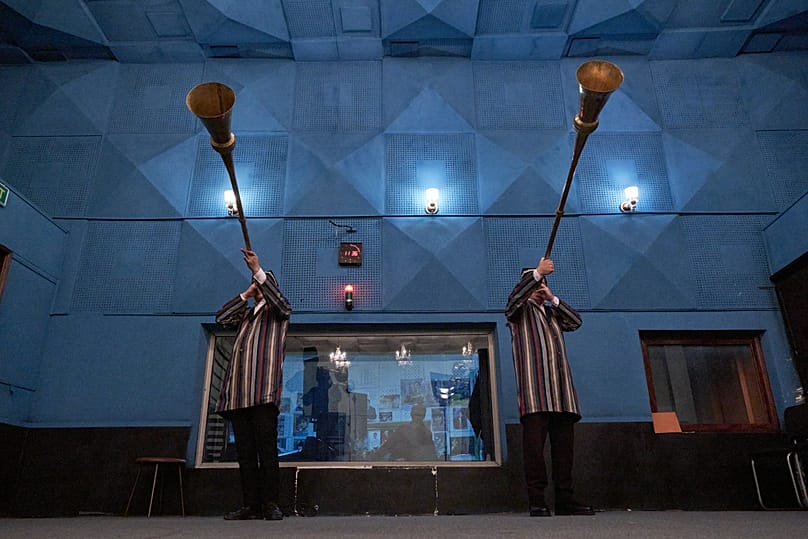
Recordings were later completed in a professional studio, where musicians participated in both solo and ensemble sessions. The result is an archive that includes 24 traditional instruments and more than 200 recorded sound samples.
Among the most notable discoveries is the gajir nay, a rare wind instrument.
“It is a wind instrument with a very rare and distinctive sound. It is made from the wing bone of a scavenger bird called gajir”, Khakimov described.
He explains that such instruments were historically used in everyday life in mountain regions. “In ancient times, they were used by shepherds and mountain dwellers while herding animals,” he says.
The project also documented musical material that had not been widely performed for decades. “We recorded ancient surnay melodies that have not been performed for 40–50 years,” Khakimov notes. “As far as we know, such recordings do not exist elsewhere.”
Other materials include sibizga, regional doira patterns, and Bukhara percussion traditions, some of which were reconstructed during the process.
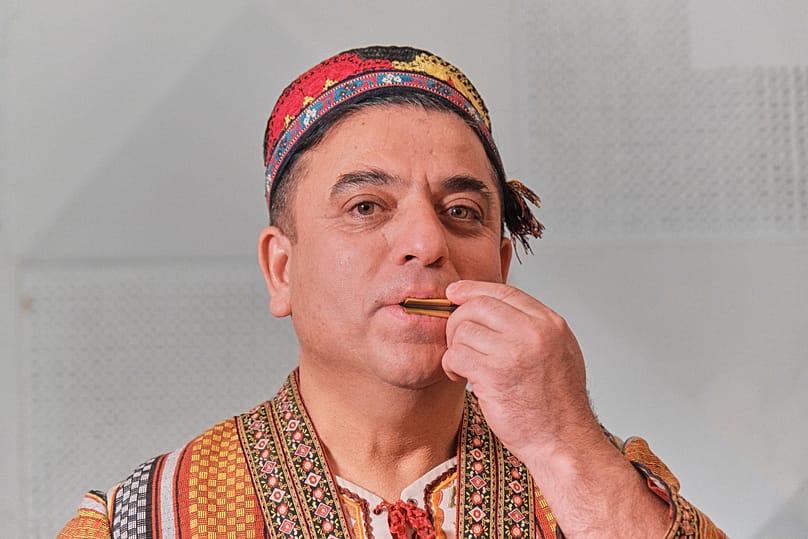
“These recordings are important not only for creators, but also for future research and preservation,” Khakimov adds.
Maintaining the original sound of traditional instruments during studio recording was a central concern throughout the project.
“For us, it was important that professional recording did not change the authentic sound,” Khakimov says. “We worked with sound engineers who understand how these instruments sound in real life.”
He adds that technical precision alone is not sufficient. “The main task was not to improve the instrument through processing, but to capture its true, original sound.”
A free-access cultural platform
The OHANG platform will be fully free to use. “The platform will be completely free,” said Khasanov. “There will be no paid functions or subscriptions.”
According to the project, all recordings will be released under a public user licence, allowing free use in personal, creative, and commercial projects.
“Users can download tracks and use them in video, film, advertising, or music,” he explains. The only restriction applies to the resale of unaltered content.
The project emphasises both accessibility and cultural respect. “We want these recordings to be widely used, but not misused in ways that distort or disrespect culture,” he adds.
Expanding the archive and future directions
The platform is scheduled for official launch in June. Initially, it will feature recordings from the first expeditions in the Tashkent region, with further expansion planned.
“This is only the beginning,” says project coordinator Maftuna Abdugafurova. “We will continue expeditions across Uzbekistan and gradually expand the catalogue.”
Beyond archiving, the platform is also expected to evolve into a creative space, potentially including remixes, user-generated content, and collaborations between traditional and contemporary musicians.
Creative director Sardor Babayev sees this as a natural development. “We already see interest from DJs and producers,” he says. “The platform can become a bridge between traditional music and modern genres.”
Plans are also being considered for an electronic music festival that would showcase reinterpretations of traditional Uzbek sounds.
“We want to bring together musicians and producers who work with these materials,” Babayev explains. “Traditional music should not remain in the past; it can exist in new forms.”
He adds that international participation is also being considered, positioning the project as a potential cultural exchange platform.
Read more