




























Drone sightings, unclear reporting chains and fragmented responsibilities are exposing a growing blind spot in the North Sea.
Possible sabotage, drone overflights and mapping by submarines: the North Sea and its off shore wind farms are vulnerable to hybrid warfare, threatening one of Europe's crucial renewable energy sources. But, who is responsible for security and defence?
 ADVERTISEMENT
ADVERTISEMENT
ADVERTISEMENT
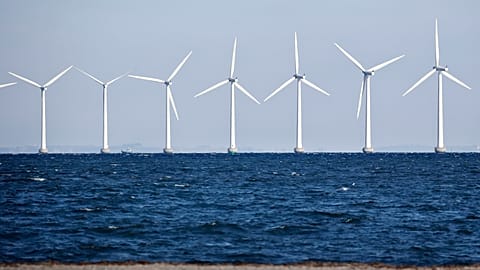
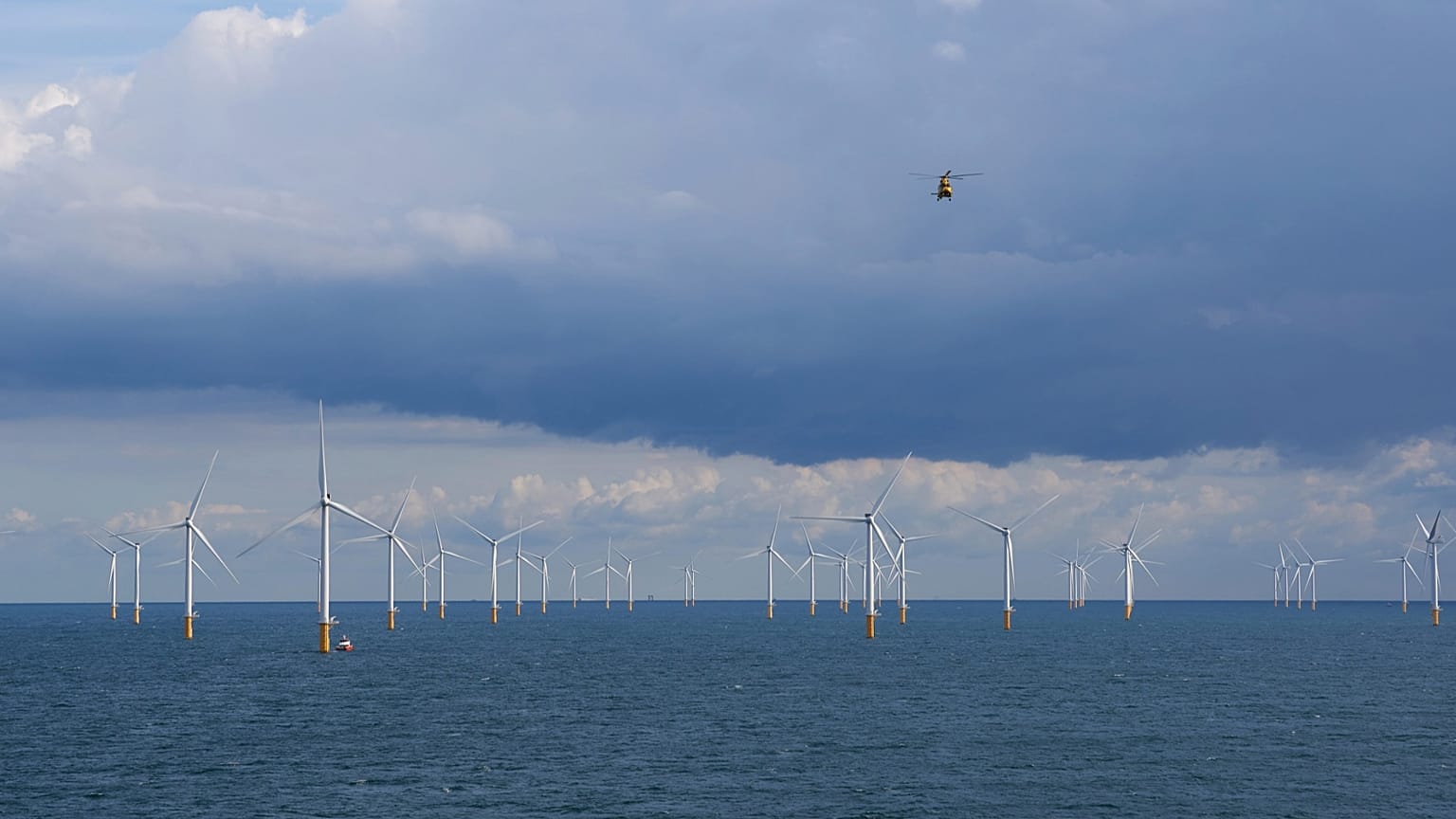
As of early 2026, more than 100 offshore wind farms are operating in the North Sea across the exclusive economic zones of Germany, the UK, the Netherlands, Denmark and Belgium. Major clusters in the German Bight and off the UK's east coast make the region one of the world's largest offshore wind hubs.
The drone blind spot over offshore energy
The shifting location of these offshore parks raises a question of jurisdiction: are national authorities, private firms or the operators themselves responsible for keeping them secure?
The answer is far less straightforward than in the case of an incident on land. In Germany, for example, if a drone is spotted near critical infrastructure, the police are responsible for dealing with it. If it is flying over a military site, the armed forces are authorised to take defensive action.
But when a drone is spotted over offshore energy infrastructure – potentially filming or taking images – it is often neither registered nor reported. In many cases, no action is taken.
According to Albéric Mongrenier, Executive Director at the European Initiative for Energy Security (EIES), such attacks are "not only increasing in frequency, but are also diversifying, both onshore and offshore, across energy infrastructure in general."
Offshore wind parks are therefore not only a target because of their function, but also their location, as they are "further away and harder to protect", Mongrenier explained at a private digital roundtable, adding that the cables connecting the parks to the shore are particularly vulnerable.
As Dan Marks, a research fellow in energy security at the Royal United Services Institute (RUSI) in London, emphasised at the same roundtable, there is also a lack of data sharing.
"Incidents tend to be reported to the police. They deal with the information they can, take witness statements and try to follow up, but the process is far from clear. What happens next, what the outcome is – it's often uncertain," he said.
"There's little incentive for companies to report incidents, and many simply experience brief disruption. You see a drone, wonder why it's there, monitor it for a while, and then it disappears. And no one reports it."
Marks ruled out hobbyist drones, saying he doubts these devices have "accidentally travelled several nautical miles out to sea to hover". It remains unclear who is operating them or where they are launched from.
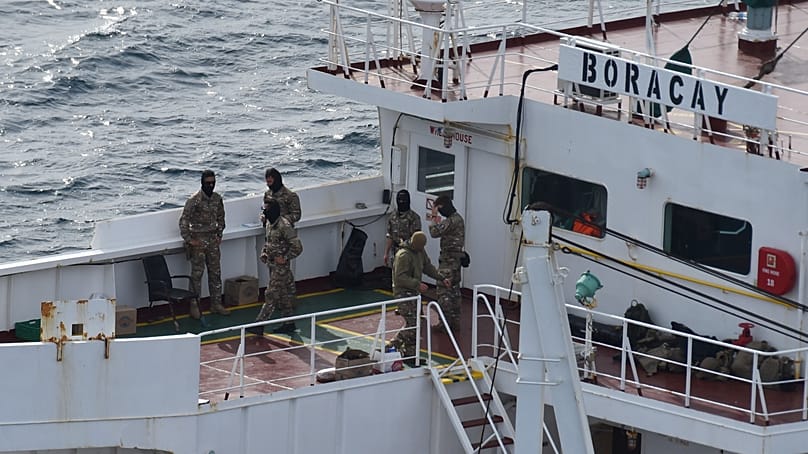
Marks also pointed to incidents in which drones were deployed from so-called shadow fleet tankers, which use concealing tactics to smuggle sanctioned goods like oil, adding that he doesn't see this as a problem specific to the North Sea.
Can Germany protect its offshore wind farms?
Defence against hybrid threats such as drones remains fragmented, largely because many countries rely on different systems and structures. As Mongrenier from the EIES explained, one solution would be for governments to establish a framework that is clear and understandable for the private sector.
"There needs to be a clear division of responsibilities between public actors, whether that is the police, the military or different branches of the administration. The private sector needs to know who is responsible for what at every stage: before an attack, during an attack and throughout the recovery process," he said, adding that approaches still differ widely across Europe.
"The Nordic countries are particularly strong in this area, especially Norway. Germany, by contrast, faces greater difficulties because it is a federal state with many different layers of authority."
Sabrina Schulz, Germany Director of EIES, agreed, emphasising that "the complexity of the federal system combined with the complexity of various responsibilities across police, water police, navy, the Federal Office for Information Security (BSI) and other authorities is challenging. For constitutional reasons, the federal level, such as the Ministry of Defence, cannot simply 'take over'," she told Euronews Earth.
Germany's Maritime Safety and Security Centre (MSSC), however, already plays a central role here serving as a key point of contact in case of an incident and making sure that appropriate action is taken, Schulz explained.
Still, comparing Germany to countries such as Norway, is "hardly possible", Schulz said. "Nevertheless, Germany should learn from best practices of other North Sea countries and adapt them to the national context."
Why are offshore wind farms so important?
When Russia launched its full-scale invasion of Ukraine in 2022, Europe faced a stark wake-up call not only on defence, but also on energy security. In a bid to cut dependence on Russian oil and gas, countries including Germany scrambled to secure alternative supplies, turning in part to LNG imports from Qatar and the US.
That shift, however, has also come under pressure amid escalating tensions between the US, Israel and Iran, with Tehran disrupting traffic through the Strait of Hormuz – a key artery for global oil shipments.
Daniel Greve, spokesperson for Germany's Federal Ministry for Economic Affairs and Energy (BMWE) told Euronews Earth that "offshore wind energy is a strategic cornerstone of a resilient German and European energy system and industrial base. With high full-load hours and a stable generation profile, it reduces our reliance on imports."
Europe is betting on North Sea wind
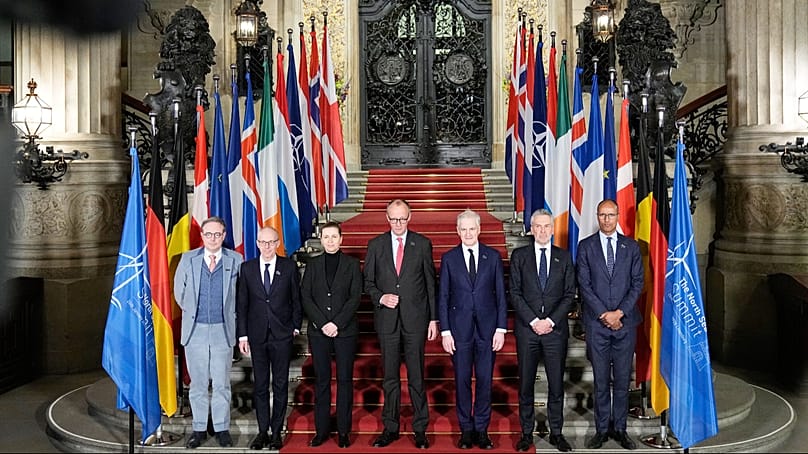
Even before the US-Israel war with Iran, European countries had committed to strengthening energy resilience under the Hamburg Declaration, signed in January by nine North Sea states, including Germany and the United Kingdom.
The agreement commits governments to ramping up offshore wind capacity to 15 gigawatts a year from 2031, with the industry pledging lower costs and create 91,000 new jobs in return. It is also expected to generate around €1 trillion in economic activity.
Greve said the annual target of 15 gigawatts applies to Europe as a whole, stressing that closer coordination of offshore projects in the North Sea will be crucial to achieving it. A capacity of 15 gigawatts would be enough to supply around 10.5 million average households with electricity for a year.
Countries in the region are working to better align their auction schedules, construction timelines and commissioning phases to avoid sudden peaks in activity. The aim is to ease pressure on supply chains and reduce the risk of delays, Greve added.
Offshore wind faces growing security challenges
Germany's offshore wind sector is indeed expanding rapidly, but its scale and location create growing security challenges, Schulz, Germany Director of the EIES explained. Almost all offshore wind farms are situated in the Exclusive Economic Zone of the North and Baltic Seas, outside German territorial waters, making surveillance and protection more complex.
She added that by the end of 2025, Germany had around 9.7 gigawatts of offshore wind capacity, second only to the UK in Europe, with plans to increase this capacity sevenfold by 2045. Still, Schulz argued that offshore wind infrastructure is inherently more resilient than oil and gas facilities because it lacks a single point of failure and does not involve volatile materials or on-site workers.
"If we look at past hybrid attacks, there was a focus on the Baltics," she said. "Nevertheless, we do have to prepare for these attacks spilling over to the North Sea in the future."