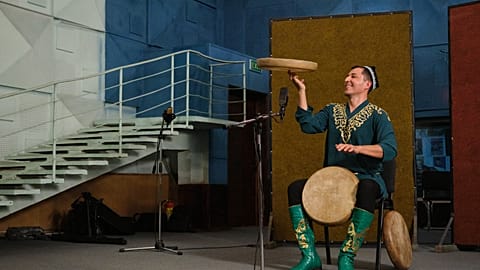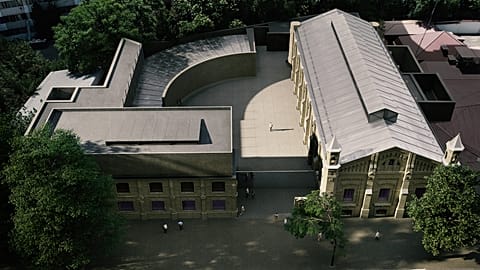





























From puppet stages for children to grand opera houses and regional drama theatres, Uzbekistan’s theatre scene remains a living cultural tradition where stories, craftsmanship and live performance continue to bring audiences together.
For more than a century, theatre has played a central role in Uzbekistan’s cultural life. Across the country, 41 state theatres carry forward traditions of storytelling, music and performance that shape how audiences experience history, creativity and national identity. From intimate puppet shows in Tashkent to opera and drama stages across the regions, theatre remains a space where live connection matters.
 ADVERTISEMENT
ADVERTISEMENT
ADVERTISEMENT
A small stage with a big world
In the heart of Tashkent, the Republican National Puppet Theatre introduces children to theatre through colour, movement and imagination. Founded in 1939, the theatre has evolved alongside its audience, blending traditional puppetry with modern technologies.
“Today, our theatre stages national productions as well as outstanding works of world drama,” says Ikrom Erkulov, Head of the Literary Department. “Our performances are created for preschoolers, schoolchildren and adult audiences. The repertoire includes nearly fifty productions, and each year we present four new ones.”
Behind the screen, puppeteers work unseen, guiding glove puppets, string marionettes and tablet-controlled figures. “Our actors are among the most dedicated artists,” Erkulov explains. “They are often invisible to the audience, but they are the most humble creators of all.”
Performances are staged in Uzbek, Russian and English. When touring abroad, the theatre adapts productions into the language of the host country. “Foreign audiences show strong interest in our nationally themed performances,” Erkulov says, noting productions based on the works of Alisher Navoi as well as Shakespeare’s Hamlet, staged in full for adult viewers.
Crafting a fairy tale by hand
Behind every performance is a workshop where sets and props are built piece by piece. Set designer Svetlana Kolesnikova describes the process as creative craftsmanship rather than routine work.
“You feel like a magician,” she says. “We create a fairy tale and give it to our viewers. You cannot deceive an audience, especially children. Everything must feel real, even in a fantasy world.”
Carpenters, painters, prop-makers and designers work together for months to produce each show. “When you put your heart into what you create, it comes alive on stage,” Kolesnikova adds. “That is the miracle of theatre.”
A landmark of opera and ballet
For many young theatre-goers, early visits eventually lead to one of Central Asia’s most iconic cultural venues, the Alisher Navoi State Academic Bolshoi Theatre. Built in the 1940s, it remains the centre of opera and ballet in Uzbekistan, hosting full seasons and international productions.
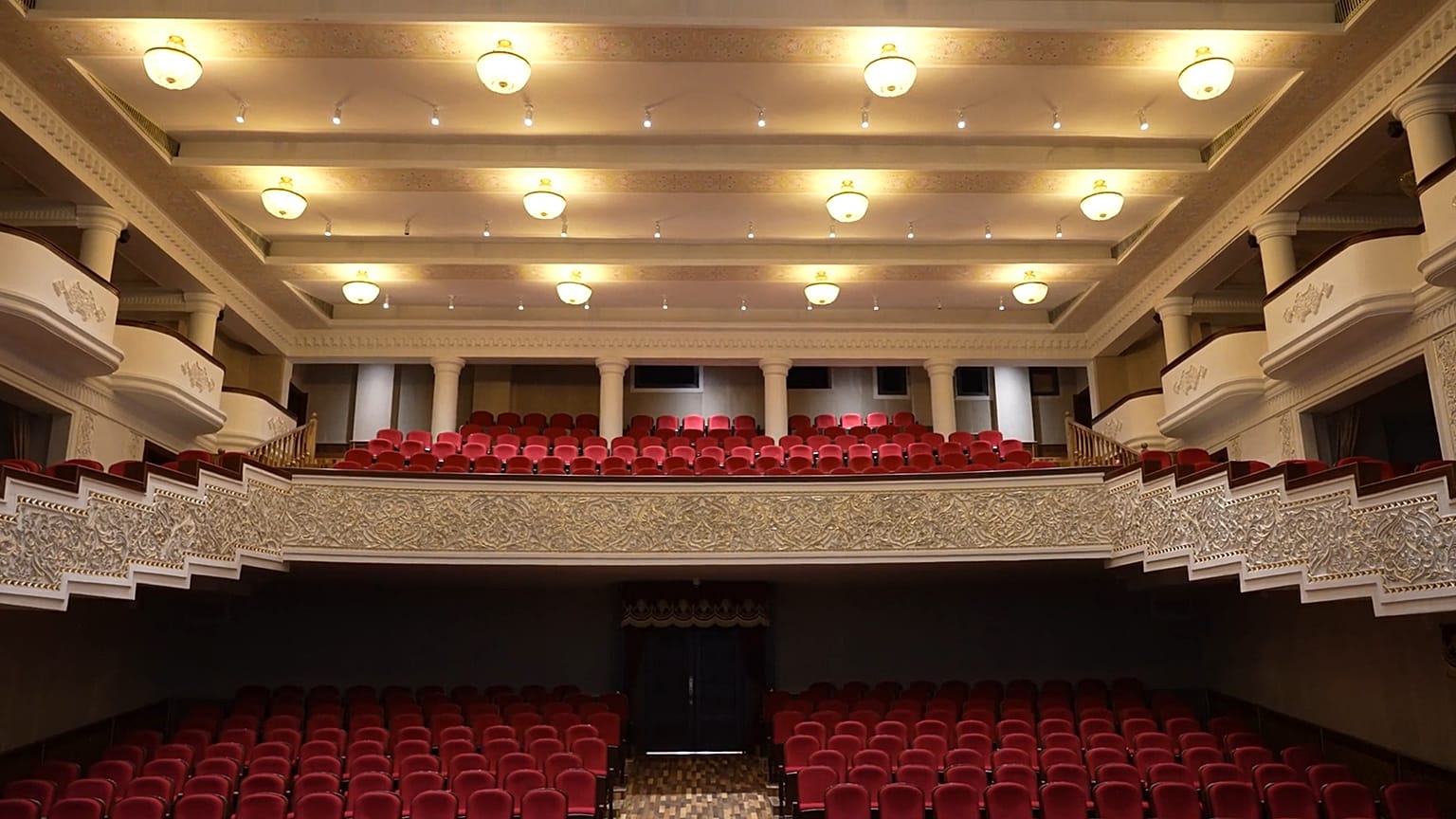
Beyond performances, the theatre building itself tells a story of craftsmanship. Museum supervisor Yuliya Seryakova explains that architect Alexey Shchusev envisioned the theatre as a “temple of art,” where every detail would teach visitors to recognise beauty.
A team of master craftsmen from Tashkent created carved panels inspired by traditional Uzbek interior design. “Even after renovations and the 1966 earthquake, these works were carefully preserved,” Seryakova says. “They remain a treasure of this place.”
The theatre’s black marble handrails carry another story. Two master brothers, Jalol and Balta Juraev, discovered rare marble in a remote quarry, cut the stone by hand and brought it to Tashkent. “For decades, visitors have touched these railings without knowing their history,” Seryakova notes.
Inside the Bukhara Hall, mirrored carved panels catch sunlight and fill the space with reflected light. “This is craftsmanship at its highest level,” she says. “Every hall here has its own character.”
Live performance in a digital age
Despite modern entertainment platforms, theatre continues to draw audiences. “A person must feel live conversation,” says a long-time theatre worker. “Every performance is born anew. Artists cannot repeat the same show twice. That is why theatre remains valuable.”
Behind the scenes, stage workers, costume designers, lighting technicians and decorators form an invisible team. “They may never receive applause,” the theatre veteran says, “but without them, no performance could happen.”
In recent years, the Navoi Theatre has welcomed international guest artists and productions. Classical works are now increasingly staged in the original language of the composer, reflecting a growing international audience.
Musical theatre for wide audiences
Not far from the Navoi Theatre stands the Uzbek State Musical Theatre named after Mukimi – the only musical theatre of its kind in Central Asia.
“Our theatre has its own orchestra, ballet company, choir and soloists,” says press secretary Feruza Holiqova. “Each year we present new productions, and our audience continues to grow.”
Actor Mehmonali Salimov has spent nearly five decades on its stage. “Uzbek audiences see reflections of their own lives in our characters,” he says. “That connection keeps performances alive year after year.”
Theatre beyond the capital
Theatre is not limited to Tashkent. In Samarkand, the Regional Musical Drama Theatre, one of the first in Uzbekistan, opened in 1914 with the production Padarkush by Mahmudkhoja Behbudiy.
“There are four state theatres in the Samarkand region and 41 across the country,” says Botir Tugalov, Head of the regional Department of Culture. “In recent years, we have focused on historical productions, comedies and collaborations with foreign directors. Our theatre now tours internationally.”
A tradition that continues
Across Uzbekistan on puppet stages, opera platforms and regional drama theatres, stories continue to be told live, night after night. Audiences gather, lights dim, and a shared experience begins.
Theatre in Uzbekistan remains a living tradition where craftsmanship, creativity and human connection meet on stage.
Read more