




























Much has been written about the fact that Spain adheres to CET, rather than being on Greenwich Mean Time, the same zone as the United Kingdom and Portugal. It's widely believed to be the result of a gesture from Franco to Hitler. Although not true, Spain is still torn between history and health.
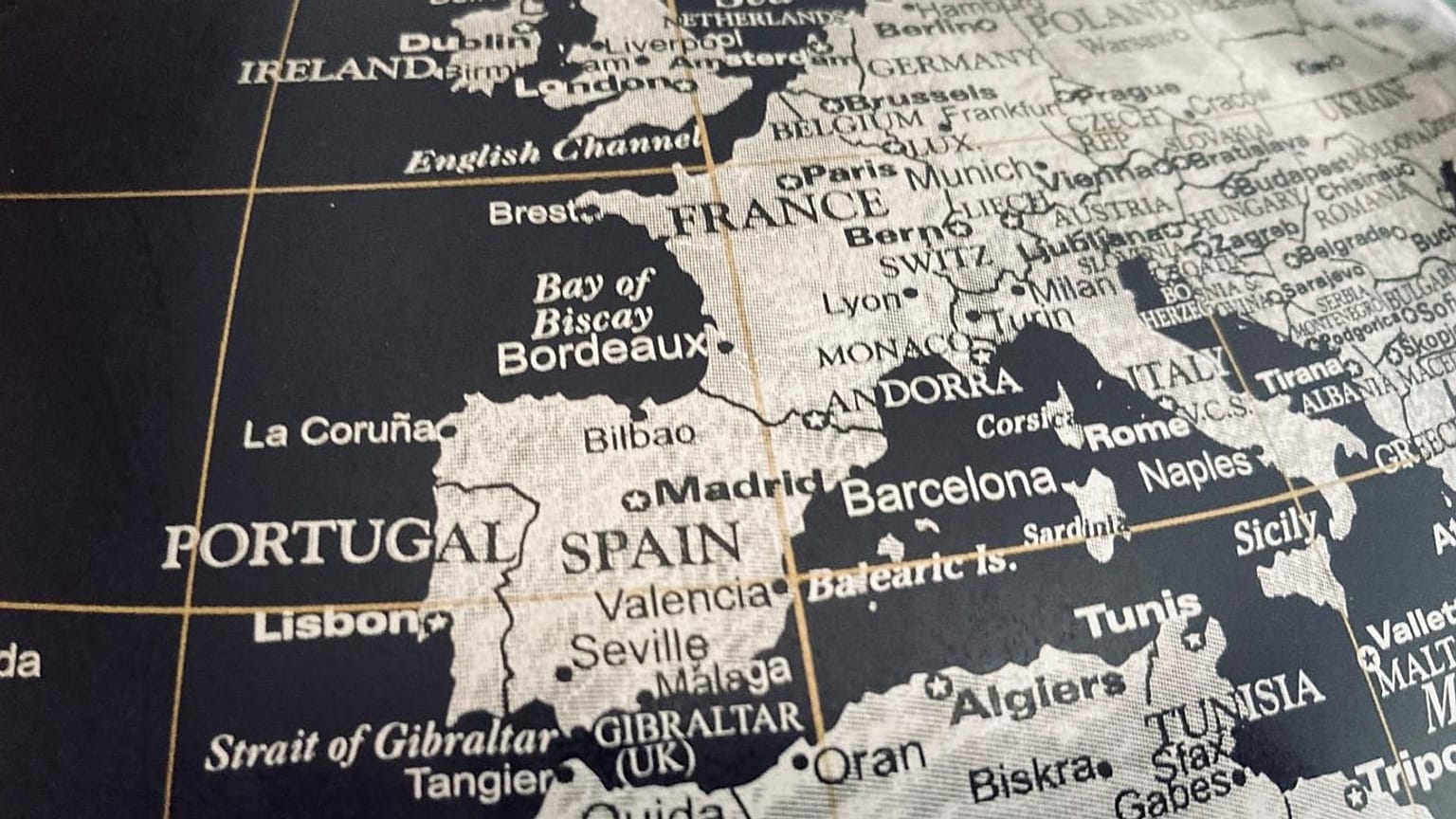
For more than eight decades, Spain has been suffering from jet lag in relation to its geographical position. Although by longitude it should be governed by the Greenwich Meridian, the country maintains Central European Time (CET), the same as that used by countries located much further east.
 ADVERTISEMENT
ADVERTISEMENT
ADVERTISEMENT
This singularity has been fed for years by a persistent story: the myth that this mismatch was a nod from Franco's regime to Nazi Germany. However, the reality - as is often the case - much more complex and less ideological than one might think.
Pere Planesas, a former astronomer at the National Astronomical Observatory, told Euronews, the one-hour advance took place in March 1940, when Francisco Franco's government ordered the clocks to be adjusted to bring them into line with other European countries.
The measure was presented as provisional, but was never reversed. Since then, most of the country lives one hour ahead of the sun in winter and up to two in summer, with the exception of the Canary Islands. In the west of the peninsula, especially in Galicia, the time difference is more evident: late sunrises in winter and sunsets that last well into the night in summer.
During the Second World War, advancing clocks was a widespread practice in Europe. Already in 1938, in Spain, the Republican government had adopted similar measures to optimise the use of light. In 1940, the United Kingdom, France, Belgium, the Netherlands and Portugal also adjusted their time.
The fact that Spanish time coincided with German time fuelled the myth of a gesture towards Adolf Hitler, but historical data does not support this interpretation. "By introducing an additional hour in April 1940, German legal time was still one hour ahead of those countries, including Spain," explains Planesas, who spent many hours studying (source in Spanish) time patterns before retiring.
"The often-repeated interpretation that it could have been a gesture towards the Nazi government is a hoax," he asserts, while recalling that the order of March 1940 spoke of bringing national time into line with other European countries that had already advanced their clocks weeks earlier, while Germany would not do so until April.
Should Spain readjust its time?
After the war, some countries returned to Greenwich Mean Time, such as the United Kingdom, but others, including Spain and France, opted to keep Central European Time. One of the reasons, according to Planesas, was the need to coordinate transport, communications and economic activities in a continent undergoing reconstruction. Sharing the time zone facilitated trade and mobility at a key moment for Europe.
"In my opinion, it is no longer just a scientific question, but rather a convention or an agreement adopted by a society, in which many factors come into play. An essential one is custom," says Planesas, who believes that many of the arguments mentioned above are still valid.
The former astronomer also points out that, being governed by Western European Time (WET), Spain shares a time zone with more than half of the countries of the Old Continent and with most of its main trading partners. From this perspective, maintaining the current time is "functional".
"There would be strong social pressure to adapt our usual activities to the same daylight hours - not clock hours - as we currently do," maintains Planesas. "We would probably end up in a situation similar to the current one, having suffered, in the meantime, many inconveniences, complications and dysfunctions during the years of adjustment to the new time zone".
The impact on health: when the biological clock protests
Beyond the historical and political debate, the time zone has direct consequences on health. Dario Acuña, Emeritus Professor of Physiology at the University of Granada (UGR), explains that human beings are biologically designed to be active in daylight. The biological clock, located in the hypothalamus, regulates key functions based on the amount and type of light received by the retina.
Daytime sunlight, which is rich in blue wavelengths, blocks melatonin production, while in the evening, when the blue component disappears, the body begins to prepare for rest. The problem, Acuña points out, is excessive exposure to light during the evening in spring and summer, which chronically blocks this process.
"We must adapt our lives and our daily activity to the geographical area and, therefore, to the amount of light we receive, always bearing in mind that we should not receive excessive light after 20:00", the UGR professor told Euronews in a statement. "This is true in any geographical area, because then we are blocking the start of the rest stages that sets our biological clock in motion.
From his point of view, the current winter timetable is the one that best suits Spain's solar reality. Maintaining it all year round would allow for a more balanced exposure to light in the morning and afternoon, preventing the light from extending into the late hours of the night. This adaptation, together with changes in social and work habits, could improve sleep problems and other disorders associated with the circadian rhythm.
"Spaniards go to bed late because they have light until late, from spring and summer onwards. So, if we readapt ourselves a little bit to a slightly more European timetable, we can greatly improve all these types of disorders that we have now," concludes Acuña.
Some eight decades after the clocks went forward, Spain is still torn between history, geography and health. The myth of the Nazi origin fades when analysing the facts, but the effect of the Spanish time zone difference is still real. As it is, in Spain the hands of the clock do not only tell the time: they reflect political decisions of the past and raise very current dilemmas about how we want to organise our lives.