















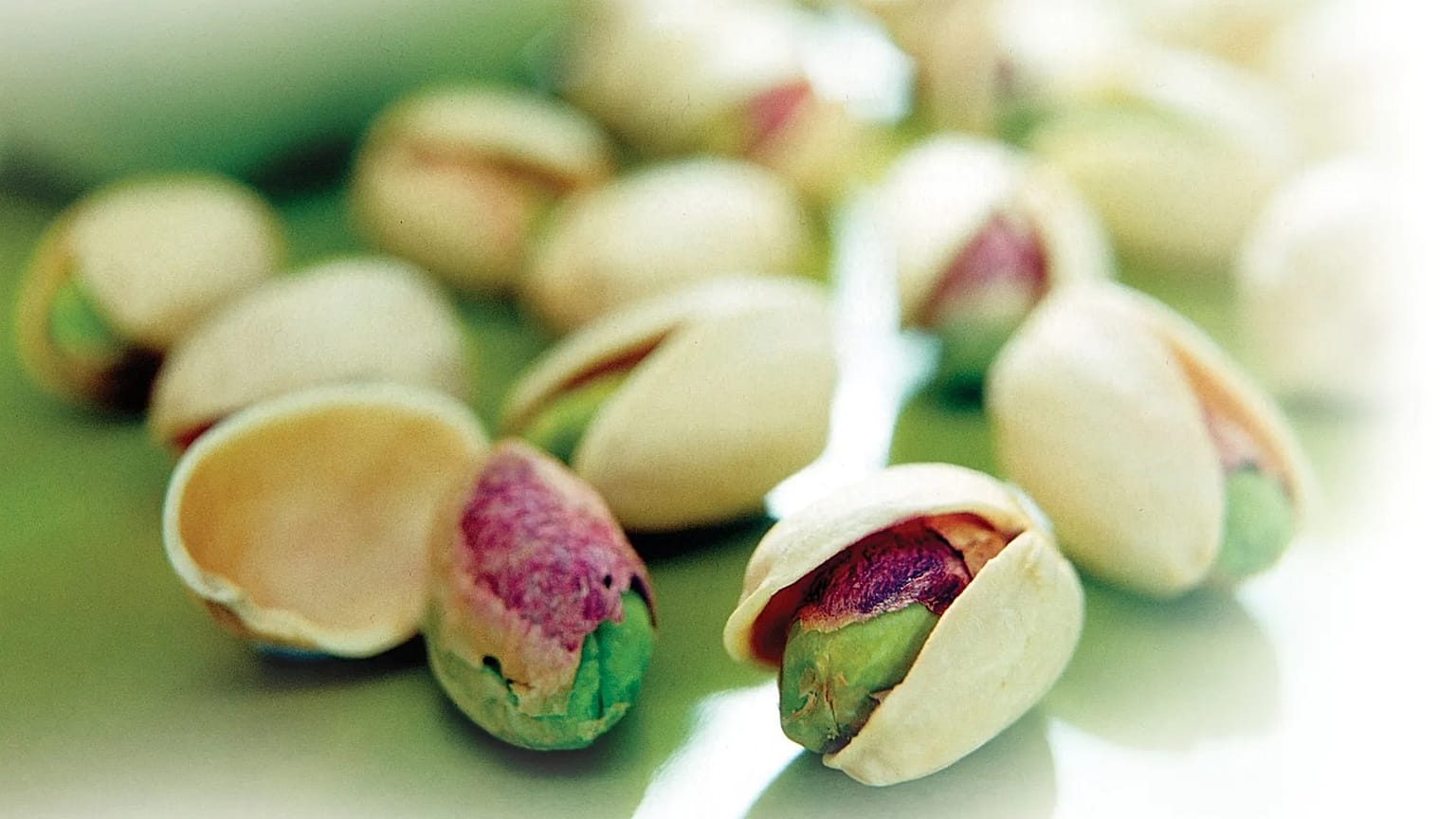













Spanish pistachio production has substantially grown by 73.6% in the past year, and the results are plain to see in supermarkets. Why has the small seed has gone from being a savoury snack to one of the most disputed ingredients in the food sector?
If you live or have been shopping in Spain recently, you may've noticed that there seem to be lots of products around that contain pistachio.
 ADVERTISEMENT
ADVERTISEMENT
ADVERTISEMENT
It's not just an impression. The small greenish seed has conquered the food market with great force.
Castile-La Mancha, Andalusia and Aragon account for most of the almost 42,400 tonnes expected to be harvested in Spain this season, compared to 8,200 in 2018.
The leap up is remarkable, although the sector readily acknowledges that Spain is still a minor player in the global context. In the last year alone, pistachio production in Spain grew by 73.6%.
What is changing now is the focus. Companies such as Víridi Horizons have detected that the real value does not lie in selling the drupe seed as it is, but in transforming it.
Spain only converts 10% of its production into industrial ingredients, which leaves a wide margin to enter markets such as pistachio paste, where Italy has dominated for years with imported products. Total traceability and the absence of additives are the arguments with which the Spanish sector wants to compete.
From field to fork
Beyond the industry, some companies have opted for a different model. Pistachyde, located in Tembleque, Toledo, manages the whole process from farm to shop and has integrated the crop into the local economy, including a restaurant business in the municipality itself.
Its manager stresses that the pistachio is helping to retain the population in rural areas, and that immigrant labour is a key part of this chain.
The international scenario is paradoxical. California had a bumper crop in 2025, 44% higher than the previous one, and yet prices did not fall. They exceeded 9,000 dollars per tonne, with increases of between 30 and 35% in one year.
The behaviour of US exporters explains why as they prefer to accumulate stocks and maintain their historical customers rather than open the tap to the spot market.
This was compounded by the frosts that wiped out 70% of the crop in Turkey in 2025 and also damaged Iran, two of the world's leading producers. The result was upward pressure on prices that was directly transferred to importing countries such as Italy, where 88% of pistachios consumed come from abroad, mainly from the United States, Spain and Iran.
Dubai chocolate and ingredient fever
Part of the push is explained by a cultural phenomenon that few anticipated: Dubai chocolate. A bar filled with pistachio cream and kadaif paste that went viral on social networks and ended up on supermarket shelves halfway around the world.
It was the tip of the iceberg of a deeper trend: pistachio has gone from being a discreet but expensive snack to sneaking into yoghurts, biscuits, chocolate bars, ice cream, cheesecakes and a growing number of processed products.
In Italy, the retail sector moves more than 5,000 tonnes of pistachio per year, worth more than 120 million euros. The volumes of shelled pistachios grew by 7% in 2025, and the products that use pistachios as an ingredient, more than 730 references in supermarkets, had a turnover 5.5% higher in 12 months.
The global market is approaching $5.5 billion and analysts estimate it will reach $7 billion by 2031. Organic, single-origin and premium-certified production accounts for most of the growth in value.
Pistachios, in short, are no longer just a nut: they are a raw material for which food industries on several continents are competing with increasing urgency.