















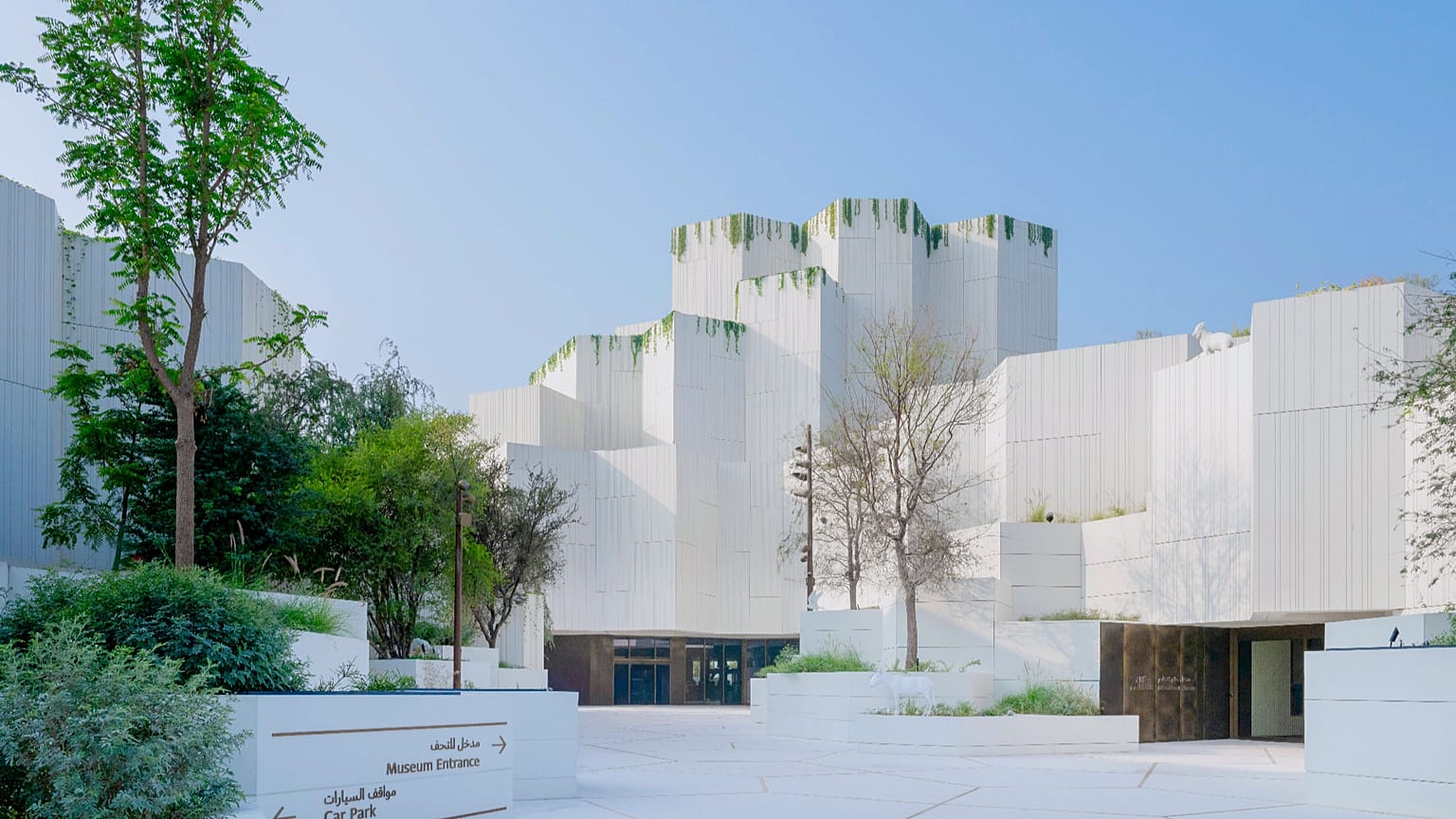













The National History Museum Abu Dhabi is preparing to open its doors as the the latest addition to the Saadiyat Cultural District which is already home to Louvre Abu Dhabi, teamLab Phenomena Abu Dhabi and Manarat Al Saadiyat.
From the creation of our planet to the history of life on earth, the Natural History Museum Abu Dhabi showcases some of the world’s most important exhibits that bring nature's story to life.
 ADVERTISEMENT
ADVERTISEMENT
ADVERTISEMENT
The 35,000 square metre space is the largest museum of its kind in the Middle East and celebrates 13.8 billion years of science and discovery.
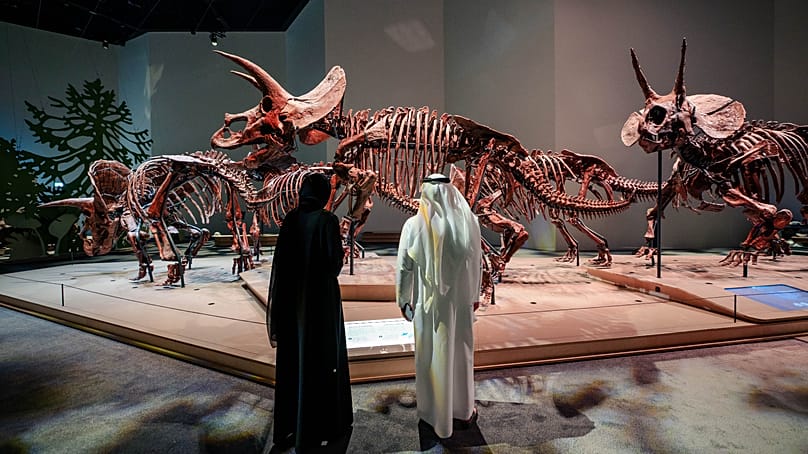
Visiting exhibitions will also make up the cultural program including 'The March of the Triceratops'. It's an immersive exhibit in partnership with Naturalis Biodiversity Center in the Netherlands. It features the first ever herd of triceratops skeletons discovered together in North America.
“From the second you enter and you're greeted by a family of five sauropods welcoming you this to this amazing museum, that in itself is going to instill so much curiosity and imagination in our youth and ourselves also,” said Mohamed Khalifa Al-Mubarak, Chairman of the Department of Culture and Tourism, Abu Dhabi.
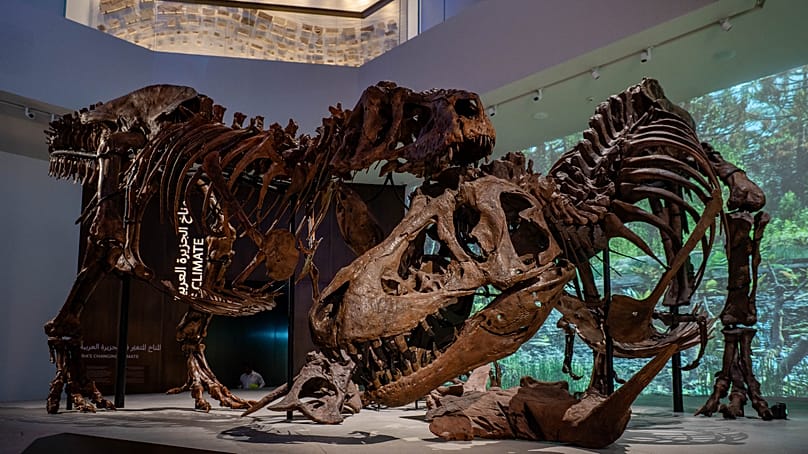
Highlights include one of the best-preserved examples of a 66 million-year-old T-Rex called ‘Stan’. This is one of the most complete and superbly preserved fossils ever recovered. In a world first, it is displayed in a battle scenario with another T-Rex and a Triceratops.
The Murchison meteorite is another exhibit sure to drawn in curious crowds. One of the most primitive space rocks known to man it was formed from a parent asteroid around 4.5 billion years ago at the birth of our solar system. When it fell to Earth in Australia, locals said that it smelled of rotten peanut butter or Brussels sprouts because of the organic compound inside and it still does to this day.
Immersive experiences and science programs for the community connect the past, present and future, stimulating imagination and encouraging learning for the next generation.
“It’s a continuous evolution in this museum… we work hand in hand with cultural institutions, scientific institutions to continuously research these amazing species, working hand in hand together and finding new discoveries, added Chairman Al-Mubarak.
A region rich with natural history
The natural history and wonders of the Arabian Peninsula are integral to the museum’s narrative and feature across many of the different galleries.
In addition, the much-anticipated Zayed National Museum will also open its doors to visitors on Wednesday 3 December after the United Arab Emirates celebrates its national day.
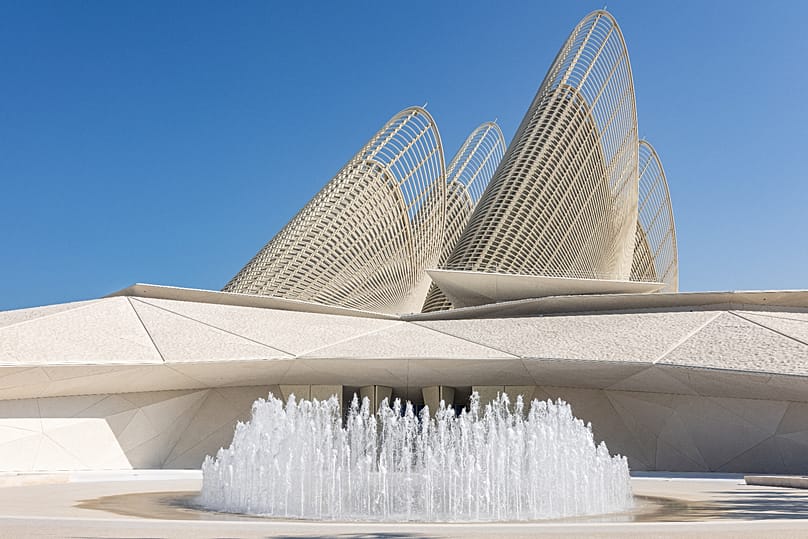
The museum, designed by British architect Norman Foster, traces the history of the UAE and the legacy and vision of its founding father the late Sheikh Zayed bin Sultan Al Nahyan.
“The story of the National Museum is really a story of our history, and it's a voyage that you take from 300,000 years to today, and you take it through the eyes of our founding father, the late Sheik Zayed… it was very important for him to understand that history. It progressed his thinking on how to create the formation of this country. So, you will be taking that voyage really through him", says Al-Mubarak.
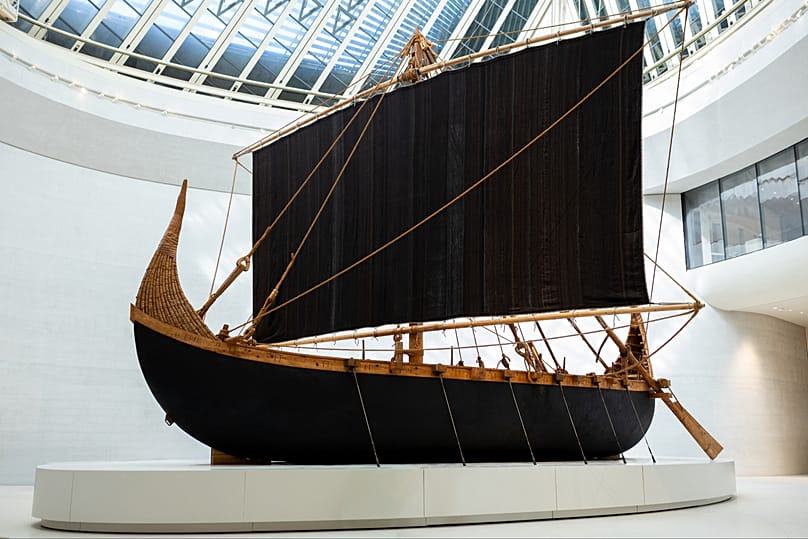
Collections feature archaeological finds as well as artefacts linked to cultural and social history. Among the 1,500 objects on display is a recreation of a merchant ship that would have sailed the Arabian Gulf in the Bronze Age and possibly the smallest but one of the most important artefacts, the world’s oldest pearl ‘The Abu Dhabi Pearl’ which has been radiocarbon dated around 5800 and 5600 BCE.
Read more