




























‘If we want to have more passengers, we need to have more trains’, Eurostar’s Chief Financial, Strategy and Transformation Officer discusses their plans for growth.
Since it first began operations in 1994, Eurostar has transported more than 400 million passengers across Europe — and it shows no signs of running out of steam soon
 ADVERTISEMENT
ADVERTISEMENT
ADVERTISEMENT
In 2025, they had a record-breaking year with 20 million travellers boarding their trains.
But following a decision by the UK’s rail regulator to grant Virgin Trains a licence to run services on the same line between the UK and Europe, is Eurostar’s rolling success under threat?
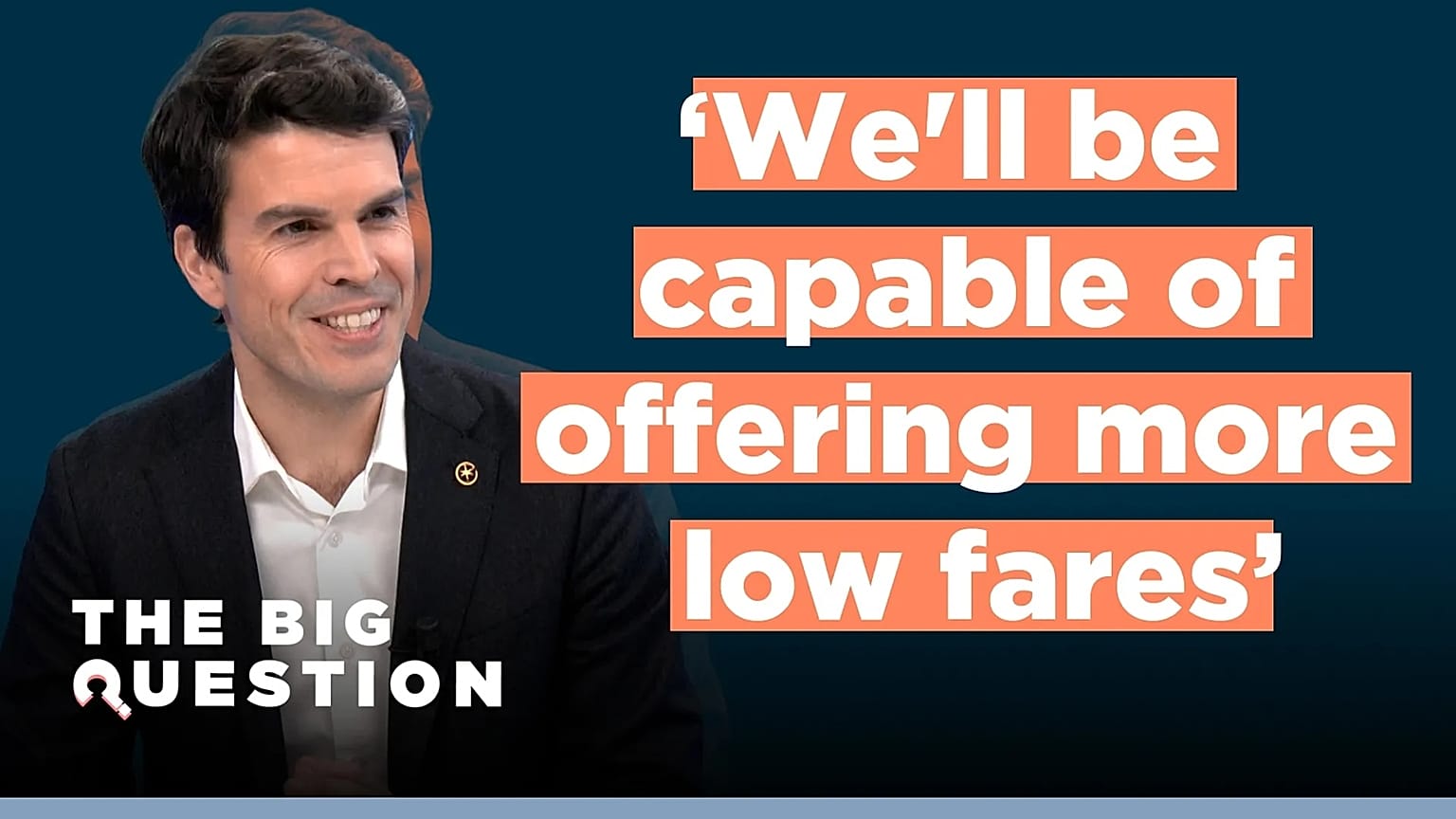
In this episode of The Big Question, Eleanor Butler is joined by Eurostar’s Chief Financial, Strategy and Transformation Officer, Matthieu Quyollet to discuss the future of the international rail giant.
Competition on the line
While Matthieu insists Eurostar isn’t worried about the competition, he did highlight the issues they’re working to fix which could have crowded out other operators from the line in recent years.
“You don't go only through the channel tunnel - you start from one station, which is let's say Gare du Nord or Brussels Midi, and you go to St Pancras. So you need to make sure you have enough space in the station, then you need to make sure you have space in each of those networks,” Matthieu explained.
“And some of those networks are used by other operators than Eurostar for domestic purposes, for instance. So it's not just about Eurotunnel. You need to make sure that you have space everywhere.”

Eurostar’s future plans
Eurostar appears to be banking on their future success, having announced a landmark investment that could lay the tracks for future growth. Eurostar plans to invest €2 billion to expand their fleet, adding 50 new trains by 2030 and introducing double decker trains to the UK for the first time.
The new trains will have a 20% bigger passenger capacity which Matthieu says will lead to more affordable tickets for travellers.
It’s not just the fleet that’s expanding but the lines and destinations too. Direct trains from London to Frankfurt and London to Geneva are expected to begin by 2030.
Though you can already reach Cologne from London by Eurostar, it requires a change in Brussels, but Matthieu confirmed that plans for a non-stop train are also underway.
“In the future, Eurostar will connect six different countries, so probably the most international high-speed railway company in the world,” Matthieu concluded.
The Big Question is a series from Euronews Business where we sit down with industry leaders and experts to discuss some of the most important topics on today’s agenda.
Watch the video above to see the full discussion with Eurostar’s Matthieu Quyollet.