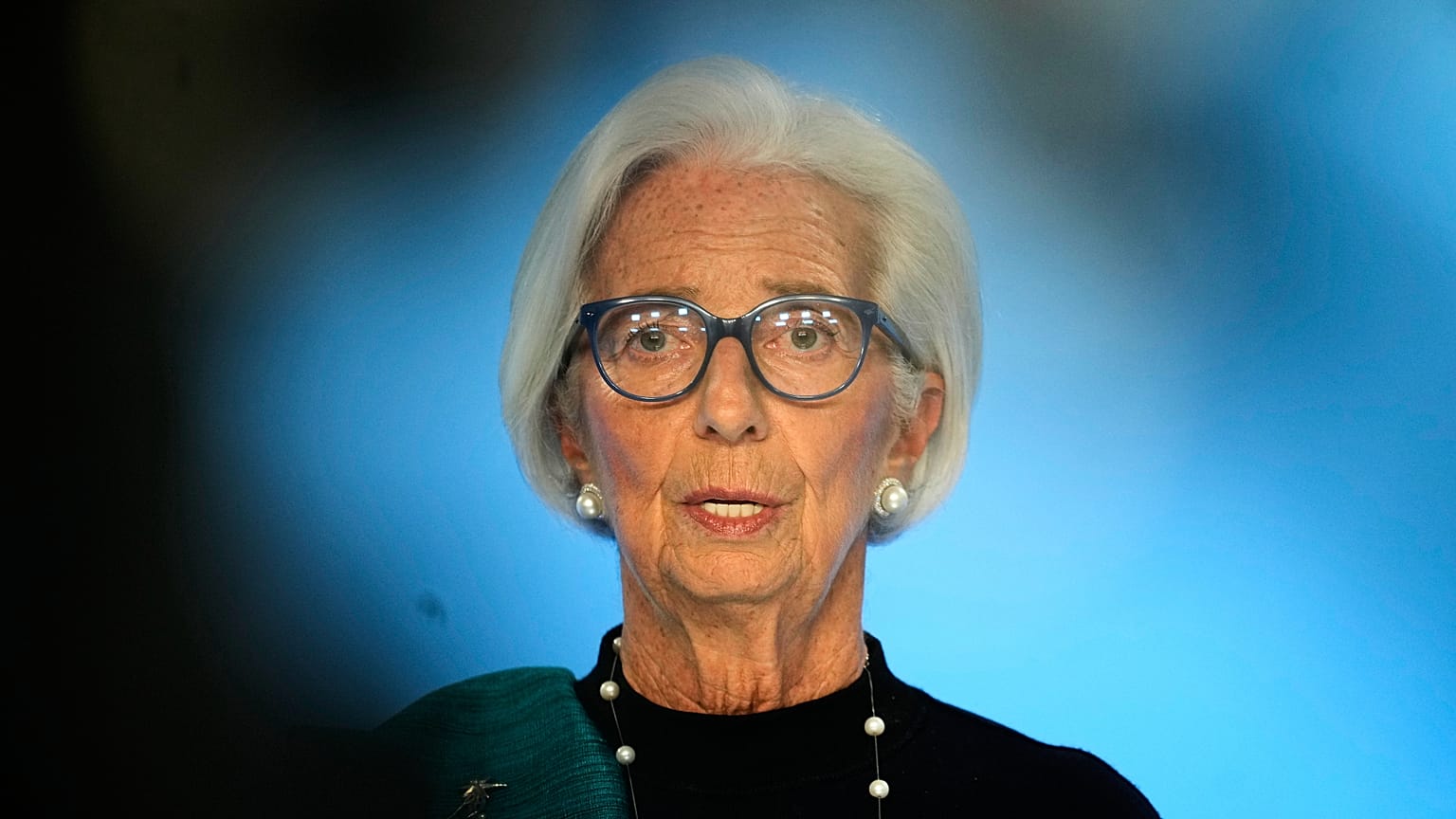













The ECB held rates as eurozone inflation fell to 1.7% in January, its lowest since September 2024 and below the ECB’s 2% target. Core inflation eased to 2.2% as energy prices plunged.
The European Central Bank has kept interest rates unchanged, saying inflation is on track to return to its 2% target even as global trade tensions and geopolitical risks cloud the outlook.
 ADVERTISEMENT
ADVERTISEMENT
ADVERTISEMENT
The Governing Council said on Thursday that it would leave its three key rates steady, with the deposit facility at 2.00%, the main refinancing rate at 2.15% and the marginal lending rate at 2.40%.
"Low unemployment, solid private sector balance sheets, the gradual rollout of public spending on defence and infrastructure and the supportive effects of the past interest rate cuts are underpinning growth," the ECB press release said.
The ECB said their latest assessment confirmed that inflation should stabilise at target over the medium term.
Eurozone inflation continued to ease in January, marking its lowest level since September 2024 and slipping below the European Central Bank’s (ECB) medium-term target.
According to a flash estimate from Eurostat, annual inflation in the euro area eased from 2.0% in December, in line with market expectations.
Core inflation eases further
Core inflation, which strips out volatile energy and food prices, edged down from 2.3% to 2.2% year-on-year, the lowest level since October 2021. On a monthly basis, consumer prices fell by 0.5%, the sharpest contraction since November 2023.
Services registered the highest annual rate at 3.2%, down from 3.4%, while food, alcohol and tobacco accelerated slightly to 2.7%.
Non-energy industrial goods saw a muted rise of 0.4%, and energy prices plunged by 4.1%, deepening from a 1.9% decline the previous month.
On a monthly basis, prices across the bloc contracted by 0.5% — the steepest fall since November 2023
Among the euro area’s largest economies, inflation remained muted. Germany recorded an estimated 2.1% annual rate, broadly in line with the euro area average, while Italy saw inflation at just 1%, reflecting weak domestic demand.
France stood out with an estimated 0.4% reading, the lowest in the bloc, underlining the strength of recent disinflation. Slovakia recorded the highest annual inflation reading at 4.2%.
Falling inflation reflects weak demand
For some economists, the drop in inflation is not an unqualified positive.
Joe Nellis, emeritus professor and economic adviser at MHA, warned that the disinflationary trend is partly driven by lacklustre demand.
“This is not necessarily a cause for celebration,” Nellis said.
“Weak economic growth over recent years has weighed on demand, helping push inflation lower.”
While easing energy prices have supported the slowdown, core inflation remains more persistent — though its momentum continues to soften rather than re-accelerate.
With inflation now close to target and growth subdued across much of the bloc, there is no case for further tightening, Nellis explained.
For businesses, the environment is becoming more predictable. Inflation close to target improves visibility over costs and pricing, while borrowing costs — though still high compared with pre-pandemic levels — have fallen from earlier peaks and could ease further later in 2026.
Consumer demand, however, is expected to recover only gradually as real incomes rebuild.
Contained price pressures
Roman Ziruk, senior market analyst at Ebury, said the inflation backdrop points to contained price pressures, with growing risks of inflation undershooting the target.
“The rapid appreciation of the euro lowers import prices to a non-negligible extent,” Ziruk said, adding that it also hurts export competitiveness — a key channel for the euro area economy.
As a result, markets that only weeks ago were leaning towards a rate hike now see a one-in-five chance of a cut before year-end.
Ruben Segura-Cayuela, economist at Bank of America, expects the ECB to remain cautious.
“If uncertainty was a key factor for Lagarde to remain prudent in December, it has only increased since,” he said.
Bank of America continues to expect a 25 basis point rate cut in March 2026, which it sees as the final cut of the easing cycle, followed by a prolonged hold through 2026 and 2027.
Market reaction muted
Financial markets showed limited reaction to the data. The euro was steady around 1.18 against the dollar, while German Bund yields were little changed at 2.88%.
Eurozone equities edged higher, with the Euro STOXX 50 up 0.3%.
National benchmarks were mixed but positive, with Germany’s DAX up 0.06%, France’s CAC 40 rising 0.74%, and Italy’s FTSE MIB gaining 0.69%.