












Euronews Business takes a closer look at how food prices changed across Europe in 2025, revealing the products that saw the highest inflation.
Food prices in the EU rose by 2.8% in 2025 compared with the previous year. Inflation was much higher for some products, reaching 10% for certain items according to Eurostat.
 ADVERTISEMENT
ADVERTISEMENT
ADVERTISEMENT
Which countries recorded the highest food inflation in 2025? Which food products saw the biggest price increases? And were there any products where prices fell?
Prices in Turkey skyrocket
Turkey was a clear outlier when it comes to food inflation, with prices going up by a whopping 32.8% in 2025, underscoring Turkey’s wider inflation problems. The next-highest increase was far lower, at 7.6% in Kosovo.
Within the EU, Romania recorded the highest food inflation at 6.7%. Food inflation remained high across parts of Eastern and Southeastern Europe in 2025. Romania, Bulgaria, the Baltic states and the Balkans mostly saw rates between 4% and 7%, well above the EU average.
Switzerland was the only country where food prices fell, down 1.1%. Prices were unchanged in Cyprus.
Among the EU’s "Big Four," France recorded the lowest rate at 0.7%. This was also the third-lowest food inflation rate among 36 European countries.
Inflation was 2.1% in Germany and Spain while Italy has the highest rate among top EU economies at 2.5%.
Double-digit inflation in chocolate, frozen fruit, beef and veal
Of the 64 common food items traced by Eurostat, prices fell for eight products and remained unchanged for one. All others recorded price increases at varying rates in 2025 compared to 2024.
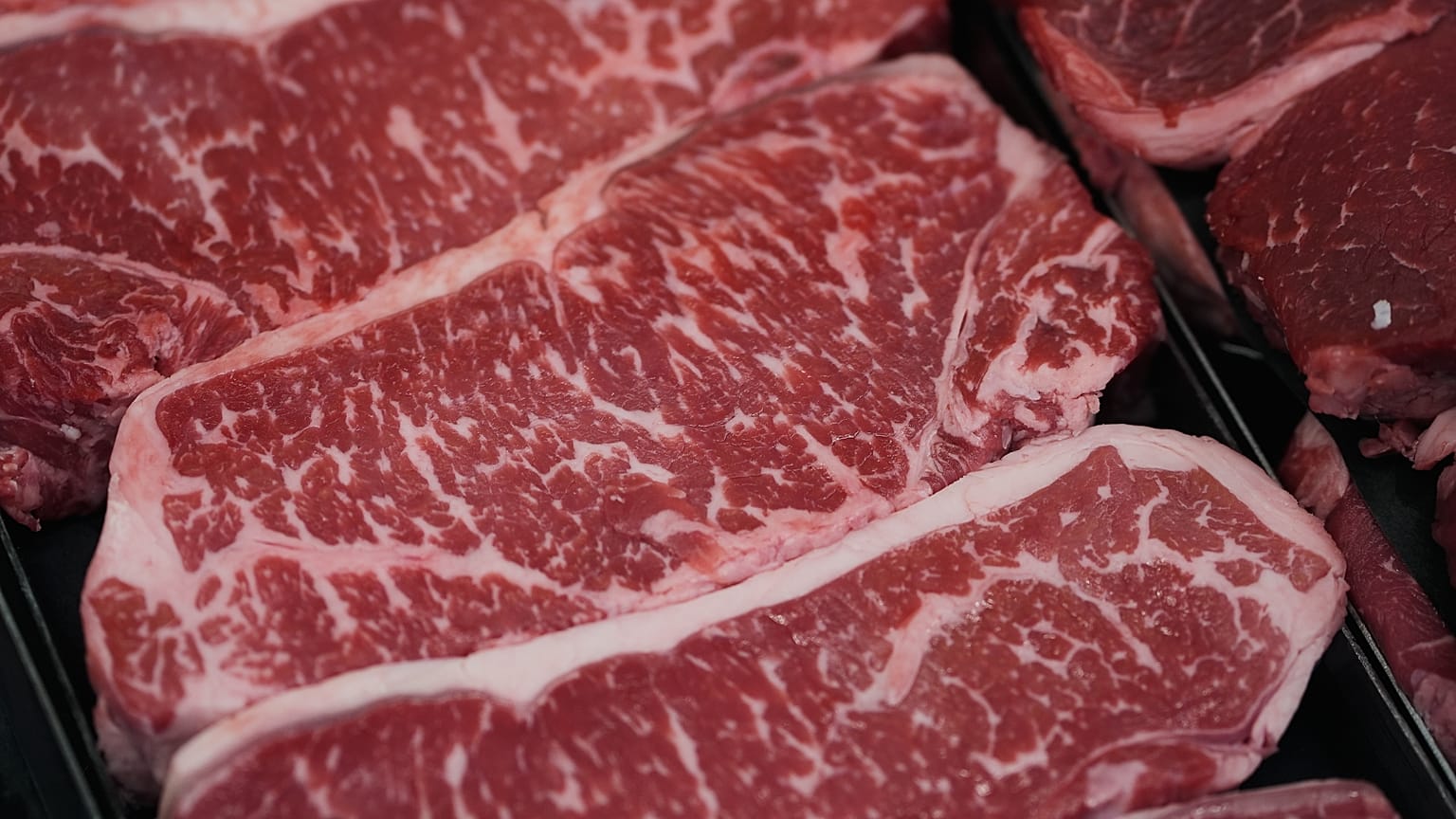
Three food products recorded double-digit inflation. Chocolate prices rose the most, up 17.8%, while frozen fruit followed at 13%, and beef and veal increased by 10%.
Beyond the top three, several other food products also saw notable price increases.
Egg prices rose by 8.4%, followed by butter at 8.3% and lamb and goat at 7.2%. Sugar, jam and honey rose by 6.8%, while fresh whole milk increased by 5.7%.
Products made from root vegetables rose by 5.5%, fresh or chilled fruit by 5.4% and fruit saw an overall increase of 5.3%. Edible oils and preserved fruit each increased by 4.7%. Poultry prices rose by 4.4%, while dried fruit and nuts increased by 4.2%.
Which food products saw price declines?
By contrast, prices fell for several products. Olive oil recorded the largest drop at 22.9%. Prices had risen sharply in recent years, making 2025 a notable reversal of that trend.
Sugar followed with an 11% decline. Oils and fats also fell by 5.4%, while potatoes dropped by 5.2%.
Top food inflation products by country
Annual price changes for food products varied from country to country. The chart below shows how the six biggest food price increases in the EU differ across the continent. All increased by more than 7% within the EU.
Chocolate prices rose by more than 30% in three countries: Poland (33%), Lithuania (32%) and Estonia (32%). Albania only saw a 1% increase.
For frozen food, annual inflation ranged from 2% in Iceland to 32% in Estonia. Data for this product were not available for all monitored countries.
Inflation in beef and vealprices rose over 20% in some countries, twice the EU average of 10%. The Netherlands (23%), Croatia (22%), and Latvia (21%) recorded the highest increases in this key food category.
Beef and veal prices were unchanged in Switzerland. France (5%) and Italy (6%) recorded the lowest increases.
Eggs, a widely consumed product, recorded price increases of 20% or more in five countries. Kosovo saw the largest increase at 30%, followed by Czechia at 29%, Slovakia at 27%, Portugal at 21% and Hungary at 20%.
Egg price inflation varies widely across Europe. In several countries, increases were very small, while prices even fell in a few.
Butter inflation reached double digits in twelve countries. It exceeded 20% in both Kosovo and Sweden.
For lamb and goat, the EU average was 7%, but six countries recorded increases above 10%. Among EU members, Poland saw the highest increase at 14%, followed by Portugal and Ireland at 13%. Sweden recorded an 11% increase, while Spain was at 10%.