
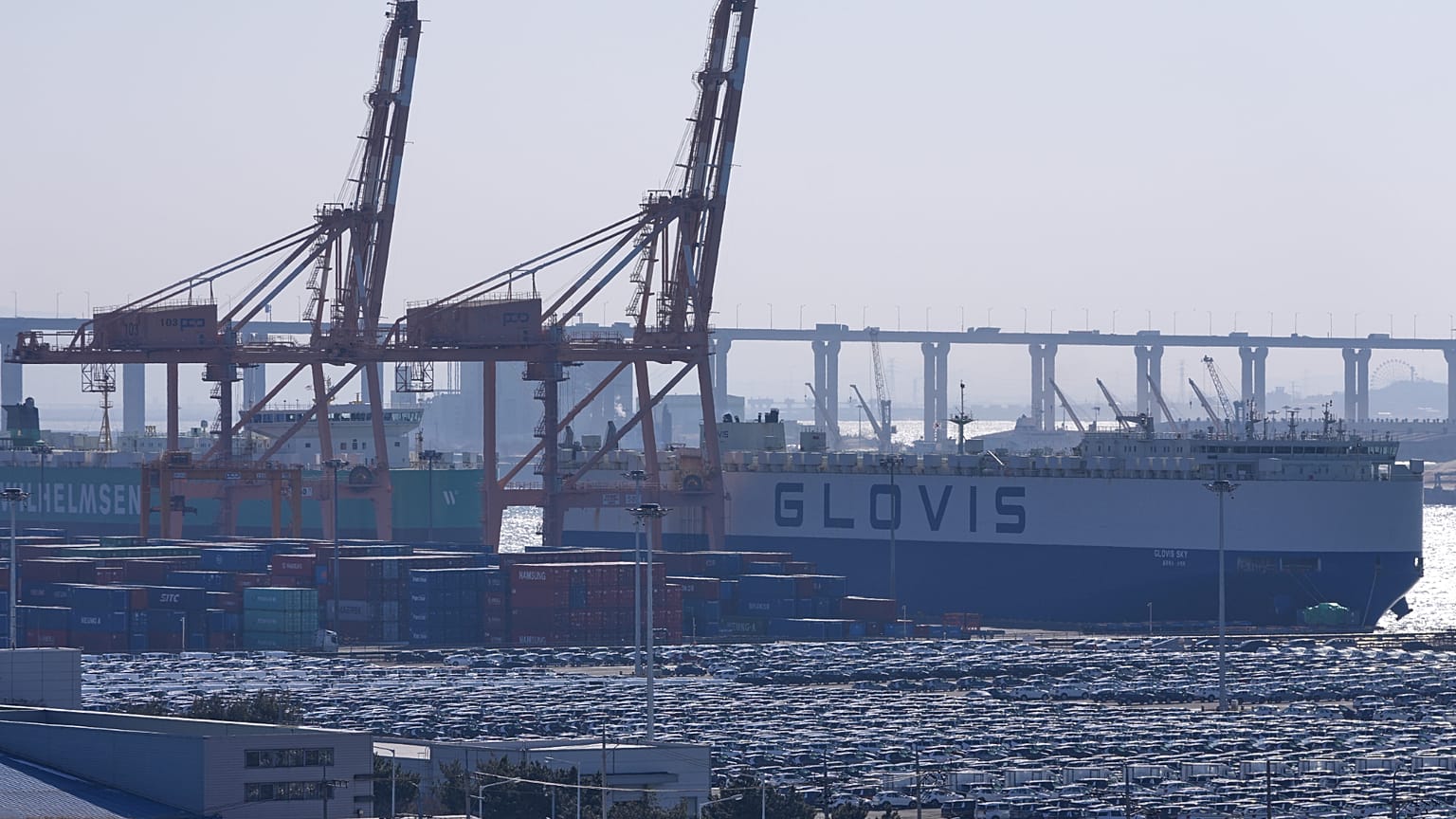













The US president said the tariffs paid on South Korean exports into America would rise from 15% to 25%, criticising the country for not making progress on a trade deal reached by the two nations last year.
Donald Trump said on Monday that he would increase tariffs on South Korean goods from 15% to 25% because the country’s legislature has yet to approve the trade framework announced last year.
 ADVERTISEMENT
ADVERTISEMENT
ADVERTISEMENT
In a social media post, the president claimed the new rate would apply to autos, lumber, pharmaceutical drugs, and “all other reciprocal tariffs”.
“Our trade deals are very important to America. In each of these deals, we have acted swiftly to reduce our tariffs in line with the transaction agreed to,” Trump said. “We, of course, expect our trading partners to do the same.”
The US president previously imposed the tariffs by declaring an economic emergency and bypassing Congress. South Korea, on the other hand, needed legislative approval for the framework announced in July and affirmed during Trump's October visit to the country.
South Korea’s presidential office responded to Trump's threats on Tuesday, stressing its commitment to last year's deal.
The presidential office said that South Korea's Industry Minister Kim Jung-Kwan will travel to the US for talks with Secretary of Commerce Howard Lutnick, while Trade Minister Yeo Han-koo will travel separately to meet with Trade Representative Jamieson Greer. Kim was on a visit to Canada.
Investment pledge
The deal struck last year was tied to a pledge from South Korea to invest $350bn (€295bn) in the US economy over several years, including efforts to revitalise American shipyards.
South Korean lawmakers have submitted five bills on implementing the investment package to the National Assembly. The bills are currently before the assembly's finance committee.
Kim Hyun-jung, a spokesperson for South Korea's governing Democratic Party, said his party will coordinate with the government to organise swift debate and action on the bills.
Assembly officials said the five bills will likely be incorporated into a single proposed law, which will need approval from the finance and judiciary committees before it can go to a floor vote.
Despite the investment pledge, US relations with South Korea have at times been rocky, notably after a raid last year by immigration officials at a Hyundai manufacturing site in Georgia in which 475 people were detained.
Hundreds of South Korean workers were held in detention for more than a week before being flown home after the South Korean government held urgent talks with the US.
A new year of tariff threats
Washington's warnings are a reminder that the tariff drama unleashed last year is likely to be repeated again and again this year — with Trump using the levies as an intimidation tactic.
Just last week, the president threatened tariffs on eight European nations unless the US gained control of Greenland, only to pull back on his ultimatum after meetings at the World Economic Forum in Davos, Switzerland.
Trump on Saturday said he would put a 100% tax on goods from Canada if it followed through with plans to bolster trade with China.
Trump has bragged about his trade frameworks as drawing in new investment to the US, yet many of his deals have yet to be finalised.
The European Parliament has yet to approve a trade deal pushed by Trump that would put a 15% tax on the majority of goods exported by the EU's 27 member states.
The United States is poised this year to renegotiate its amended 2020 trade pact with Canada and Mexico.
There are also ongoing Section 232 investigations under the 1962 Trade Expansion Act, as well as an upcoming Supreme Court decision on whether Trump exceeded his authority by declaring tariffs under the 1977 International Emergency Economic Powers Act.