
















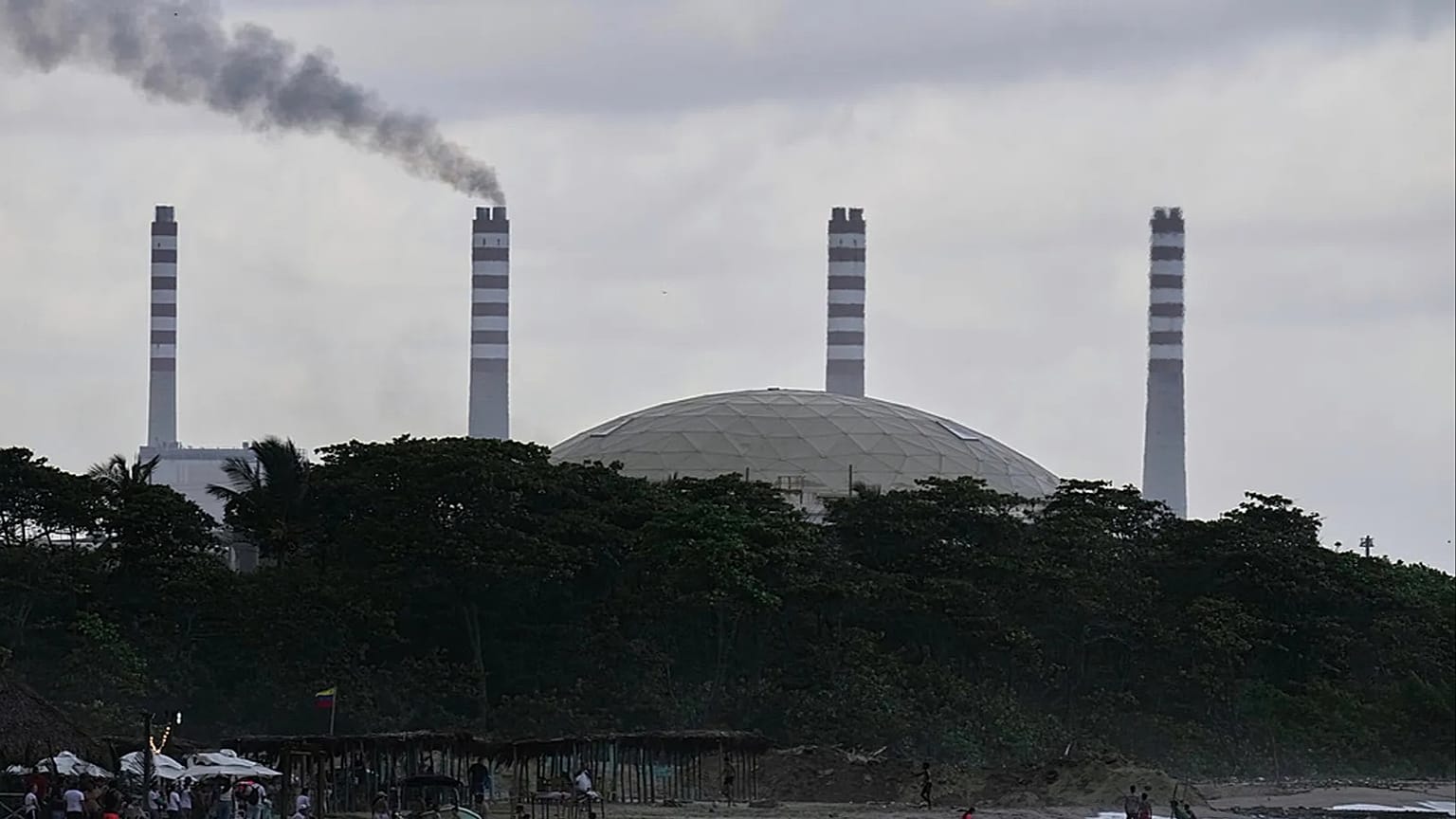













Washington’s action in Venezuela jolted markets, with oil showing volatile price movements as investors considered long-term supply consequences. Gold and defence stocks also inched up.
The shock US intervention in Venezuela reverberated across markets on Monday as Europe and the US eased into trading for the first full week in January, with the crisis affecting stocks and commodities.
 ADVERTISEMENT
ADVERTISEMENT
ADVERTISEMENT
After the US captured President Nicolás Maduro over the weekend, gold and silver rose, while oil prices inched up after an earlier fall. Stock indexes also drifted up, with shares in defence companies outperforming.
"Investors often reach for gold when the news headlines are bleak or worrying as the metal has a reputation for acting as a store of value during uncertain times... investors are hedging their bets by increasing exposure to assets with supposed haven qualities," said Russ Mould, investment director at AJ Bell.
“The FTSE 100 hovered just under the 10,000 level as investors loaded up on shares in gold miners and defence contractors off the back of US strikes on Venezuela,” he continued.
Last Friday, gold traded at around $4,300 (€3,679) per troy ounce but rose to over $4,400 (€3,765) in European trading on Monday. Silver, another haven asset, traded at around $70 (€59.9) at market close on Friday, before hovering around $75 (€64) per ounce on Monday afternoon.
Mould said that while investors often get spooked by geopolitical tensions, an immediate, widespread sell-off does not seem to be on the horizon.
"Investors appear to be taking the view that events in Venezuela will not lead to full-blown war. This situation is still fluid, which means that investor sentiment could quickly change," Mould explained.
Oil prices rise after earlier dip
Oil moved in the “wrong” direction for a geopolitical shock on Monday morning, as it seemed traders were already planning for a longer-term supply increase
Prices of oil usually go up when there is a crisis or geopolitical tensions erupt as investors become wary of production and distribution delays and higher insurance premiums.
"Oil prices dipped as the market weighed up the implications of a potential increase in supplies from Venezuela longer term," Mould explained.
Later on Monday, prices nonetheless inched up, with WTI at €57.79 a barrel, a 0.82% daily rise. Brent was trading at €61.16, a 0.67% increase.
Investors are closely watching the crisis in Venezuela as the country holds the world’s largest proven crude oil reserves as well as significant mineral wealth, including gold, iron ore, and bauxite.
Some traders are expecting oil supplies to increase in the long term if the US upgrades the country's infrastructure, although this could take years to materialise. The Trump administration and the government in Caracas are not providing a clear roadmap setting out how the country's vast resources will be utilised going forward.
“Trump is keen for US companies to invest in Venezuela to benefit from its rich oil reserves. Short-term, there is unlikely to be a flood of new supply due to sanctions, blockades and likely hesitation by oil majors over committing large amounts of money in a country undergoing geopolitical turbulence," Mould continued.
According to a Goldman Sachs analysis released on Monday, combined oil reserves from Venezuela, Guyana, and the US could give the US about 30% of global oil reserves if consolidated under its influence.
With a political transition, Venezuela could raise oil production to 1.3-1.4 million barrels per day within two years and potentially reach 2.5 million barrels per day over the next decade, up from about 0.8 million barrels per day currently, according to Goldman Sachs.
"Regime change in Venezuela would immediately represent one of the largest upside risks to the global oil supply outlook for 2026–2027 and beyond," the analysis continued.
Underutilisation of resources
Venezuela pumped as much as about 3.5 million barrels a day in the 1970s, but output steadily went down in the following decade.
The peak and subsequent dip coincide with the period when international oil majors were the ones solely running operations in Venezuela, since the country nationalised its industry in 1976 and transferred large parts of it to Petróleos de Venezuela S.A. or PDVSA.
Unlike some nationalisations elsewhere, this was initially seen as a technocratic success, since PDVSA was run by Western-trained managers, reinvested profits, and maintained close ties with international markets.
In 2007, President Hugo Chávez forced a “migration” of foreign-run heavy-oil projects in the Orinoco belt into PDVSA-controlled joint ventures, part of his wider push to reassert state control over strategic assets.
ExxonMobil and ConocoPhillips refused the new terms and left Venezuela, triggering a long-running expropriation dispute that spilled into international arbitration and compensation claims, while Chevron accepted the joint venture structure and stayed embedded in the country alongside PDVSA.
Nicolás Maduro, Chávez’s successor, largely inherited that state-first framework as output and investment deteriorated.
The squeeze intensified after Washington sanctioned PDVSA in 2019, leaving Chevron to operate under shifting US Treasury and Office of Foreign Asset Control waivers that allowed limited activity under strict conditions.
The lowest the country has produced was at about 393,000 barrels per day according to OPEC data, a gross underproduction and underutilisation of what is the single largest source of oil in the world.
Defence stocks rally on tensions
When geopolitics turns unstable, defence stocks tend to react to the probability of higher state spending.
Even when a crisis does not become a war, the risk of escalation can be enough to move markets because much of defence revenue is anchored in long contracts and state-backed demand, which investors often treat as comparatively resilient when other sectors face uncertainty.
“It was only natural to see the sector in demand after Venezuela’s leader was captured. BAE Systems jumped 4.4% while on the German stock market, Rheinmetall moved 6.1% higher," Mould said.
Inversely, these stocks dip when there is progress on solving geopolitical tensions.
“Shares in defence companies briefly pulled back before Christmas on progress with peace talks between Russia and Ukraine, yet the US/Venezuela situation has provided a new reason for investors to stay bullish," Mould continued.
Other possible escalations also pushed defence stocks up. These include risks linked to the US's rhetoric on seizing Greenland, threats to intervene if the Iranian government turns violent in the ongoing protests there, and tensions with China,
"Investors are watching China even closer amid speculation it is slowly laying the groundwork for an invasion of Taiwan," he concluded.