













According to new research, people underestimate inequality when they live in segregated social worlds. But when wealth is openly displayed, dissatisfaction rises fast.
Year after year, inequality deepens, hardens, and settles in across the world.
 ADVERTISEMENT
ADVERTISEMENT
ADVERTISEMENT
Fewer than 60,000 of the world’s richest people own more wealth than half of the entire world put together, with a global elite amounting to 0.001% of the population being three times wealthier than the bottom 50%.
A new study by a team at the London School of Economics (LSE) focuses on one factor reinforcing inequality. Most people do not actually see it, or see enough of it, in their daily surroundings to understand the true extent of it.
"One finding that is pretty universal is that people have a pretty bad idea about inequality in society. Some of it has to do with the fact that we don't understand things like the Gini coefficient... scientists and economists talk about these measures, but it just doesn't mean much to average people," Milena Tsvetkova, one of the authors of the study, told Euronews.
Measured from 0 (perfect equality) to 1 (maximum inequality), the Gini Coefficient is used by economists to capture income inequality on a scale from near-ideal distribution to extreme concentration of wealth.
In the European Union, Bulgaria has the highest coefficient or concentration of wealth at 0.384, while Slovakia has the lowest income disparity at 0.217, according to the European Commission.
Of the big EU economies, Germany’s Gini coefficient is about 0.295, France’s is around 0.30, and Italy has a coefficient of about 0.322 — showing Italy has somewhat higher income inequality than its EU peers.
However, these numbers often have little to no relevance or practical application for people who do not handle statistics on a daily basis.
The study explains that these perception biases are largely driven by the fact that people are surrounded by others with similar wealth.
Social networks — friends, colleagues and neighbours — act as distorted mirrors, and people extrapolate from what they see locally and mistake it for the average.
"A lot of times we blame the fact that we tend to be friends with or form social networks with people who have similar wealth to us... and so then we assume everyone lives like we do, we think society has the same wealth we do and that there isn't much inequality," Tsvetkova explained.
If people do not observe inequality regularly, they underestimate the severity of the problem and are consequently less likely to take political stances and actions in opposition to it, according to the study.
The experiment
To test these dynamics, the authors conducted an online experiment involving 1,440 participants, who were placed into groups of 24. Participants were randomly assigned to be either “rich” or “poor” and were able to see the scores of only eight others.
Which eight people they observed depended on one of six predefined network structures, ranging from highly segregated groups to networks where wealth differences were especially visible.
Over the course of three rounds, participants voted on a tax rate that redistributed resources within their group. At the end of the experiment, they were asked how satisfied they were with their outcome and how fair they believed the final distribution to be.
The contrasts between conditions were striking. When poorer participants were mostly paired with other poor participants, they had little sense of how wealthy the rich actually were.
Their situation appeared normal by comparison. In these groups, poorer participants tended to vote for lower levels of redistribution. As a result, they remained materially worse off — but reported higher satisfaction and were less likely to judge the outcome as unfair.
In networks where poor participants observed many rich ones, they voted for significantly higher taxes, leading to stronger redistribution and better material outcomes for themselves. The voting behaviour of richer participants, however, changed very little across conditions.
The emotional responses told a different story. Despite ending up better off, poorer participants who were exposed to wealth reported lower satisfaction and were more likely to view the final outcome as unfair. Visibility, rather than payoff, appeared to shape how people felt about the result.
The authors conclude that increasing the visibility of wealth can raise support for redistribution — but often at the cost of heightened tension.
“When everyone observes the rich, the rich don’t really change their opinion,” Tsvetkova said.
“But the poor are the ones who start demanding more. And when you see that there is actually much more for the rich to give, that can make you unhappier than when you didn’t know the extent of their wealth or how different it was from yours.”
Economic segregation?
One reason inequality doesn't always translate into widespread anger or sustained political pressure, the study suggests, is that different income groups increasingly inhabit economically segregated social worlds.
Wealthier people tend to live in separate neighbourhoods, holiday in different places, send their children to different schools, and shop in spaces that are largely inaccessible to poorer households. The result is not simply physical separation, but parallel social lives — with limited opportunities to directly observe how others live.
According to the study, this separation helps explain why high levels of inequality can coexist with relatively low levels of social conflict. When people primarily compare themselves to others like them, inequality becomes less visible, and dissatisfaction less acute.
Tsvetkova points to the early months of the COVID-19 pandemic as a moment when those invisible boundaries briefly collapsed. At first, there was a widespread sense that “we’re all in this together”. But that perception did not last.
As lockdowns took hold, differences in living conditions became impossible to ignore. Quarantine, remote work, and online schooling drew attention to stark contrasts between those isolating in spacious homes and those confined to small apartments with entire families. The shared crisis, Tsvetkova argues, revealed that experiences of the pandemic were profoundly unequal.
In the period that followed, she observed a noticeable shift. Displays of wealth became more muted, and public expressions of luxury receded.
“There was a bit of a withdrawal of the rich,” Tsvetkova said. “Now we are moving into a period where the rich don’t care anymore, probably enabled by certain politicians and political movements.”
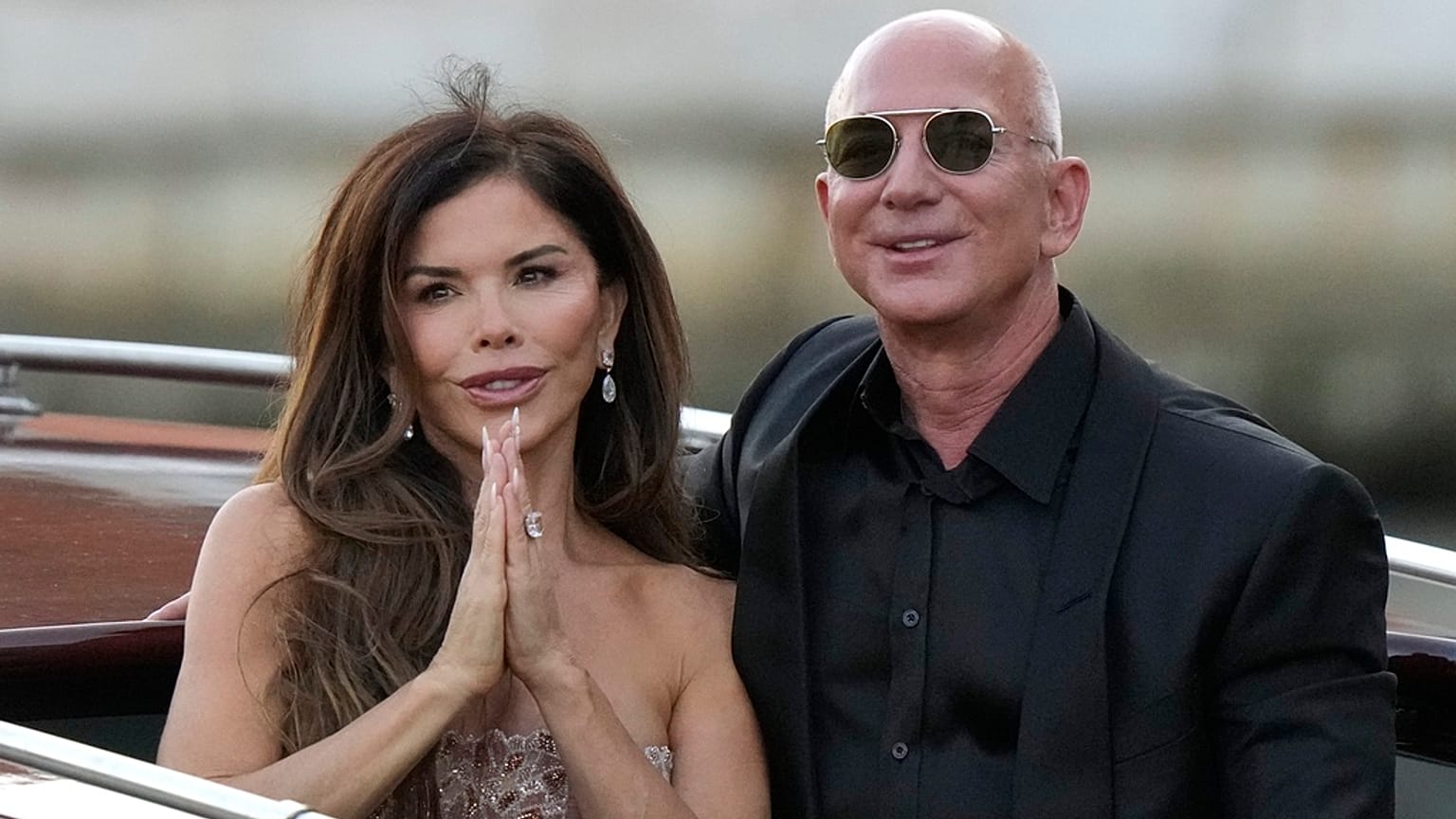
Today, she argues, conspicuous wealth is again difficult to miss — from headline-grabbing celebrity weddings to ultra-exclusive private events that showcase a level of affluence far removed from everyday life.
“I mean,” she asked, “people notice this, right?”