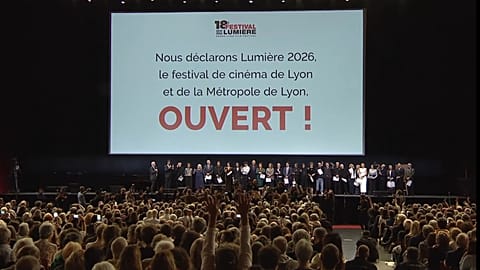














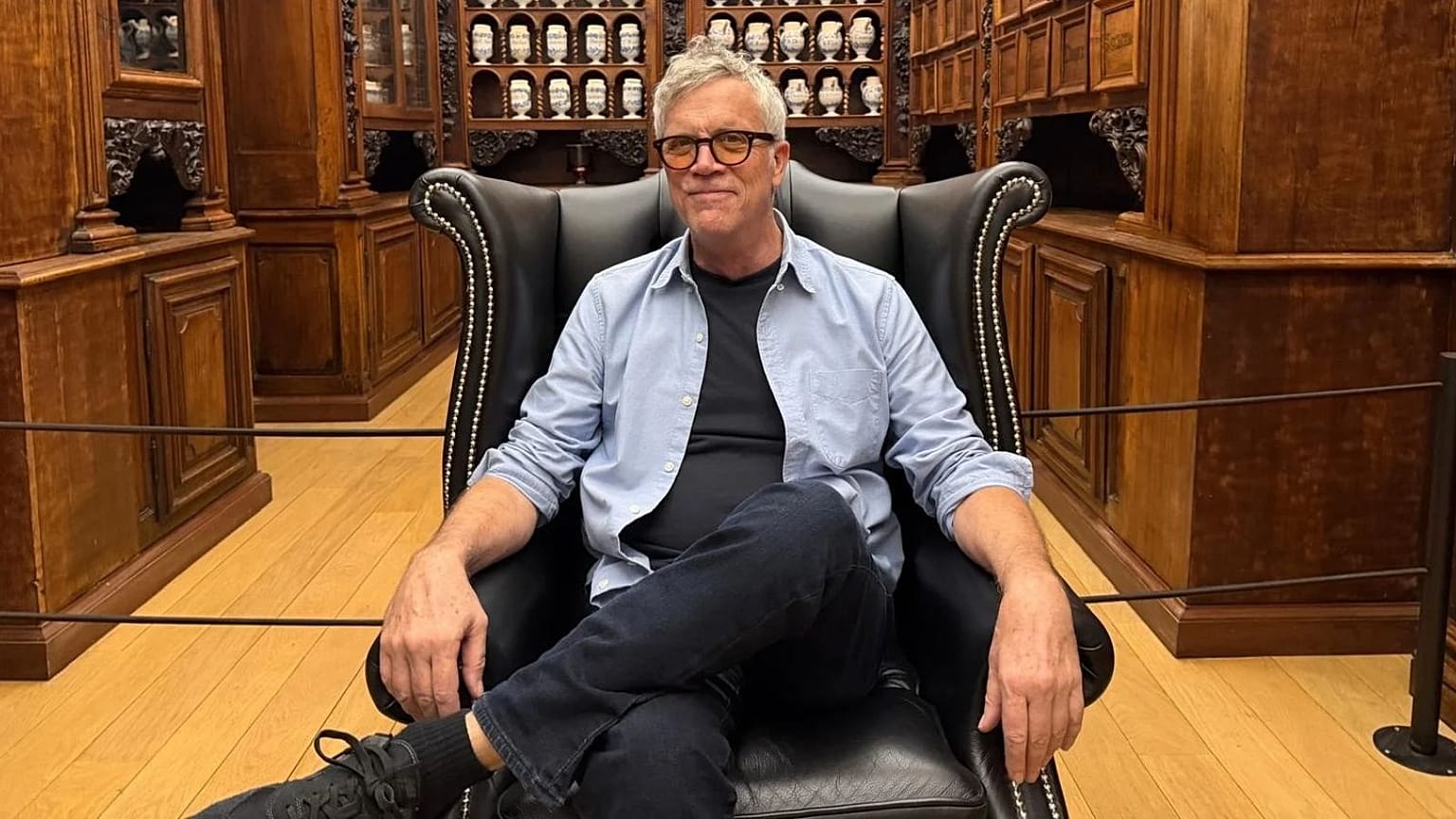













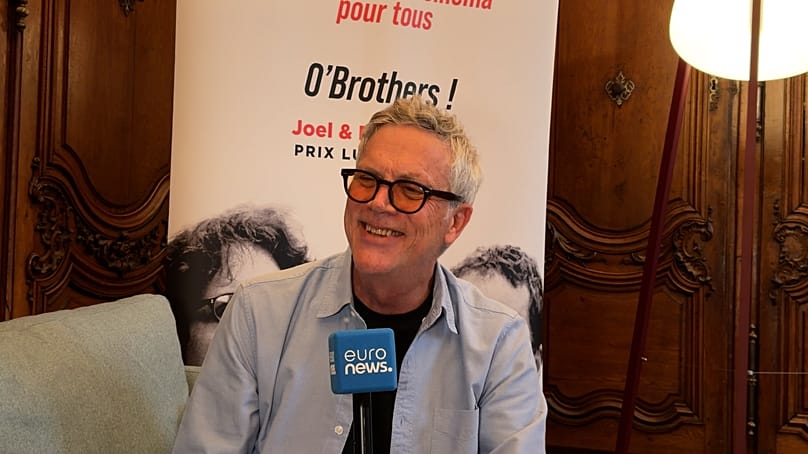
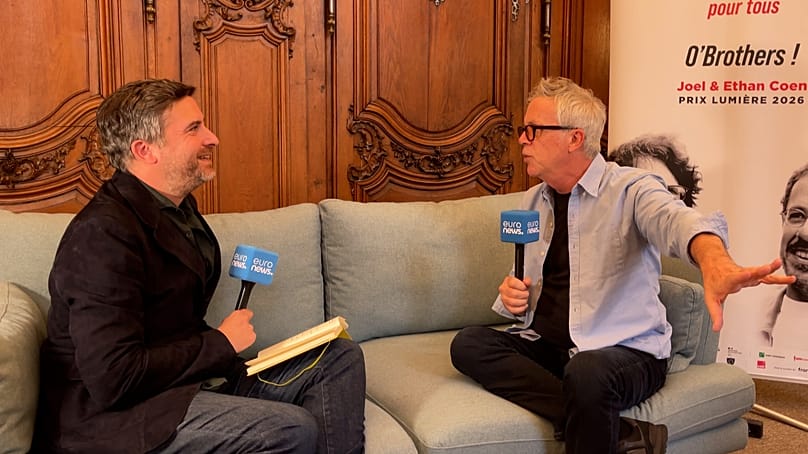
"It is a time to remember how important it is to protect our freedoms, and our ability to speak freely." Euronews Culture sits down with celebrated filmmaker Todd Haynes during this year's Lumière Film Festival.
One of the guests of honour this year at Lyon’s Lumière Film Festival is none other than Todd Haynes, one of the most important and singular voices in contemporary American cinema.
 ADVERTISEMENT
ADVERTISEMENT
ADVERTISEMENT
The celebrated director and screenwriter of Far From Heaven, I’m Not There, Carol, and May December is known for his pioneering work associated with the New Queer Cinema movement of the early 90s. He then gained acclaim for his films exploring the emotional repercussions of social repression and the unspoken desires revealed by marginalized experiences.
He attends the Lumière Film Festival to present the restored versions of his directorial debut Poison (1991), a provocative exploration of AIDS-era perceptions. He also presents the Julianne Moore-starring psychological drama Safe (1995), marking the first time that these two films have screened in French cinemas since their initial releases.
Euronews Culture sat down with Todd Haynes during the festival to discuss the enduring timeliness of Poison and Safe, his thoughts on the evolving Hollywood ecosystem, as well as his upcoming film De Noche.
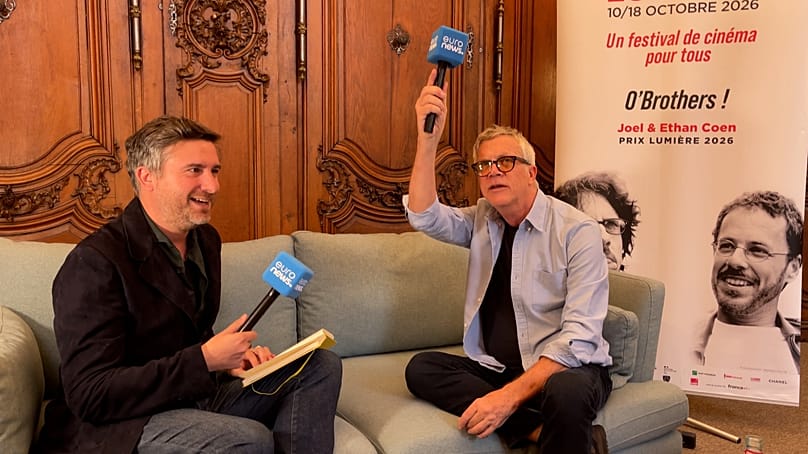
Euronews Culture: How does it feel to be at the Lumière Film Festival in Lyon, the birthplace of cinema?
Todd Haynes: Pretty thrillingly natal! No, really, it's a festival I've been hearing so much about for so long. And it really is such a celebration of movies of all kinds, of every genre, of every era. Restorations are presented, artists are attributed, and it's a really remarkable place and atmosphere, and it's so much about just the filmmaking and the films.
There's a retrospective of your films, including two newly restored versions of Poison and Safe. How do you look back on these films, and how do you feel about the fact that there are going to be audiences at this festival who are seeing these two films for the very first time?
I was there for the introduction of Poison. People were asked in the theater who were seeing it for the first time and almost every hand went up! And it was a completely full theatre, so that just demonstrates a kind of interest and curiosity about what's being shown in Lyon, and an audience that is very enthusiastic about it.
So, it's incredibly meaningful. These are my first two features. They are very, very different. Poison came out in the height of the AIDS era and it was among the first couple of films that would join other films in being categorised as the New Queer Cinema. None of which, I don't think, would have been possible outside of that political and socio-economic crisis - the public health crisis of AIDS. In certain times, those kinds of conditions make creating film and documentary, and protest and organised resistance, essential. They drive a kind of urgency that we don't always feel in our medium or our market. That was absolutely true for Poison. And then I made a film [Safe] that also is, in my mind, inconceivable without the AIDS era as a framework. It's a film that takes the place about as far away from the battlefield, if you will, but still engaged. A lot of the themes and issues deal with illness, and the body, and feeling alienated from the world around you...
I had the pleasure of re-watching both films, and that sense of isolation in Safe still feels incredibly prescient.
That’s always surprising and encouraging to hear. I understand how that might be what people could say about Safe. The film was watched again during Covid. There was a lot of discussion about the film and articles that came out were sent to me. And sadly, these issues remain relevant when we're hit by things that are overwhelming and that challenge every single aspect of the way we lead our lives, and the assumptions about how to live our lives that we take for granted.
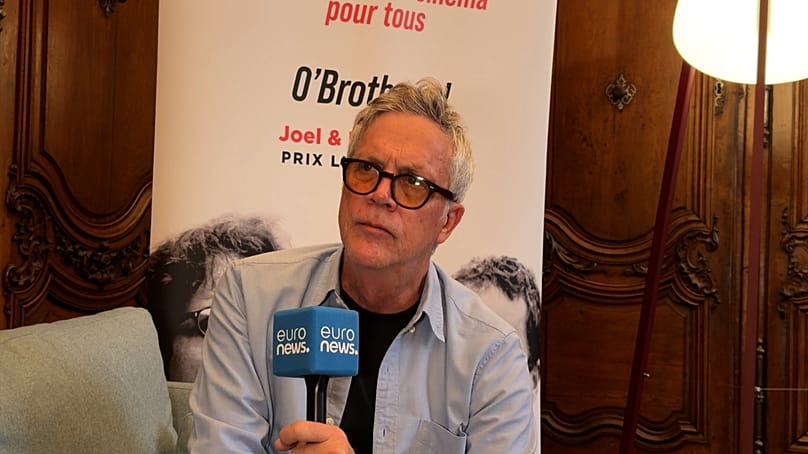
Both explicitly and implicitly about the AIDS crisis, do you find it heartening or disheartening that Poison and Safe still feel timely? After all, Poison was made at a specific time, and there are many members of the gay, trans, queer communities who continue to feel threatened and continue to express fears...
Absolutely. One does feel at times like we’re in a replay, if not crashing backwards in battles we’ve fought. Battles around reproductive rights, around tolerance and acceptance over queer communities and trans communities. Poison in particular addressed very much that sense of vulnerability that the community was feeling under the siege of AIDS and HIV.
Jean Genet, who's a writer and thinker and poet and playwright who I've always loved - but also derived a certain energy from his attitude about how important it is to remember that being defined marginal... The goal to that is not necessarily to find your way back to the table and become just like everybody else. For him, his queerness, it came out of a criminal background. He liked that homosexuality had this criminal aspect to it. He used that as a way of weaponising his critique of dominant culture. Poison was made at the very end of the 80s and we needed a voice like that.
I'm heartened to see that some of Jean Genet’s books are displayed next to DVDs of your films at the Lumière marketplace...
Oh, I didn’t see that. That’s awesome!
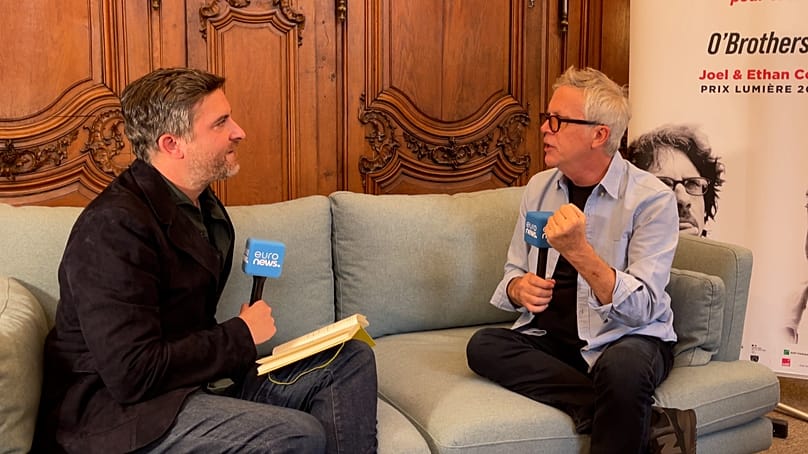
From a European perspective, when you look at present day Hollywood, it’s hard not to see a sense of regression. For instance, to take a recent example, the Paramount-Warner merger feels like it threatens the financing of films from a plurality of voices. What are your thoughts on the evolution of the studio system and Hollywood at the moment?
It's distressing when you see the conglomeration of huge media organizations that one might imagine would provide enough revenue and foundation for risk-taking to still occur. But sadly, that is rarely what you end up seeing. I don't feel it, particularly in the moment, among some of the big streaming companies. There's a sense of wanting to repeat what worked the last time, and keep replicating what the audiences seem to crave. And that's tough.
For my last couple films, we've really gone elsewhere. I mean, we did sell May December, my last feature, to Netflix - and they were a fantastic company, full of incredibly smart people who really believed in the film. But the way we made the film was through the limited amount of investment that we absolutely had to have to get it done so we could all retain our creative freedom and identity. That's how we put together the financing for my current film that I'm finishing now, De Noche. And in that case, I really do want a company fully committed to theatrical release.
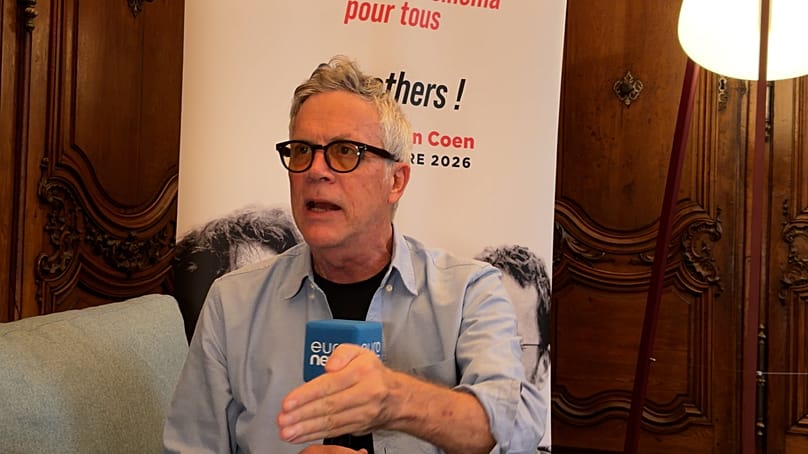
Discourse around film and the creation of film feels in jeopardy at the moment. For example, we saw it this year at the Berlinale with the controversy surrounding Tricia Tuttle and the pro-Palestinian speeches made by invited filmmakers. Do you fear or foresee that cultural institutions will become increasingly threatened by political pressure, like in Berlin?
Sure. I think Germany has a unique, specific, and at times contradictory attitudes or laws around how we discuss Israel, for instance. There's this happening on the one hand where speech is kind of being watchdogged and limited, and people have a hard time of just saying that it doesn't have to be about Jewish people to have problems with the policies of Netanyahu, or whoever it may be.
But at the same time, the AfD is rising in Germany... So you have that complete sort of disconnect between these two forces - one trying to make remedy after an incredibly horrific past in history, and then all of a sudden, wanting such extreme change to come into place from completely the opposite direction.
So, Germany is a unique case, but I think we're feeling similar things about a crackdown on content and what is called ideology or point of view in the United States. It's targeted at the media, it's targeted at the news industries, and it's targeted at universities... So it is a time to remember how important it is to protect our freedoms, and our ability to speak freely.
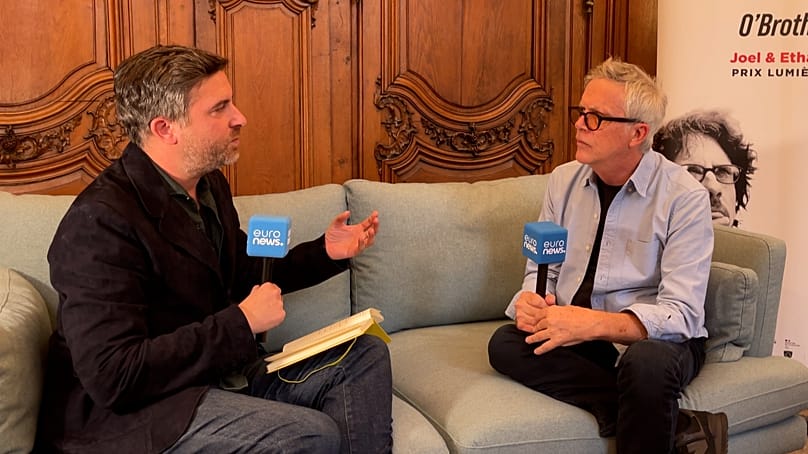
To temporarily move away from the doom and gloom, I wanted to share with you that the first film of yours that I saw was Velvet Goldmine (1998), which had a profound impact on me. I remember seeing the trailer for the first time, watching Brian Slade in his feather outfit on stage, hearing the gunshot followed by the needle drop of T. Rex’s '20th Century Boy', and... it still gives me goosebumps.
(Laughs) Awww....
The film turns 30 very soon... How do you look back on Velvet Goldmine and please tell me there’ll be a resotration?
Oh, it's another film that sort of realised or completed a phase of my creative life that was very profound and deep in that whole era of music and the early 70s. And the very interesting relationship between the UK and the US in how that music came to be. Criterion Collection is working on the release of Poison that will coincide with that 30th anniversary. I'm very, very excited about that.
Music plays a big part in your filmography – whether it’s Karen Carpenter, Bob Dylan, The Velvet Underground... I read somewhere that you’re working on a documentary about The Cure...
You know, that was news to me! (Laughs) Somebody brought it up... I mean, I love The Cure and they were formative in my life. Their music and evolution as a band from record to record... But no, it's not something I'm doing, and I'm not exactly sure where that came from! (Laughs)
Can you blame people for trying to manifest this project into existence?
(Laughs) Exactly!
Well, glad we got that cleared up! You mentioned your upcoming film, De Noche... You’ve wrapped, right?
We've wrapped the film and we're in post-production. We're moving from the picture cut to the sound. The whole production was based in Mexico. And this film was a particular struggle to get to this place, so I'm very proud of it.
You mention struggles...
Oh well, it began with the relationship with an actor [Joaquin Phoenix] who came to me for it and we moved forward. We got very close to production two years ago, and then he had a very abrupt or unexpected change of heart and walked away. And so De Noche 1 fell apart. But it was remarkable how the financiers and the investors who were there for that version came back, and demonstrated loyalty to the project and a film that means so much to all of us.
I’m glad De Noche 2 happened, with Danny Ramirez and Pedro Pascal starring. You also worked with Jon Raymond, who you’d previously collaborated with on the miniseries Mildred Pierce. I’m a huge fan of his work with Kelly Reichardt, especially on Old Joy and First Cow, which is a masterpiece in my book.
I couldn't agree more. Jon is a novelist first and has become a screenwriter. I’m so proud to have played even the smallest part in introducing Jon to Kelly when I moved to Portland, Oregon. They met each other, and they really hit it off. Many of his short stories were the first places that she went to in order to resuscitate a career in feature filmmaking that she had kind of put aside. And amazingly, well before she ended up even settling down in the Pacific Northwest, she and Jon really became the chroniclers of that region, its history, of Portland and beyond. So that unexpected move in my life to Portland from New York City... There have been so many rewards from it. And Jon is one of my dearest, closest friends. He's the most fabulous human being.
I can't wait to see De Noche. Is there anything else you can tell us about the film?
I don't know if I've ever quite seen anything like it before as a concept. It sort of begins as a detective story in the late 30s in a very corrupt Los Angeles, and through circumstances and the corruption that these two characters have become embroiled in, they're forced to leave Los Angeles and flee to Mexico. A very inexplicable, unexpected relationship begins to form between the two of them. To get to that point, a lot of dynamics of divisions between them in terms of power and race are overcome bit by bit, step by step, through the exploration of each other as lovers. It ultimately becomes a love story that that leaves you, I hope, longing and wondering what will happen between these two men.
To wrap up, at the opening ceremony of the Lumière Festival, you shared with me that the first film that had a profound impact on you was Mary Poppins. What was it about that film that marked you?
For one thing, it was the sort crown jewel of the Disney experiment, in terms of the films that came out of Disney at that time. The score is so exquisite, the two actors who take the leads are just perfection, it's so beautifully produced... I think for a three-year-old's imagination, there’s something about a maternal subject who comes with unique powers, and also discipline. Just a curious combination of various aspects of that character. I think seeing a movie on the big screen for the first time can't be overstated. The sheer power of that... I think all of those things conjoined to make it a sort of escapable moment of introduction to this medium.
This year has been a very good one in terms of cinema attendance and that being mirrored at the box office. Still, there are cinemas struggling and many fears expressed about the threat that artificial intelligence represents for the creative arts. As broad a question as this is, are you optimistic about the future of cinema?
I have to be optimistic. Because it's a medium I just love. I wasn't able to shoot De Noche on film, as we couldn't afford it, but it will always be my starting point on any film that I make. And what you are seeing among young people is an incredible desire to go out of their houses and leave their home screens and their phones behind and join in the experience of watching a movie on the screen.
You know how we all thought vinyl was going to go away with the introduction of CDs and MP3 and there was a sort of counter movement that was like ‘No, I want to hold it in my hand'... The desire to actually experience it and the warm resonance of hearing vinyl play with a needle on... Sometimes the simplest technology remains the best and the most profound. I hope that continues and I hope we can see that still being played out. It is about younger people and exposing them to what that experience means, and what that's like to share communally in a theatre in the dark.
On that note, Mr Haynes, thank you very much for your time.
The Lumière Film Festival takes place until 18 October in Lyon, France. The restored versions of Todd Haynes' Poison and Safe are being screened, as well as Far From Heaven and I'm Not There. Safe is out now on Criterion 4K UHD Blu-ray.
Todd Haynes' new film, De Noche, finished shooting in April 2026. No release date has yet been announced.