















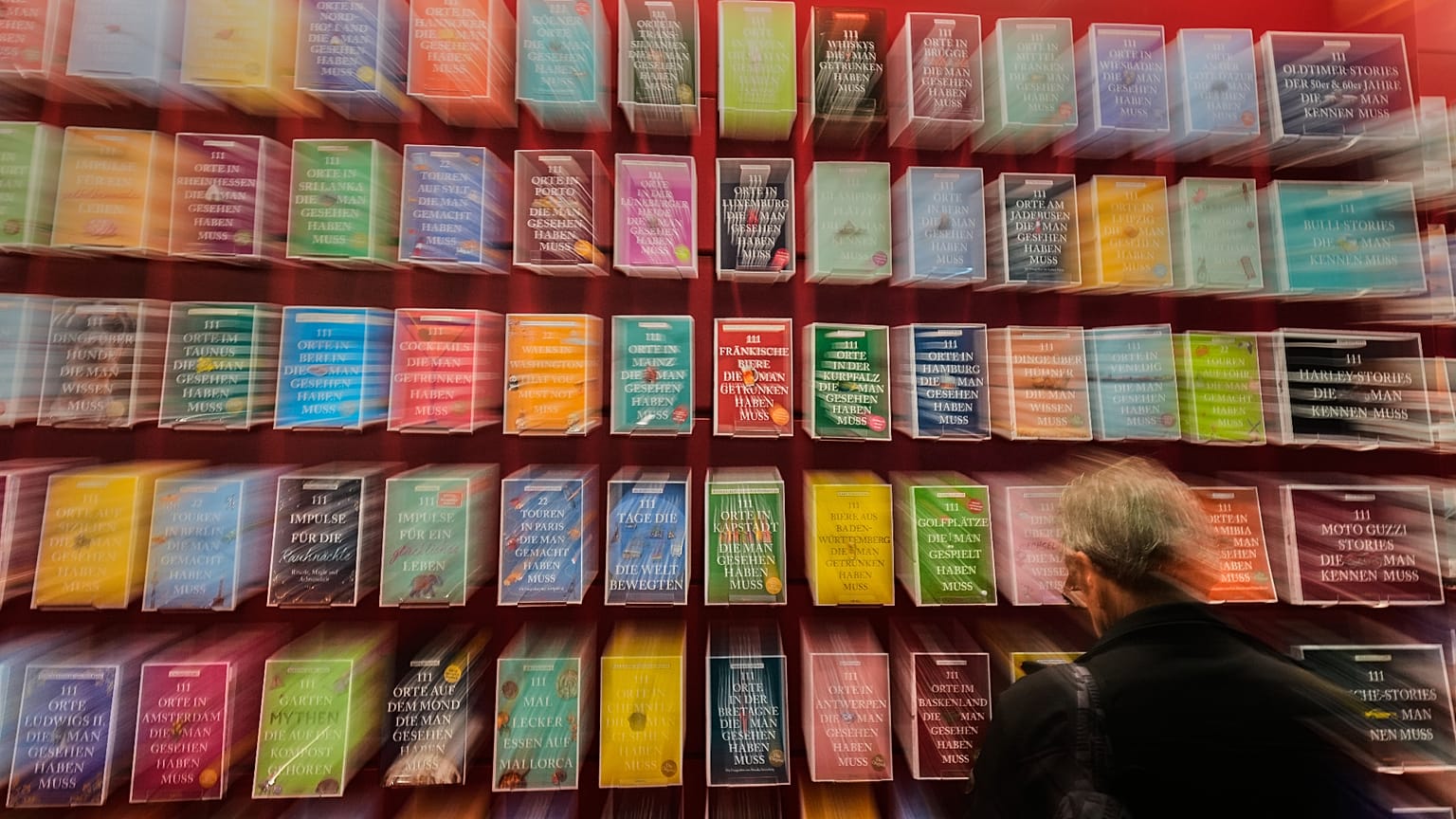













The three frontrunners 'Crashout', 'Ragebait' and 'Peak' are in the running to become Germany's youth word of the year 2026, with anglicisms particularly trendy. The winning term will be announced this Saturday at the Frankfurt Book Fair.
For weeks, young Germans have been able to vote on which word best reflects their generation. The favourites are "Crashout", "Ragebait" and "Peak". Together, they attracted votes in the mid six-figure range. The poll was open to 11- to 20-year-olds.
 ADVERTISEMENT
ADVERTISEMENT
ADVERTISEMENT
On Saturday, Langenscheidt, the publishing house behind the vote, will announce this year's winning term at the Frankfurt Book Fair. These are the favourites.
Crashout
If you "crashout", you've lost control. "Completely losing your composure, freaking out or emotionally exploding," is how the Langenscheidt jury defines the term, which has already made it into the top three.
The twist: it does not always mean that someone is genuinely overreacting. The word can also be used ironically, especially when an emotional outburst is triggered by something trivial.
Ragebait
This term refers to digital posts on social media: content deliberately designed to provoke a reaction. "With provocative takes, blatant false claims or completely wild opinions, people try to stir up anger," explains the Langenscheidt jury.
For responses are the currency on platforms such as Instagram or TikTok. Reactions bring clicks, comments, shares and reach. The more outrage there is, the more often a post is shown: the algorithm boosts it.
Peak
This originally English word can in fact be translated literally in German: it is about peak values, highlights and summits. "If something is peak, it is the best of the best – the absolute high point, maximum quality or simply 10/10," is how the Langenscheidt jury puts it.
The other most voted words of 2026:
Altogether, 43 percent of all votes cast went to the top three terms, according to an analysis by the publisher. Since 2008 it has been choosing the Youth Word of the Year.
For Langenscheidt's spokesperson there was a surprise. The popular 67 (Six Seven), which comes with a hand gesture, only made it into the top ten and not into the three most popular terms. It is less about a fixed meaning than about belonging. The trend went viral thanks to TikTok, basketball memes and above all the song "Doot Doot (6 7)" by US rapper Skirlla.
"We were actually sure that 67 would end up in the top three," said the publishing house's spokesperson. "Once again, it shows how unpredictable and fast youth language evolves." The fact that many of the words are Anglicisms, on the other hand, came as little surprise to the publisher – that was already the case back in 2023.
Another absolute classic, "Digga", was among the submissions once more, but the term has never yet taken first place.
In addition, the line "Du bist gut genug" ('You are good enough') from a song by KitschKrieg, Shirin David and Blumengarten made it into the top ten. The short sentence went viral on TikTok and other platforms and has also delighted audiences abroad. According to the Langenscheidt jury, there are now countless memes, remixes and parodies of it.
Another term, "Gute Käse", does not have a literal meaning but roughly stands for "really good" and "solid", and ranks among the ten most popular expressions. "Macker" can mean boyfriend, crush, mate or simply a guy, depending on the context. "Schere" comes from gaming and is used in the sense of "Sorry, my bad".
Yet another language made it into the top ten: the Turkish version of the word "super". The term became widely known through a viral video of an ultramarathon runner who, when asked "How are you?" after his race, simply replied "Süper".
"Mehrzweckeier" ruled out by jury
The jury also excluded a term this year that had been submitted many times: "Mehrzweckeier". The expression first appeared at a demonstration against the reintroduction of conscription. The placard originally carried the slogan "Merz leck Eier", which was confiscated by the police. The protester then faced an investigation for slander and defamation.
Afterwards, a campaign on Reddit called on people to submit the altered term "Mehrzweckeier" as a candidate for the 2026 Youth Word of the Year. The jury vetoed it "because the term stems from a campaign and at the same time is based on a personal insult", as the reasoning puts it. It therefore meets two key exclusion criteria, the jury said.
Gammelfleischparty: The very first Youth Word of the Year
In 2008, "Gammelfleischparty" was chosen as the very first Youth Word of the Year. It refers to an over-30s party and is a cynical comment on how young people see older generations.
As the years went by, terms such as "hartzen", "swag" and the acronym "Yolo" ('you only live once') were voted winners.
More votes than ever before
Thanks not least to social media and Susanne Daubner reading out the shortlist on the main German news programme Tagesschau, the vote on the Youth Word of the Year has attracted huge attention.