




























Locals living in Etna’s shadow face volcanic ash clean-up and hidden health costs. Is Sicily finally seeking solutions?
When in March 2021 Emilia Privitera started coughing relentlessly, she initially worried she might have caught COVID-19 again. Then when the test came in negative, she thought it could be just a seasonal allergy.
 ADVERTISEMENT
ADVERTISEMENT
ADVERTISEMENT
“But the cough persisted for weeks, and my lungs would make a strange hiss sound when taking a breath between one cough and the other,” she tells Euronews Earth. “So I went to a specialist, and he found something I’d never expected: some almost imperceptible ash particles stuck in my lungs.”
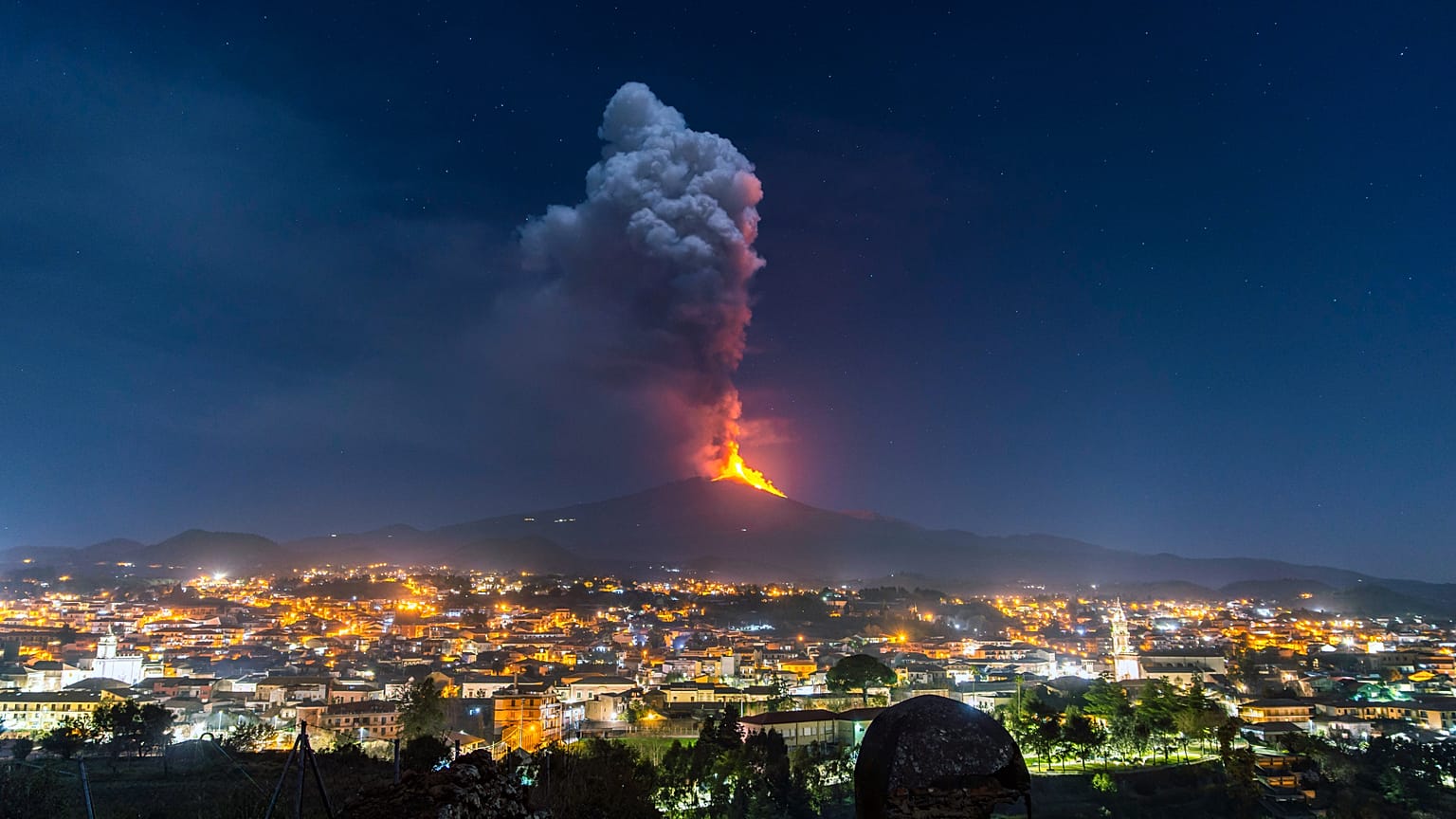
Privitera lives in Nicolosi, a town near Sicily’s second largest city, Catania. It is perched on the slopes of Mount Etna, Europe’s highest and most active volcano. At every eruption – which can take place multiple times a year – her symptoms come back, and it’s the same for hundreds of other residents in the area.
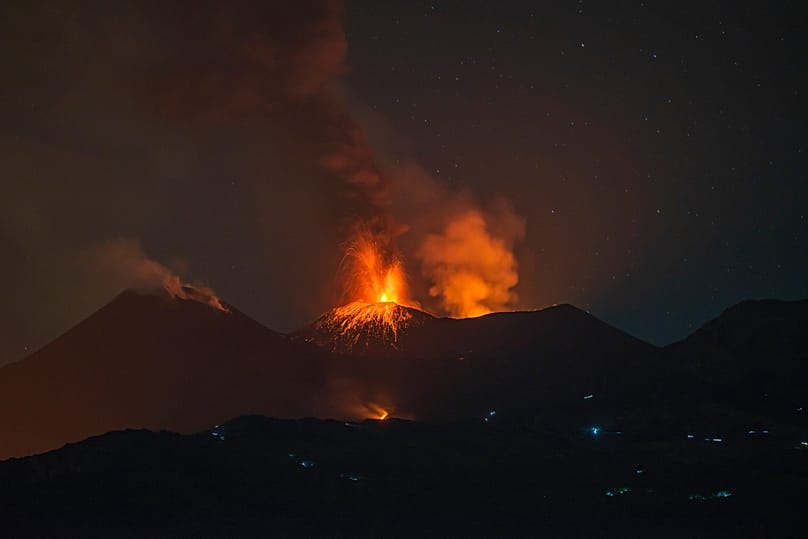
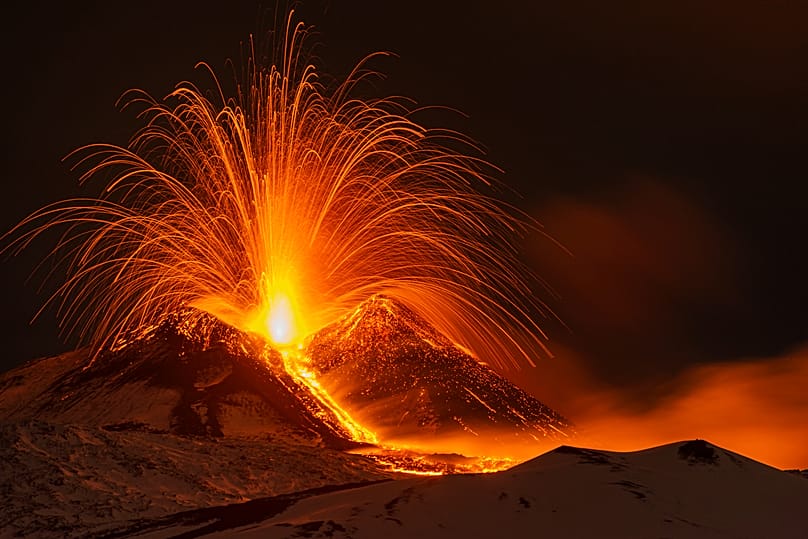
In recent weeks, an intense series of eruptions has brought Mount Etna back to international headlines for its fiery show, as well as for grounding hundreds of flights for a week.
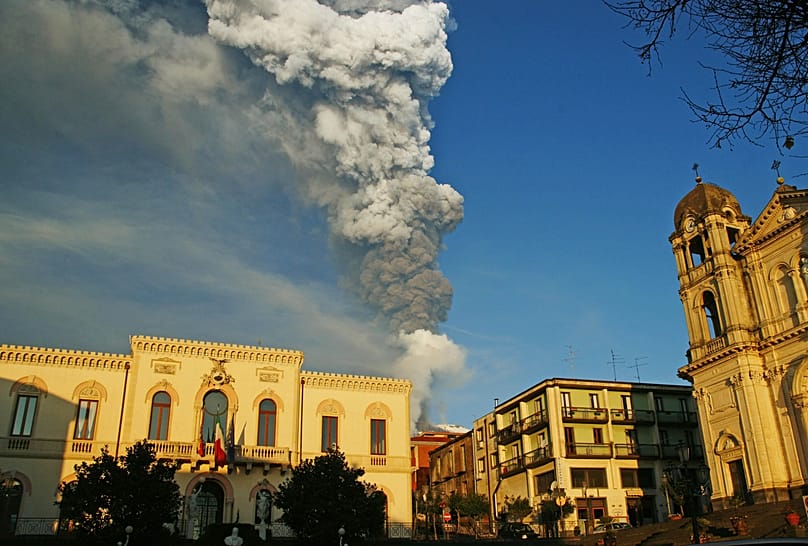
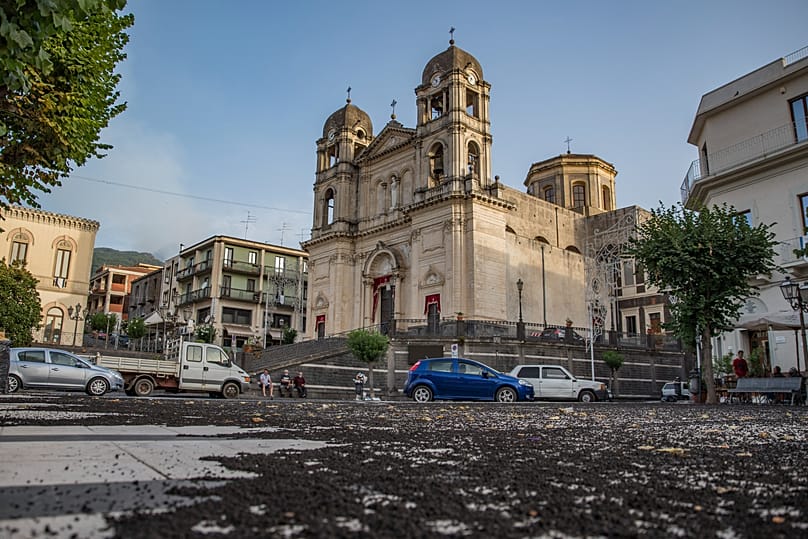
But while millions of people marvel at these natural phenomena, less attention is paid to the people living with the consequences of steady volcanic ash release. In periods of intense volcanic activity, ashfall can reach thousands of tonnes a day, blanketing towns across the region.
The hidden health impacts of volcanic ash
Volcanic ash consists of very fine particles of rock, minerals and volcanic glass, and can easily get stuck on roofs and hard-to-reach corners of buildings and streets for years.
This ash can act as a mineral-rich fertiliser that improves soil drainage and water retention on surrounding land. But the particles also pose a hidden health risk – particularly when they are inhaled after being stirred up by wind or vehicles on ash-covered roads.
A 2013 paper on Etna's 2002 eruptions – among the most intense in recent times – found a significant increase in emergency department visits for acute respiratory illnesses, cardiovascular conditions, and eye irritation during the eruption compared with the same period the previous year.
Daniele Lombardo, co-author of the study, explains that the fine fraction of volcanic ash is capable of penetrating deep into the lungs, where it may trigger inflammation, oxidative stress and respiratory irritation, especially among children, older adults, and people with chronic respiratory disease.
The University of Palermo has also previously conducted studies investigating elevated rates of thyroid cancer in populations living in the Etna volcanic area, alongside evidence of increased exposure to trace elements associated with volcanic emissions.
Patients in Catania face a ‘worsening’ of respiratory conditions
Nunzio Crimi, a pulmonologist and allergist based in Catania, cut his summer vacation short this year after receiving a number of emergency calls from his regular patients who already suffer from respiratory disorders.
“Patients with already fragile immune systems or pre-existing breathing medical conditions, like allergic asthma and chronic bronchopneumonia, are more prone to get sick from the ashfall and can experience quite serious worsening of their conditions,” he tells Euronews Earth. “Especially those whose respiratory systems have been weakened by past experiences of pneumonia or COVID tend to suffer the most.”
During the early August Etna eruptions, the Sicilian Department of Civil Protection, which handles disaster prediction, prevention and emergency management, reported an increase in patients rushing to hospital emergency rooms in the province of Catania.
They shared similar symptoms: eye irritation or conjunctivitis, coughing, a runny or irritated nose, and sneezing. Crimi says he saw an eight per cent increase in medical appointments compared with normal.
Italy isn’t the only European country grappling with the issue. In Iceland, the 2010 Eyjafjallajökull eruption had lasting health effects. Researcher Gunnar Guðmundsson found that respiratory symptoms and psychological distress persisted for several years among the residents most heavily exposed to ash particles, particularly those repeatedly exposed to ash resuspension by wind after the eruption.
Animals can also be severely affected by volcanic ashfall.
"If ashes are not quickly removed from the fields, the cattle can risk dying of fluoride poisoning if they breathe or eat too much contaminated grass,” Berglind Hilmarsdottir, a farmer in Dyrafjord, in the Westfiords, tells Euronews Earth.
Fluoride present in volcanic ash can form acids in animals’ digestive systems, damaging the intestinal lining and potentially causing internal bleeding. It can also interfere with calcium in the bloodstream, and prolonged, heavy exposure over several days may weaken the bones and, in severe cases, cause teeth to deteriorate.
Inefficient removal of ash puts residents at risk
For years, Catania residents have urged stronger public health preparedness for volcanic eruptions – but weaknesses still remain.
Delayed ash collection and inadequate disposal infrastructure have been prolonging residents’ secondary exposure to Etna’s fine particulate ash, exacerbating respiratory and cardiovascular health risks, according to Riccardo Castro, a local politician and medical executive at the main hospital in Acireale, a town about 20km from the Etna volcano.
“These ashes contain metals, so breathing them is not healthy,” he explains. While Castro says that short-term exposure is not considered especially dangerous, he explains that “those who are exposed to these particles several times a year since they were born, especially in towns closer to the top of the volcano, can develop serious longer-term health effects. Rapid removal significantly reduces secondary exposure.”
Castro warns, however, that some clean-up methods are actually exacerbating the situation. Using air blowers to clear streets and roofs reintroduces ash back into the air rather than permanently removing it.
‘We are left to deal with it on our own’
Privitera says it’s not just during eruptive phases that she gets sick; her cough and respiratory symptoms stick around for weeks even after the end of an eruption.
Her fellow Nicolosi citizen, Delia Zappalà, who co-owns a factory that uses lava stones to produce artistic objects, says that for as long as she can remember, her family and neighbours have had to collect bags of volcanic ashes themselves. These were often kept for months in a corner of their garden, as the municipality didn’t provide proper collective removal or guidelines on how to dispose of it. “It’s a nightmare every time, and we are left to deal with it on our own,” she tells Euronews Earth.
The Sicily Region and its civil protection department did not respond to a request for comment.
Crimi suggests that, for now, the best way for citizens to protect themselves is to wear a mask when there’s intense volcanic activity.
Privitera, who now doesn’t leave the house without a mask during periods of intense ashfall, adds: “It’s just a palliative, but until we take this more seriously, that’s the best we can do to stop coughing.”
Could volcanic ash be transformed into a useful resource?
For years, Sicilian researchers have tried to cooperate with authorities to advance solutions that minimise the health impacts of ash.
“We have drawn inspiration from Japan, where around active volcanoes such as Sakurajima, authorities integrate rapid ash removal systems. But we lag behind in terms of technology and planning, where a huge gap still remains,” says Paolo Roccaro, an environmental engineering professor at the University of Catania.
Roccaro says that, despite decades of frequent eruptions at Etna, as well as volcanoes on Sicily’s Aeolian islands, the issue keeps being treated as an emergency rather than a persistent problem that requires planning and mitigation.
He hopes a decree passed by the region of Sicily in March could encourage better coordination of ash removal – with benefits for people, business and the environment.
It aims to transform volcanic ash into a valuable natural resource by officially reclassifying it from hazardous waste to a reusable raw material. This opens opportunities for mineral-rich ash to be utilised in industries such as construction, where it can become a partial cement replacement, among other uses.
Roccaro thinks this could significantly help tackle its health effects. “More ash employed in productive activities means less flying around or piling up as waste that can potentially be tossed around again, even after a long time,” he tells Euronews Earth.
Reporting for this story was funded by an environmental grant from Journalismfund Europe.