
















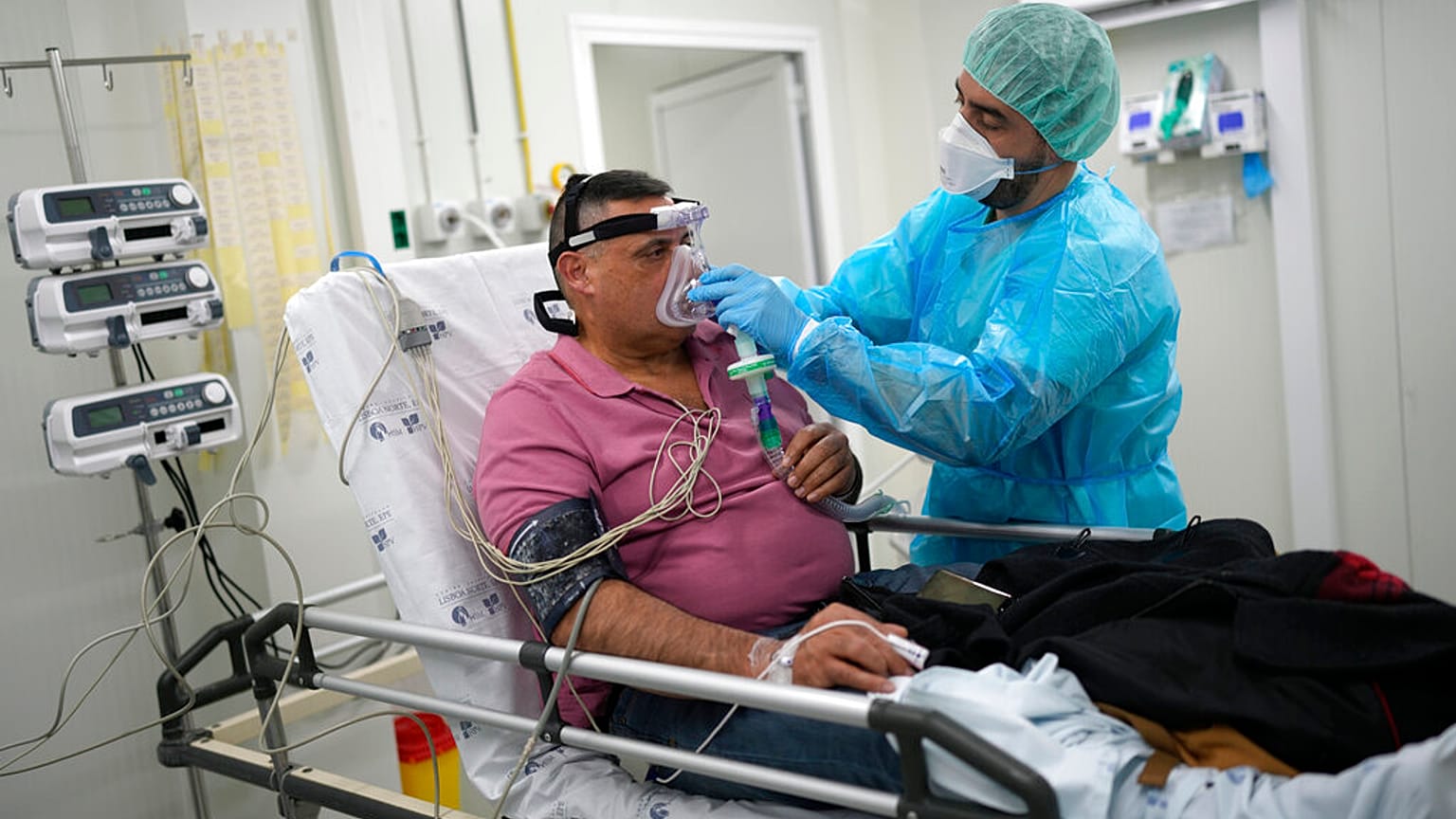













As climate change worsens respiratory diseases, doctors and drugmakers are exploring earlier diagnosis and low-carbon inhalers to cut emissions from care and protect patients.
For millions of people, climate change is already affecting their breathing, from asthma attacks caused by pollution to lung damage from wildfire smoke, and the very same health systems treating these conditions are themselves contributing to global warming.
 ADVERTISEMENT
ADVERTISEMENT
ADVERTISEMENT
Climate extremes and poor air quality are driving a rise in respiratory diseases, mainly through worsening air pollution, heat, wildfires, and longer pollen seasons.
Over 90 percent of the global population breathe air with particulate levels above the World Health Organization’s recommendations.
Experts note that an important share of respiratory illness is linked to environmental factors.
Increasing wildfires and air pollution are changing the air people breathe, increasing the risks of exacerbations, disease progression, and, in some cases, the onset of disease.
Therese Laperre, head of the respiratory department at the University Hospital Antwerp, warns that climate change is multiplying triggers for asthma and chronic respiratory diseases flare-ups, and patterns of respiratory infections.
“We know that changes in particulate matter [air particles that can harm human health] have an impact days later on emergency department visits of patients with asthma and chronic pulmonary disease”, she said.
A study by the European Environment Agency estimated that over one-third of all chronic respiratory disease deaths in Europe are linked to environmental factors such as air pollution, extreme temperatures, wildfire smoke, and allergenic pollen.
A vicious cycle
Worldwide, between 400 and 500 million adults are estimated to live with COPD and more than 250 million people live with asthma globally.
Health care institutions’ response to this burden comes with its own climate cost. The non-profit international organisation Health Care Without Harm estimated that global health services generate about five percent of worldwide greenhouse gas emissions – if the services all formed a country, they would rank among the world’s top polluters.
Without action, emissions from health care are projected to reach six gigatons a year by 2050, equivalent to putting more than a billion cars on the road.
Hospitals, and particularly intensive care units (ICUs), are responsible for a large share of this impact. They are among the most polluting parts of the system on a per‑patient basis, because they use a lot of energy, equipment and large volumes of single‑use materials.
Respiratory specialists say that early control of chronic disease by health care professionals is not only good for patients, but also essential to shrinking health care’s climate footprint.
Earlier diagnosis is a climate measure as well as a clinical one, says Philippe Tieghem, from the French respiratory association Sante Respiratoire.
“If we are detecting earlier, we are controlling earlier, it's good for patients, it is good for carbon, it is good in an economic vision as well”, he said.
Inhalers: the perfect example
One product that embodies this dilemma is the inhaler, mainly used to treat long-term lung diseases such as COPD and asthma.
The most common devices are pressurised metered-dose (pMDIs), small aerosol sprays that use gas to push out the medicine directly into the lungs.
The propellants – the gas that sprays the medicine out of the canister – in these inhalers are typically hydrofluorocarbons (HFCs), fluorinated greenhouse gases with a high global warming potential.
Recent estimates suggest that pressurised inhalers emit roughly 4–5 million tonnes of CO₂‑equivalent per year in Europe and around 16–17 million tonnes globally, about 0.03 percent of total greenhouse gas emissions.
The United Kingdom’s National Health Service estimates that these inhalers account for around three percent of its own carbon footprint.
While these remain a small part of global emissions, the numbers are large enough for health services and manufacturers to work on inhalers as a priority for decarbonisation, engineering traditional devices to use “greener gases”.
So far, only one of these next-generation products has reached patients: AstraZeneca’s reformulated COPD inhaler, approved for use in the UK and the European Union.
It contains the same three active medicines and is used in the same way as its predecessor, but the propellant has been switched, from the old HFA‑134a to a new gas called HFO‑1234ze(E).
The change cuts the inhaler’s warming impact by about 99.9 percent compared with the old gas, roughly a 1,000‑fold reduction in global warming potential.
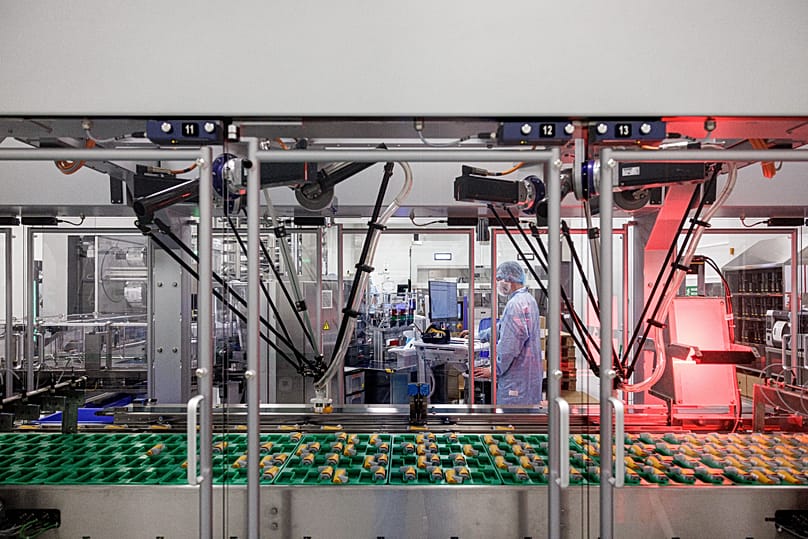
New efforts to reduce environmental impact
The British-Swedish pharmaceutical company has also pledged to cut its emissions by 98 percent by 2026, and is starting with inhalers, addressing scope 3 emissions linked to suppliers and product use.
“We do have a mission, working on prevention in early detection, early diagnosis, and early treatment, to ensure that we use our medicine to keep patients controlled in the community and free up hospital capacity that tends to be a lot more costly and more critical, particularly in acute situations”, Pablo Panella, senior vice-president for respiratory diseases, told Euronews Health.
Other major drugmakers have also pledged to cut their emissions and shrink their environmental footprint.
Pfizer has committed to a company-wide climate plan to reach net-zero by 2040 – Johnson & Johnson has the same goal for 2045.
Better control of chronic disease means fewer emergency admissions and less need for resource-intensive care.
This is what the pharmaceutical company calls a “green patient”, someone whose disease is well-controlled enough to avoid repeated flare-ups, hospital stays, and high-carbon interventions.
For the industry, technology is only part of the equation. The other is whether regulation makes it easier or harder to bring low-carbon options to patients.
The final pillar, Panella added, is regulation that supports innovation, particularly those addressing environmental footprint.
“Regulations need to be welcoming and facilitating. Sometimes, the more complex and cumbersome you make regulations, the more it might mean that even if you are developing the technology, it can take a lot of time to actually reach patients”, Panella said.
On climate-conscious regulation, he said the question should not be whether it goes in that direction, but how to design it so that the industry has a welcoming ecosystem to continue to invest and bring innovation.