















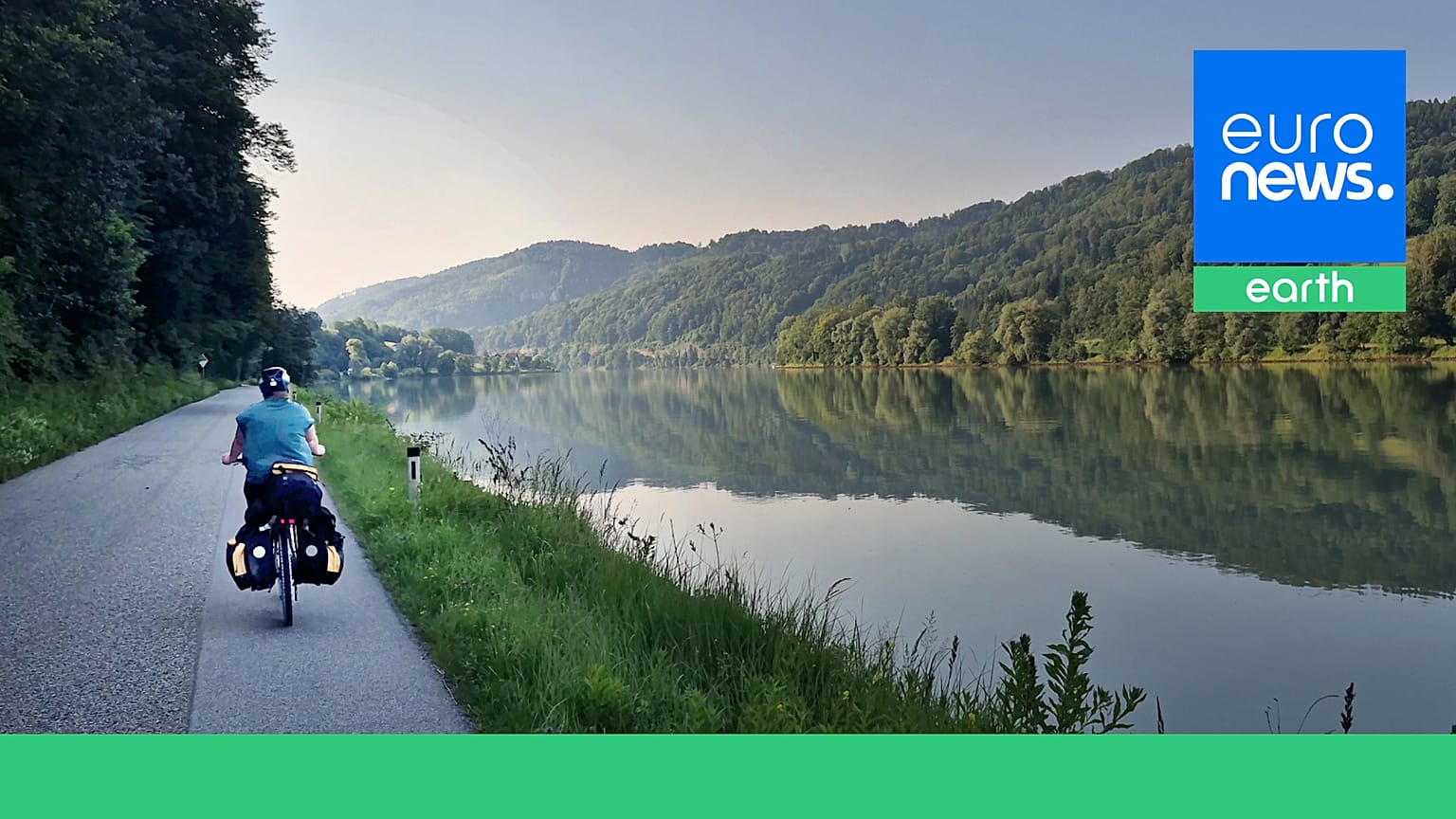














This couple cycled 3,000km along the Danube. Here's what drought looks like from the riverbank.
Cycling the Danube from source to sea, Anna and Callum were mid-trip when the river suddenly hit the headlines.
 ADVERTISEMENT
ADVERTISEMENT
ADVERTISEMENT
On 3 August, as drought worsened, authorities were forced to use a controlled explosion to redirect water towards Romania’s only nuclear power plant, which supplies 20 per cent of the country’s electricity and relies on the river for cooling.
“To me, it was that moment of, this is becoming real now: we are actively interfering in the river ecosystem to ensure that human electricity and power needs are being met,” recalls Anna Wentsch, the German-born co-founder of New Zealand charity Conservation Amplified.
While the measure was extraordinary, it still wasn’t enough: the plant was forced to shut down its final reactor on 13 August after it failed to maintain sufficient cooling water.
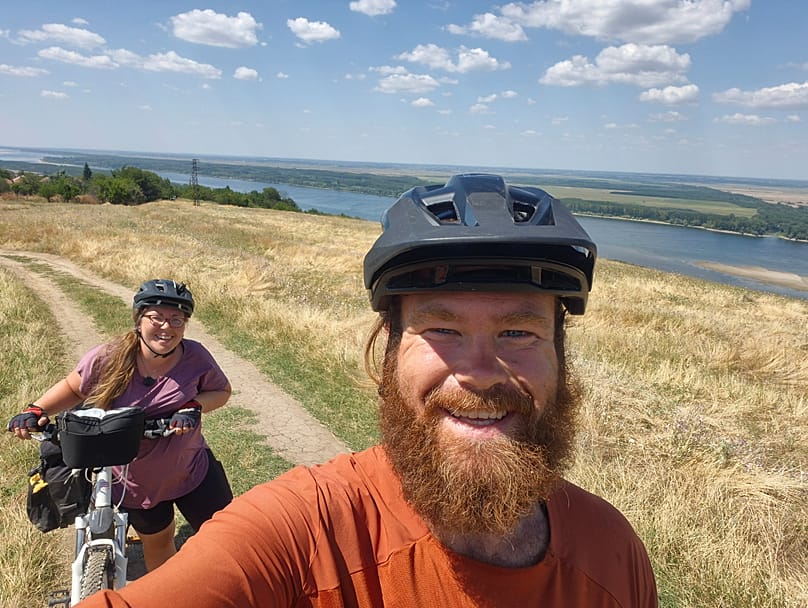
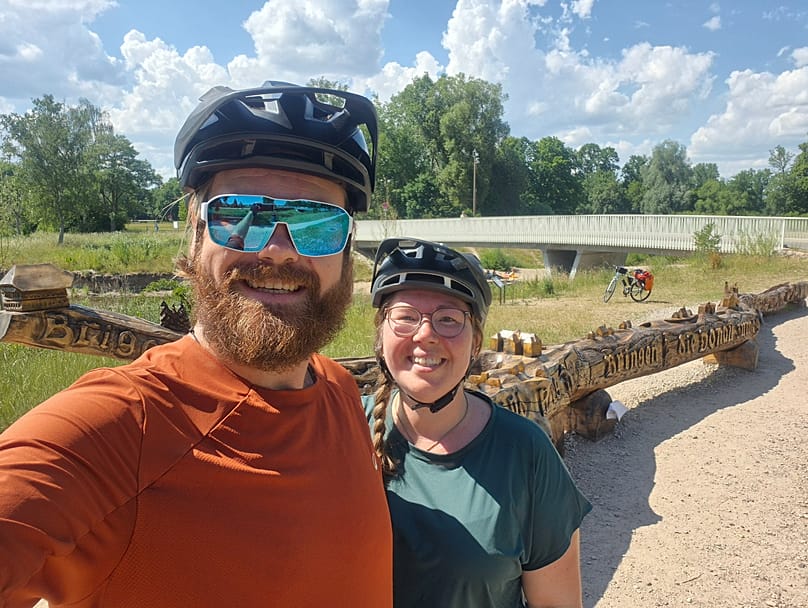
Together with her partner Callum Armstrong, Anna recently completed a 3,000-kilometre journey through 10 countries to find out how communities and nature are responding to drought on the EU’s longest river.
Danube drought impacts more than energy
Successive heatwaves and a severe lack of rainfall have driven Danube water levels to record lows this summer, with impacts not only on energy security but food, drinking water, transport and wildlife.
Romania isn’t the only country facing a drought-induced energy crisis. On 15 August, Hungarian authorities sank two barges in the Danube to raise the water level and prevent a shutdown of its only nuclear power plant.
Even more basic human needs have been hit, with farmers’ harvests devastated by dry soils. Hungarian winegrowers have already reported a 30 per cent drop in grape harvests.
Parched vegetation has also sparked wildfires – Anna and Callum witnessed one along their route in Serbia.
“It was hot, dry and windy,” recalls Callum. “Just seeing how dry the ground was – just a spark’s needed for it to go up in flames.”
For people who live in the area, these conditions are now just part of daily life. Knocking on a door to alert the nearby town, Callum and Anna were invited in by friendly locals who told them, “This is just normal, all the locals have called it in, people won’t respond until it actually gets to a really bad state.”
More than 580,000 hectares have now burned across the EU this year, according to the European Forest Fire Information System.
Panting birds and grounded boats: Life along the drought-hit Danube
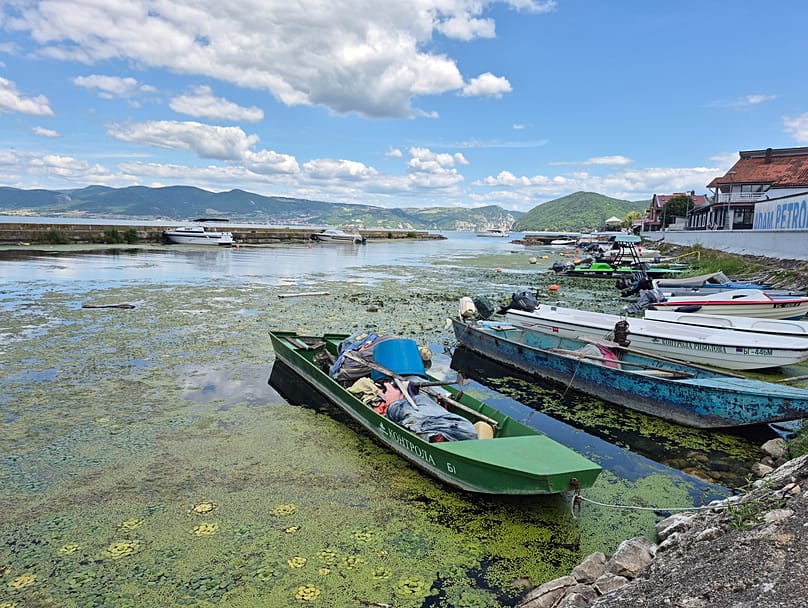
At Germany’s Danube Gorge, Anna and Callum were confronted with another consequence of low water levels when their booked ferry was unable to run.
“We had to catch one of those small wooden boats because they were the only ones that were still able to operate,” says Anna.
While passenger ferries have run aground, freight traffic has also been brought to a standstill, with operators rerouting to avoid the dried-up waterway and grain harvests piled up at terminals – creating further food insecurity.
It’s not unique to the Danube: Germany has temporarily relaxed truck-driving restrictions to ease pressure on supply chains disrupted by record-low water levels on the Rhine.
But, for Anna, the impact on animals hit her hardest.
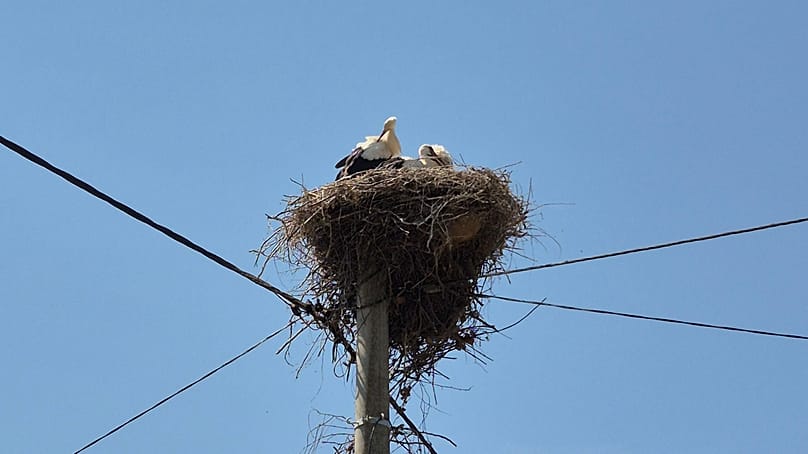
“We’ve seen a lot of wildlife, in particular birds, panting during the day. We’re obviously cycling in the heat, and we’re struggling. But then seeing them struggle is even worse,” she tells me by video call.
“We can take ourselves out of that environment and go into the shade, but for a stork, for example, that nests on an open platform, they don't have that ability.”
Extreme weather has hit a vast ecosystem already under strain: human infrastructure like power plants and dams has fragmented habitats, reducing biodiversity and disconnecting wetlands and floodplains that once acted as natural buffers against drought.
Witnessing this first hand has made one thing clear, according to Anna and Callum: protecting humans and protecting nature are inextricable.
‘Speckles of hope’ along the drought-hit Danube
But for all the reasons to be worried, “There are these speckles of hope everywhere of things that are already happening, and we’re seeing results,” says Anna.
An eight-kilometre fish bypass helping biodiversity to return to a stretch between Germany’s Neuburg and Ingolstadt made a particular impression on Callum. It’s part of a conservation project that reconnects floodplains and restores ecosystem functions lost due to dam construction.
While this covers just a tiny fraction of the 2,857-km river, countries are also working together to restore the natural corridor.
Anna points to the 930,000-hectare Mura-Drava-Danube Biosphere Reserve as an inspiring example of cross-border collaboration.
Five countries – Austria, Croatia, Hungary, Serbia and Slovenia – are working together to protect the expansive river landscape, from enforcing a no-dam policy to preserve free-flowing water, to replanting native forests to restore biodiversity.
The protected landscape provides migratory pathways and feeding zones for otters, beavers and more than 250,000 waterbirds. It is also an important nesting site for white-tailed eagles, with around 150 pairs now calling the area home.
For Anna and Callum, these projects are more than wildlife success stories. They show how restoring the river’s natural functions can also strengthen the systems people depend on – from water and agriculture to energy and local economies.
Nature isn’t just a victim – it’s part of the infrastructure
Among the many learnings Callum and Anna will take back home, one stands out: nature needs to be considered before infrastructure is built, rather than retrofitted into systems that have already been designed around human needs.
“Think about nature and the consequences for you before you put infrastructure in place,” says Anna. “It’s way easier to find a healthy balance.”
That balance isn’t about putting people and nature on opposite sides of the equation. The river supplies water, energy, food and transport, while healthy wetlands, floodplains and forests help sustain the ecosystems and water that communities rely on.
“Conservation is more than just protecting wildlife,” says Callum. “It’s securing our future, securing our economy, because there’s all these unpriced benefits that come from the stability that’s there.”
For Conservation Amplified, the New Zealand charity they co-founded, the journey has also been an experiment in finding new ways to engage people with environmental issues.
“Always look overseas to what other people are doing or what your neighbour is doing,” says Callum. “We can learn so much from each other.”
And after 3,000 kilometres of following the Danube from its source to the Black Sea, Anna says there is one message she wants people to take away.
“A river is a lifeline. It’s fresh water. It’s so important to treasure these places and not take them for granted.”