















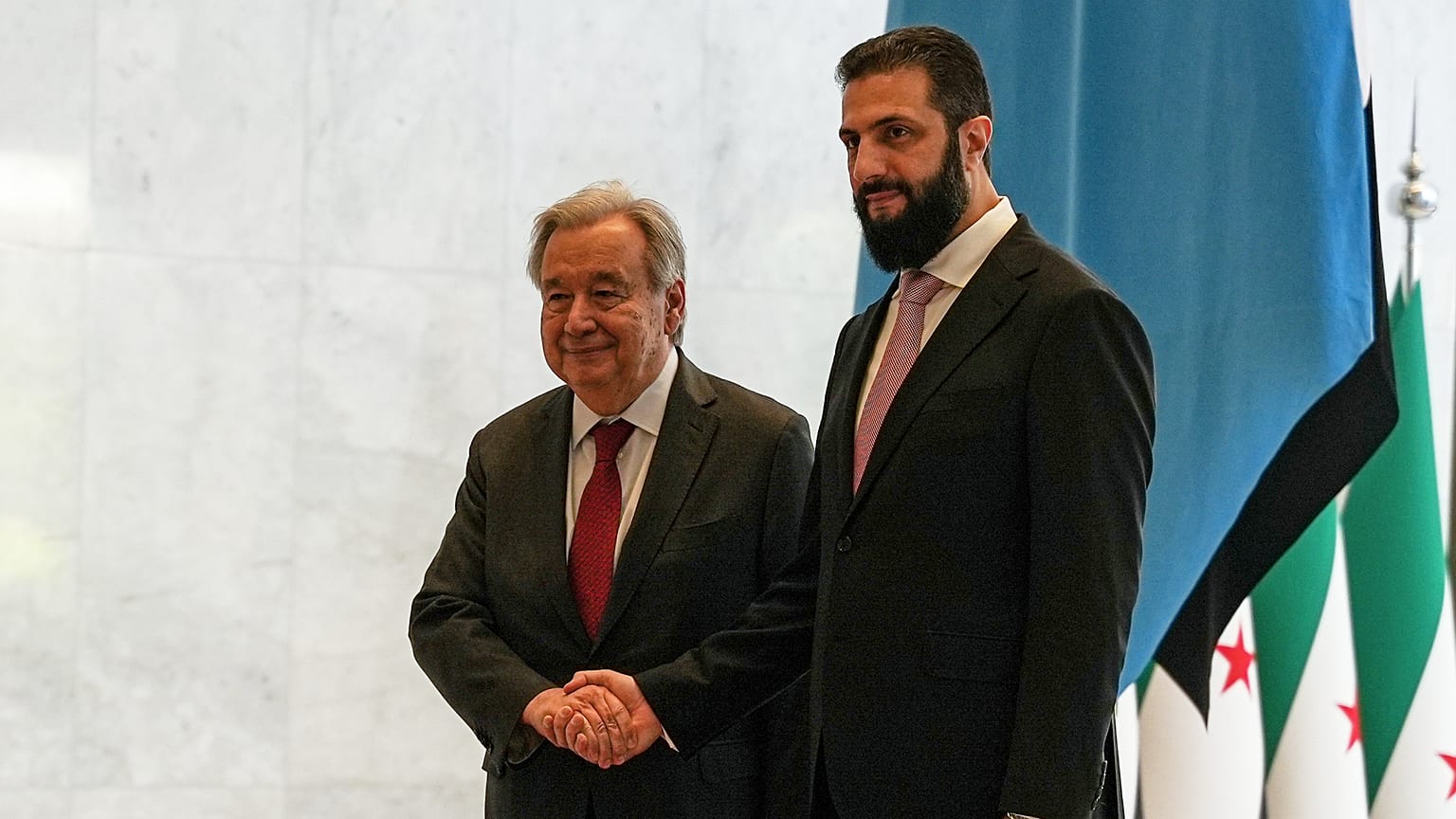














United Nations Secretary-General António Guterres is the first UN chief to visit Syria since his predecessor Ban Ki-moon in 2009, two years before the start of Syria's civil war.
In the first visit by a UN Secretary-General to Syria since 2009, António Guterres appealed to the international community to support the country's people as it transitions following the fall of longtime leader Bashar al-Assad.
 ADVERTISEMENT
ADVERTISEMENT
ADVERTISEMENT
"I have just arrived in Damascus for a visit of solidarity. My message is clear: The UN stands with Syria at this pivotal moment and I appeal to the international community to spare no effort to support the people of Syria as well," Guterres said on X.
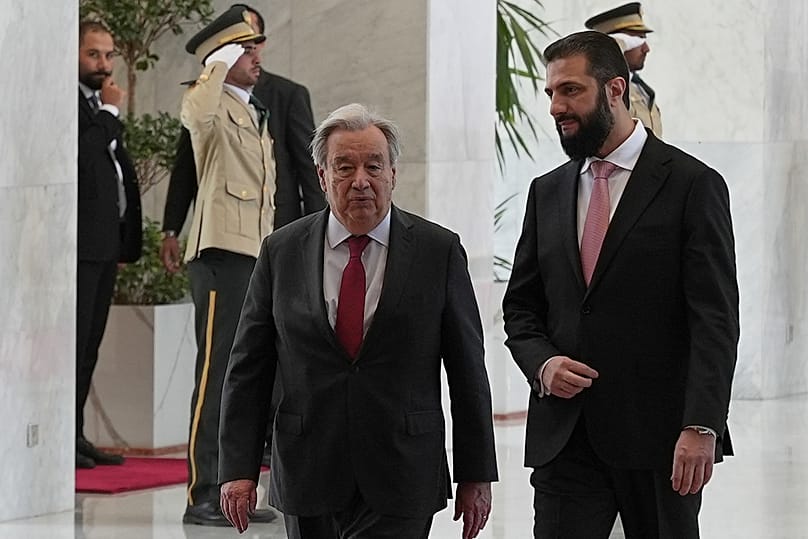
Shortly after his arrival, Guterres held talks with Syria’s interim president, Ahmad al-Sharaa, before taking a tour of the old quarter of Damascus and the famous Umayyad Mosque.
His visit comes as Syria recovers from the deadly conflict that broke out in March 2011, which resulted in the deaths of more than half a million people.
Since the five-decade Assad family rule came to an end in December 2024, when forces led by al-Sharaa's fighters stormed Damascus, the nation has been struggling to recover from years of conflict and the effects of crippling Western sanctions.
While the United States and Europe have lifted many of the sanctions imposed during the rule of the Assad dynasty, the impact on the ground has so far been limited.
Since al-Sharaa took power, the international community has urged the new Islamist authorities to build strong and effective institutions and establish a governance system that includes all components of Syria's multi-ethnic, multi-confessional society.
Situation in Golan Heights 'unacceptable'
Guterres is set to meet representatives of Syrian civil society and non-governmental organisations supporting women's issues, and to visit a UN peacekeeping force that has been stationed in south Syria's Israeli-occupied Golan Heights since 1974.
After Assad's overthrow, Israel sent troops into the UN-patrolled buffer zone that separated Israeli and Syrian forces on the Golan, and has carried out strikes and repeated incursions deeper into Syrian territory.
Israeli officials have said they intend to keep forces in a "security zone" in southern Syria, where they seek a broader demilitarised zone.
"What is happening in the region around the Golan Heights is totally unacceptable," Guterres told a press conference alongside Syria's Foreign Minister Asaad al-Shaibani, who called for an "immediate and unconditional Israeli withdrawal" from the area where they had advanced.
Despite tensions between the neighbours, Israel and Syria's new authorities have held several rounds of direct talks and have agreed to establish an intelligence-sharing mechanism, though the move has failed to halt Israeli military activity.
Since al-Assad's ousting, some 1.9 million internally displaced people and 1.7 million refugees from abroad have returned, according to the UN, while around 5.5 million people remain displaced inside the country and another six million overseas.
With many Syrians living in poverty, an estimated 15.6 million people require humanitarian assistance.