































Austrian law provides for the jurisdiction of local courts over certain offences committed abroad and the Vienna court has jurisdiction in this case because the defendants reside there.
An ex-Syrian general and a former senior Syrian police officer went on trial in Vienna on Monday, accused of torturing opponents of the now-deposed regime of Bashar al-Assad.
 ADVERTISEMENT
ADVERTISEMENT
ADVERTISEMENT
The two are accused "of having, on numerous occasions, ordered or failed to oppose the mistreatment of members of a protest movement," according to prosecutors.
The defendants, a former brigadier general in the Syrian intelligence services and a former head of the investigations office of the local criminal police, are said to have committed the crimes in Raqa between April 2011 and March 2013.
Several similar cases relating to crimes committed during the Syrian civil war have been tried in other countries, including Germany, France and Sweden.
Brigadier General Khaled al-Halabi, 63, who has been in pre-trial detention since 2024, will plead not guilty, his lawyer Timo Gerersdorfer told reporters before the trial started.
He fled Raqa in 2013, just before the so-called Islamic State (IS) group overran the city.
Charged alongside him is 54-year-old Lieutenant Colonel Musab Abu Rukbah.
The two Syrians applied for asylum in Austria in 2015 and have resided in the Central European country ever since.
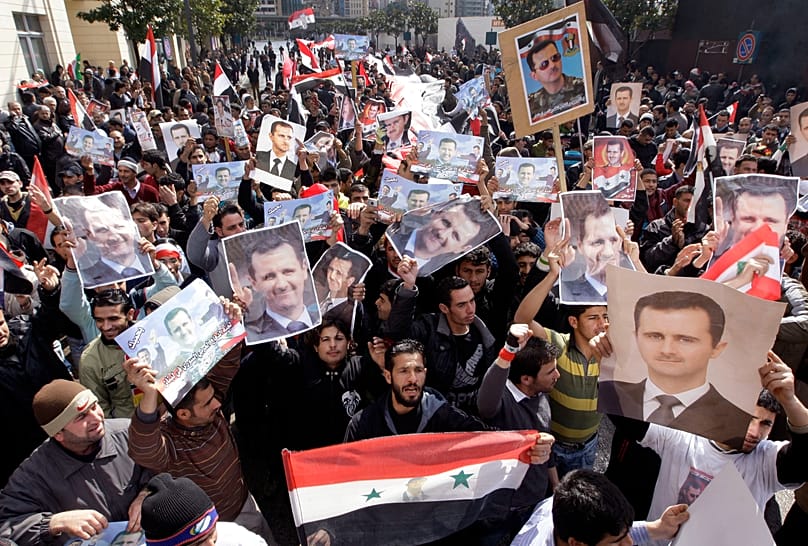
Crackdown on protest movement
The Austrian prosecutors said in their statement: "On the orders of the central government and the National Security Bureau of the Syrian Arab Republic, 21 individuals detained in prisons were tortured and abused as part of the crackdown on a civilian protest movement."
At the time of Halabi's indictment, activists considered him the highest-ranking Syrian official responsible for abuses present in Europe.
He is charged with torture, aggravated coercion, sexual coercion, as well as multiple counts of serious bodily harm, and faces up to 10 years in prison.
Rukbah, the police officer, is accused of serious bodily harm, aggravated coercion and sexual coercion and is also facing up to 10 years in prison.
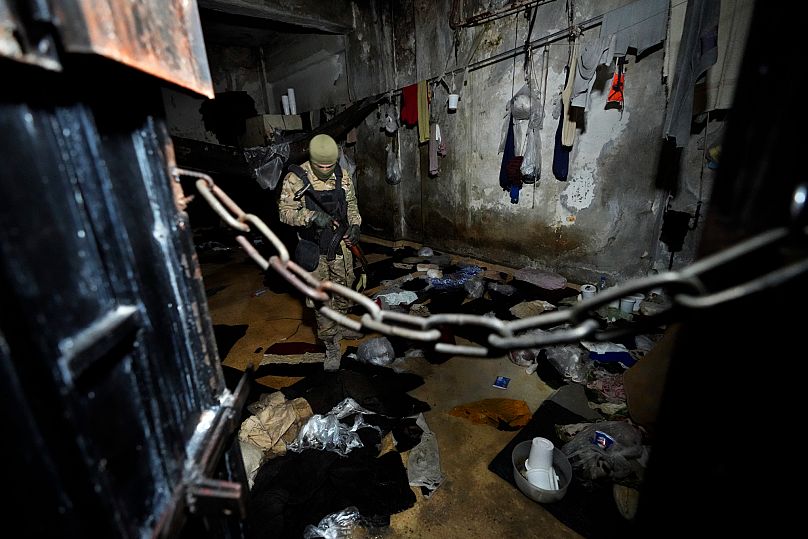
The 10-year statute of limitations that would ordinarily apply was lifted, the indictment said.
International treaties including the United Nations Convention Against Torture and the Rome Statute of the International Criminal Court meant prosecutors were obliged to bring charges, it said.
Austrian law provides for the jurisdiction of local courts over certain offences committed abroad.
Alleged victims to testify
The Vienna court has jurisdiction because the defendants reside there. Thirteen hearing days are scheduled to take place through to 30 June.
Alleged victims who are residing in Syria and Europe are expected to testify.
Anwar al-Bunni, a Syrian lawyer based in Germany who himself spent five years in Syrian prisons, said the general should have faced additional charges.
He called the trial "important" but told the AFP news agency: "I don't know really why they don't charge him with crimes against humanity."
Senior Austrian officials suspected of having protected the former brigadier general were acquitted in 2023.
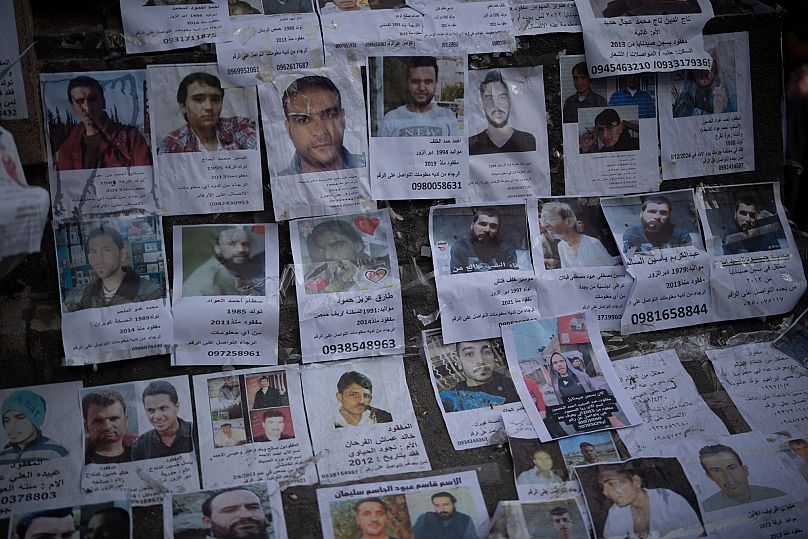
Prosecutors had accused them of helping him obtain protection in the country, referencing an agreement allegedly concluded in May 2015 with Israel’s national intelligence agency, Mossad.
Mossad is said to have brought the Syrian military officer to Austria from France, where he was at the time, according to local media.
In 2016, the Commission for International Justice and Accountability (CIJA), a group that gathers evidence for alleged war criminals, informed Vienna of al-Halabi's alleged crimes.
According to Austrian news agency APA, the agreement with Mossad, code-named "White Milk", had been overseen by Martin Weiss, then head of the Austrian intelligence service (BVT).
Weiss is on the run in Dubai and wanted for supposed links to another fugitive Austrian spy, Jan Marsalek, who is suspected of being protected by Moscow.
Tatiana Urdaneta Wittek of the Centre for the Enforcement of Human Rights International (CEHRI), a lawyer representing 18 of the 21 alleged victims, told APA that there was a danger that Austria was providing shelter to perpetrators.
"Austria must not become a refuge for war criminals," she said.