
















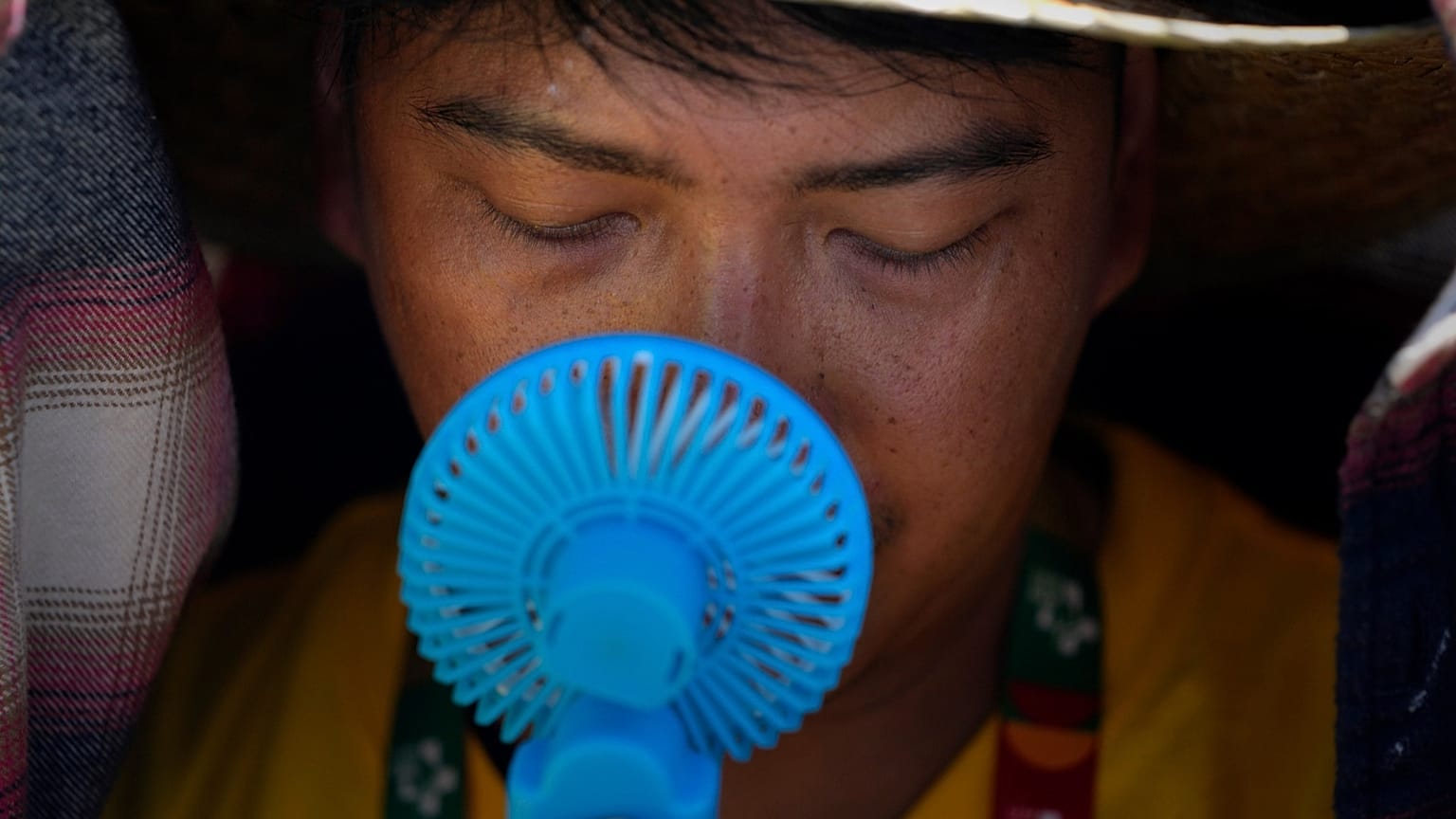













TikTok tells me that freezing my pjs will provide much-needed relief from extreme heat. I need other options…
I’m standing in my kitchen, waiting for my pyjamas to crisp-up.
 ADVERTISEMENT
ADVERTISEMENT
ADVERTISEMENT
I’ve placed them in the freezer, next to a bag of petit pois, a hack that has recently gone viral on social media – along with a slew of others – as yet another heatwave swelters much of Europe.
I live in Yorkshire. God’s Own Country: renowned for its rainy weather and misty moors (see ‘Wuthering Heights’ for reference) – but temperatures have hit 32C this week, and aren’t expected to drop down to a more manageable 24C until Sunday.
For southern Europeans used to 40C summer highs, this may not seem like ‘extreme heat’. But remember, only five to seven per cent of homes have air conditioning in the UK, our houses were built to keep heat in, and we don’t get to have siestas in the middle of the day (at least not without getting fired).
At 8pm, my thermostat reads 24C, which means I’ve successfully kept some of the heat out by keeping my curtains shut, keeping the conservatory closed, only opening windows in the morning and night – if the outside temperature drops – and avoiding significant heat-generating appliances like the oven.
However, my thermostat is located on the downstairs landing – the coolest part of the house. If I head upstairs, it feels significantly hotter.
Deadly tropical nights are becoming more common
Tonight, the temperature is forecast to drop to 18C. This falls just below the criteria for a ‘tropical night’ (where temperatures never drop below 20C in a 24-hour period) but I suspect it will still be an uncomfortable one.
TikTok tells me that freezing my pjs will provide much-needed relief from the sticky heat. It won’t cool the house, but it will hopefully cool my body.
“Nighttime heat is often underestimated, but it can be particularly dangerous because people are typically at home and may not have access to cool, air-conditioned spaces,” Ruth Engle, a data scientist at the World Resources Institute tells me.
“We often talk about the 'cumulative heat burden' – the idea that the longer people are exposed to heat, the greater the impact on their health. When homes remain hot overnight, people lose the opportunity to recover from daytime temperatures, increasing risks, especially for older adults and those with underlying health conditions."
Studies have shown that high nighttime temperatures are linked to increased mortality, while the UK Met Office warns that the likelihood of experiencing three consecutive tropical nights during July has increased significantly due to climate change.
Daytime temperatures are also becoming a concern here, despite the northern location making it cooler than places like London. In fact, Leeds recently became the first UK city council to launch a ‘Cool Space’ scheme – opening up 39 hubs, libraries and leisure centres across the city to help residents beat the heat.
It’s a similar concept to the network of climate shelters that have popped up across Spain in recent years, allowing vulnerable communities access to cooling and water.
Does the viral TikTok cooling hack work?
I take the frozen clothes from the freezer and get changed. It’s a weird sensation, but does feel refreshing – like I have just turned into an ice lolly.
However, it doesn’t take long before the novelty has worn off and I am back to being hot and bothered. It’s like turning your pillow in the night: you’re hit with a sudden coolness which swiftly disappears.
Fabric holds very little heat energy compared to your body, meaning it warms back to room temperature within minutes.
But, like Carrie in ‘Sex and the City’, it got me thinking. How can Europeans actually stay cool without the power of air con?
Keeping the body cool during hot weather
Weirdly, the UK government doesn’t recommend putting your pjs in the top drawer of your freezer – or placing a bowl of ice cubes in front of an electric fan.
Instead, it offers slightly less bizarre advice that most people will naturally already do during heatwaves. Avoid the sun, particularly when it is at its strongest, use SPF, limit physical activity, and wear loose, light-coloured clothing.
It does suggest spraying or sponging your skin with cool water can help too, as well as wrapping cold packs in a cloth to place under your armpits or on your neck.
Keeping the house cool during heatwaves
When it comes to cooling the house, there is much less advice. The UK Health Security Agency suggests keeping windows and curtains closed in rooms that face the sun during the day and opening windows when the air feels cooler outside than inside.
I have already done that, and while it has somewhat helped curb the heat, my home is still too hot. If you’re in the same boat, here are three interesting ways to keep your home cool (without air con) that are a bit more long-term that icy t-shirts.
Cool roofs: Should you should paint your home white?
A 2024 paper by UCL and the University of Exeter, published in the science journal Nature Cities, analysed the cooling effect that roofs painted white or other reflective colours would have on London’s air temperature between June and August 2018.
At the time, this was one of the city’s hottest summers on record, with the average temperature during those three months hitting 19.2C – about 1.6C warmer than average for that time of year.
Researchers found that had cool, light-coloured roofs been widely installed throughout the city, London could have cooled by about 0.8C on average. This would have prevented the heat-related deaths of an estimated 249 people, according to the study.
White roofs are a common sight in hotter countries in southern Europe and North Africa, but aren’t as common in the UK. Light-coloured roofs absorb less radiant energy from the sun than darker alternatives, lowering city temperatures and keeping the indoor temperature cooler.
You can learn more about cool roofs here.
Solar panels: Not just a source of cheap power
While solar panels are of course designed to help households reduce their reliance on polluting fossil fuels and lower energy bills – the same study also found they have a cooling effect.
This is because rooftop solar panels create a barrier between your roof and the sun, absorbing UV radiation that would otherwise heat up your roof and enter the home. The glass in solar panels also reflects sunlight away from the property.
Researchers say that if rooftop solar panels had been similarly widely adopted in London during its 2018 heatwave, they would have cooled the city by about 0.3C. This would have prevented the deaths of an estimated 96 people across the city.
“Solar panels have great benefits as a source of renewable power, so it’s good to see they won’t make the city hotter,” said lead author Dr Charles Simpson, following the study’s publication.
You can learn more about the hidden benefits of solar panels here.
Green shading: Why you should welcome a tree into your family
Okay, so this is technically one for just outside your home, but adding green shading (trees and vegetation) can drastically lower surface and air temperatures.
This has become a focal point of urban planning, and has been studied for decades. In 1997, researchers in the US found that shaded surfaces may be 11-25C cooler than the peak temperature of unshaded materials.
Alongside providing shade, and preventing surfaces like concrete retaining heat, adding trees to your garden can also help remove air pollutants and sequester carbon emissions (which are a key driver of global warming).
Of course, all of these things cost money, take time to install, and are much more long-term investments than freezing your pjs.
But as the UK swelters through yet another heatwave, and global temperatures threaten to break records once again, us Brits may have to start thinking about how we can adapt our homes.