
















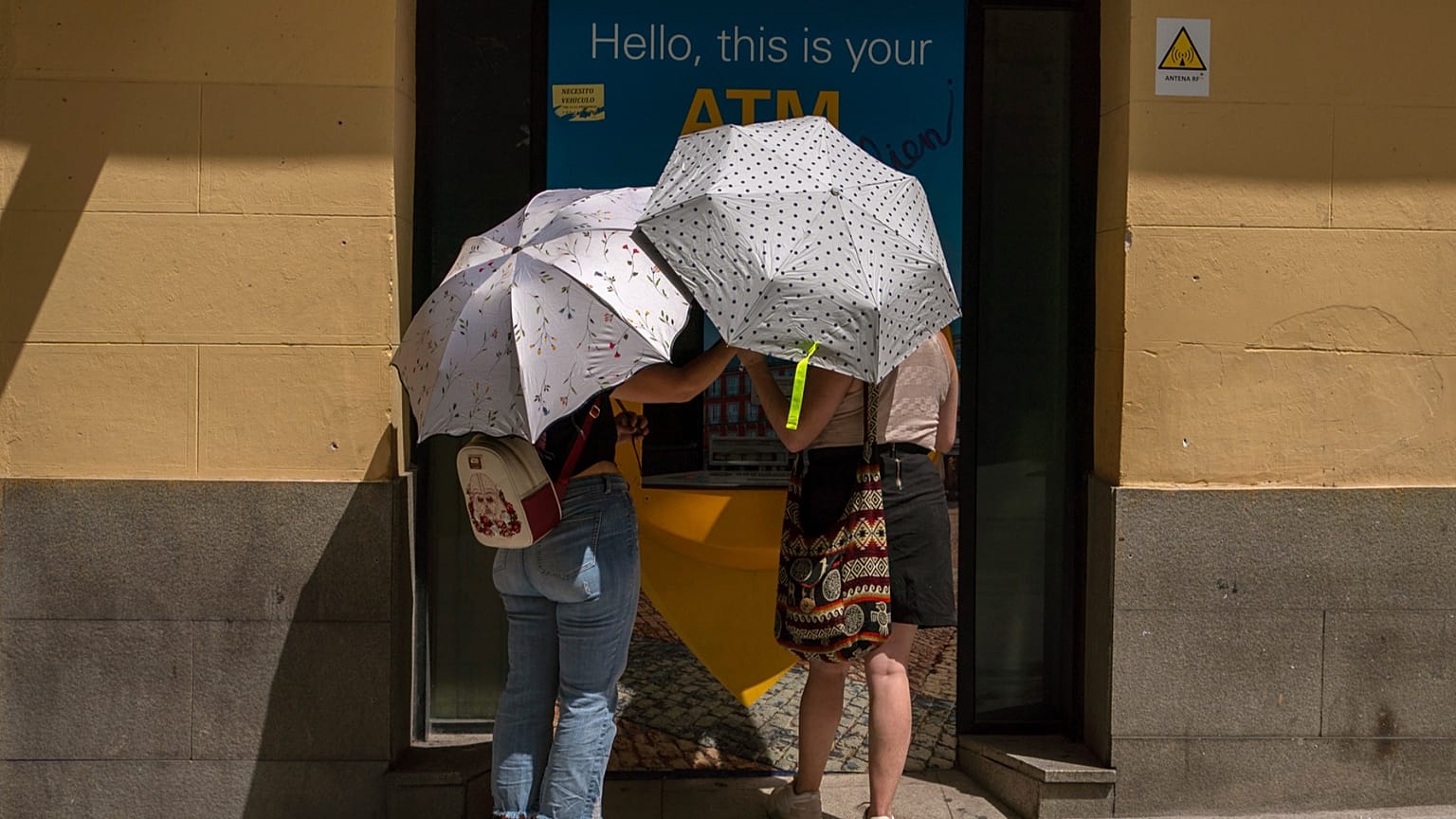














Europe’s lack of air-conditioning means it is unprepared for the expected increase in ‘tropical nights’, experts warn.
Climate scientists have warned Europeans of the dangers of ‘tropical nights’ as yet another scorching heatwave grips the continent.
 ADVERTISEMENT
ADVERTISEMENT
ADVERTISEMENT
France’s national weather service Meteo France says the country is entering a “plateau” of unrelenting heatwave conditions that won’t ease until Friday (26 June) at the earliest.
More than half of France’s 96 departments have been placed under red alert for ‘severe weather’ as temperatures climb up to 40°C. It comes just weeks after France endured a deadly May heatwave that experts say had the “fingerprints of climate change all over it”.
Yesterday (21 June) authorities banned the consumption of alcohol at the annual Fête de la Musique (Music Day) festival in Paris due to soaring temperatures. Emmanuel Grégoire, the mayor of Paris, announced swimming would be allowed in Canal Saint-Martin from Wednesday, while authorising Paris's parks and gardens to remain open 24/7 to help people cool off.
Weather forecasts predict the mercury will hit 40°C this week in many parts of Spain, including Bilbao, Zaragoza, Almeria and Madrid. Even the UK is bracing for scorching temperatures, with the Met Office predicting highs of 38°C in southern England during the coming days.
Ioanna Vergini, founder of wfy24.com, tells Euronews Earth that Italy and Greece will remain “comparatively milder” during the heatwave, with Rome reaching 35°C and Athens staying in the low 30s.
What are tropical nights?
Europe’s latest heatwave will also see more tropical nights. This is where the temperature never falls below 20°C within a 24-hour period.
While this is more common in warmer climates, cooler nations are witnessing more frequent occurrences, particularly during heatwaves.
An attribution study by the UK’s Met Office found that the likelihood of experiencing three consecutive tropical nights during July has increased significantly due to climate change.
In a pre-industrial climate, such an event had a probability of less than one per cent per year in the UK, a nation known for its typically cool weather. But in today’s climate, that probability has risen to approximately 20 per cent per year.
The dangers of nighttime heat
Tropical nights can have a significant impact on human health, as the body relies on cooler temperatures during the night to regulate its core temperature and recover from daytime heat. This can lead to increased cardiovascular stress and sleep disturbance.
“Nighttime heat is often underestimated, but it can be particularly dangerous because people are typically at home and may not have access to cool, air-conditioned spaces,” Ruth Engel, a data scientist on environmental health and extreme heat at the World Resources Institute (WRI) tells Euronews Earth.
“In Europe, where air conditioning (AC) remains relatively uncommon and temperatures are rising faster than in any other region, tropical nights are becoming a major public health concern.”
AC in Europe has more than doubled since 1990, with around 110 to 130 million units now installed. However, this still only represents around 20 per cent of buildings on the continent.
While AC can act as a life-saving tool during intense heat, it is also pushing Europe into an endless ‘cooling loop’. As rising global temperatures and heatwaves, fuelled by climate change, drive demand for cooling – Europeans are becoming more reliant on AC to maintain a comfortable indoor temperature.
But AC units, which are often powered by fossil fuels, are dumping refrigerants such as hydrofluorocarbon (HFC) and hydrochlorofluorocarbon (HCFC) into the air. These chemicals trap thousands of times more heat in the atmosphere than CO2, driving global warming.
In cities, this heat is trapped between tall buildings and absorbed by the large amounts of asphalt and concrete before being released back into the air. This makes the outdoor temperature even hotter, fuelling demand for more AC.
‘Cumulative heat burden’ increases health risks
Studies have shown that high nighttime temperatures are linked to increased mortality, particularly among older adults and those with pre-existing health conditions.
Tropical nights are also having an impact on public services such as schools, which are now considering changing exam times to help protect students who aren’t sleeping well due to high temperatures at night.
“We often talk about the ‘cumulative heat burden’ – the idea that the longer people are exposed to heat, the greater the impact on their health,” Engel says.
“When homes remain hot overnight, people lose the opportunity to recover from daytime temperatures, increasing risks, especially for older adults and those with underlying health conditions.”