

















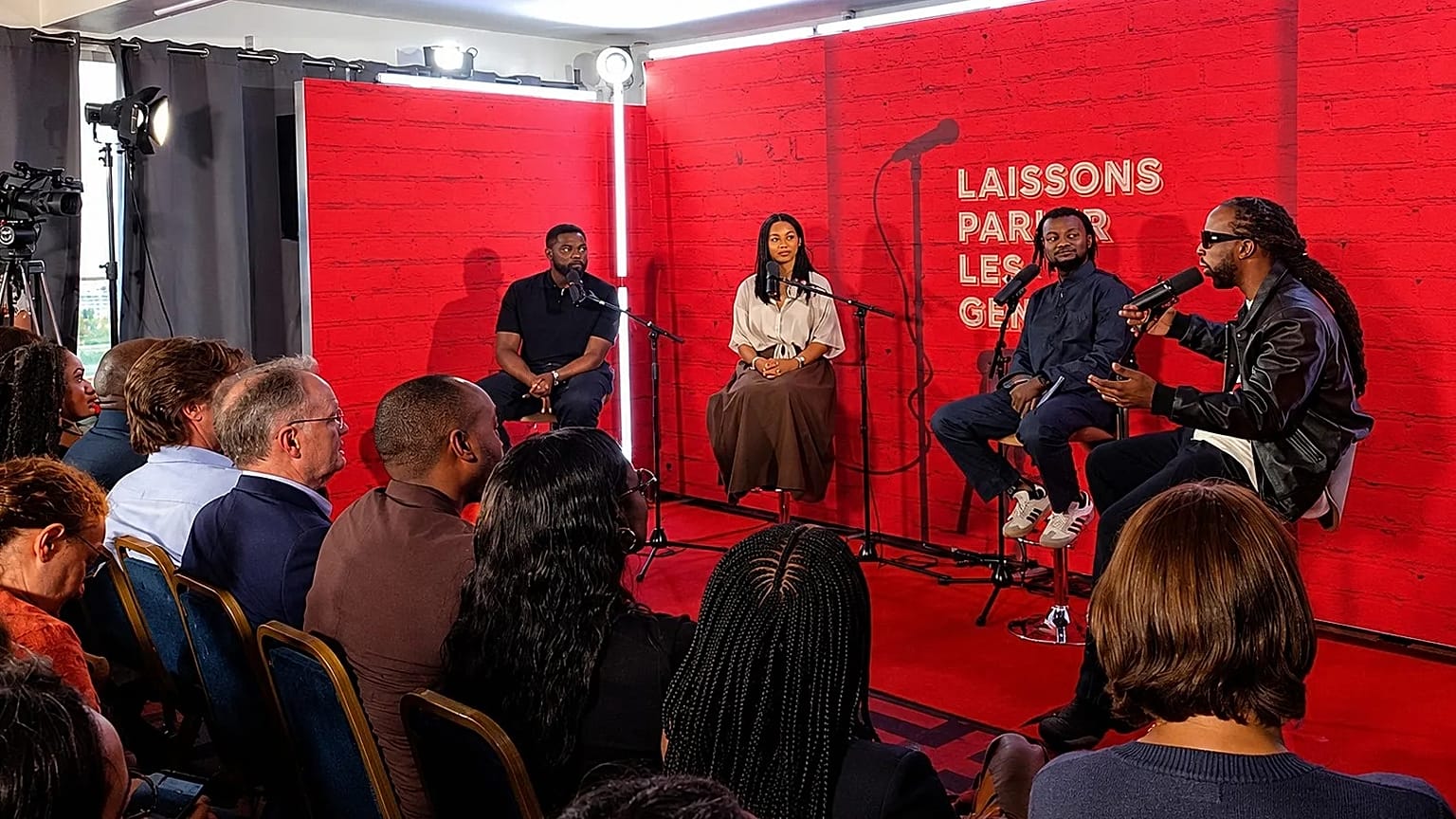













Youssoupha acknowledged cyberbullying and harassment were part of the challenges facing young Africans today, but he urged the youth to focus on the positives.
Legendary Congolese and French rapper Youssoupha joined content creators, media professionals and young audiences in Brussels for a conversation about the issues shaping a new generation for African youths, from music and culture to mental health and social media.
 ADVERTISEMENT
ADVERTISEMENT
ADVERTISEMENT
The gathering formed part of the Kouman x Brussels initiative built around the popular Ivorian podcast "Laissons Parler les Gens," which uses digital storytelling, humour and culture to invite conversations on issues affecting young Africans and their engagement online.
Youssoupha acknowledged cyberbullying, harassment and bullying formed part of the challenges of today's digital age, but he urged young people to focus instead on the positives.
"We must build on the positive. We’ve been and we tend to be placed in tough situations. But the hard times—they’re always going to be there. I said it on set just an hour ago: 'The hard times and challenges will always be there— no matter the times or era, whatever the generation,'" Youssoupha said.
"And in fact, if we settle for just the hard part, in the end we won’t move forward. We’re going to move forward with the people who encourage us, the resources, the talents, and the strengths—and that’s what will take us upward, actually. The rest—everything that doesn’t help us move forward is useless," he added.
Supported by the CFI Médias Kouman project and the European Union, the panel stage at L’Horloge du Sud in Brussels also featured Congolese-Belgian digital creator Vanessa Caixeiro and Ivorian-French comedian Sacko Camara.
For Istorias Media, the creators of "Laissons Parler Les Gens," podcasts like this present a great opportunity to foster dialogue and conversations that can promote social change.
“Laissons Les Gens Parler” is a podcast that is aimed at young people, that brings young people together and, above all, creates a space for these young people to express themselves. And today, we’re coming out of this event with a great deal of hope and many opportunities for social cohesion," Marta Rodriguez Martinez, co-founder of Istorias Media, said.
The Brussels discourse began with workshops bringing together researchers and institutional actors to discuss how digital platforms can better connect with younger audiences, encourage civic participation and combat the harmful use of social media.
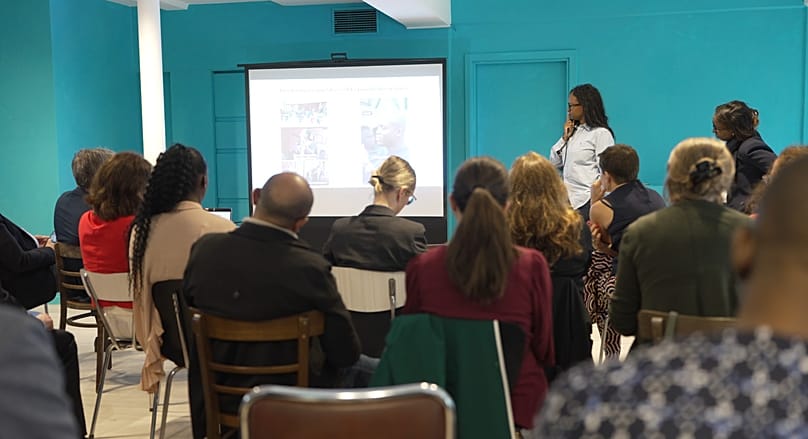
Participants also took part in a listening club, where they spoke about episodes of the podcast which tackle issues ranging from online hate speech, malicious AI-generated material and cyberbullying to mental health, gender-based violence and geopolitical discourse.
Discussing the issues is one thing but offering solutions is another, as one of the participants shared.
"I think that today we are in a world where our generations are trying to implement, in fact, solutions, resolutions, and measures that ensure that, just as much as we want to heal a society that has suffered in the past, at the same time, we want to tell ourselves that it’s possible to stay together, to live together," Blessing Ngoy, a Congolese actress, said.
"And I think that’s what’s beautiful about this. 'And I think we should rely on these young people and give them a little more trust," Ngoy added.
UNICEF poll: 34% of sub-Saharan African youths experienced online bullying
Her perspective was shared by Vanessa Caixeiro during a live audience recording of the podcast.
Speaking with the weight of someone who has stared down the darkest corners of online scrutiny, Caixero didn't hold back about how quickly digital love can turn into weaponised hate or how vital it is to anchor oneself in something deeper than screen-deep validation.
"You have to bear in mind that social media is like a double-edged sword: it can either make you or break you," Vanessa said. "There’s no success without a struggle, and success that comes easily today will lead to a big fall tomorrow".
Caixeiro, who hosts her own personal series titled "Les Confessions de Vanessa", an unfiltered podcast where she shares her personal struggles, faith, and journey toward healing, encouraged young Africans to be bold and audacious, believing in their self-worth regardless of the issues digital life throws at them.
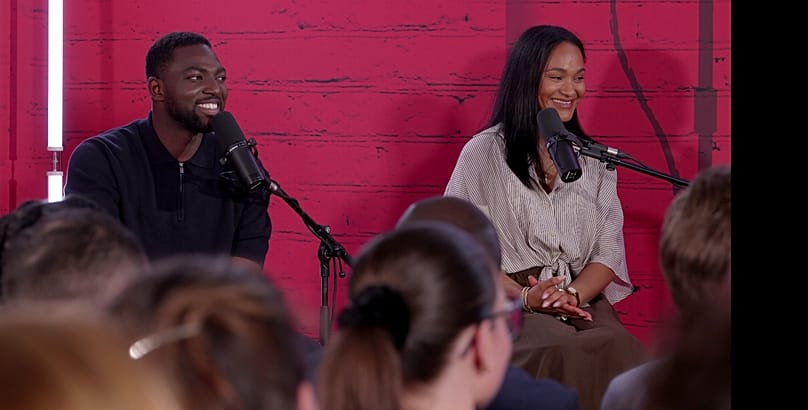
Sitting right alongside her, comedian Sacko Camara brought a grounding sense of clarity, blending his sharp wit with brutal honesty. Sacko, who routinely performs on stages across Europe, shifted the focus to the mechanics of online hate, breaking down the psychology of internet trolls and offering a powerful mental framework for self-preservation.
"When people attack you online, they’re not attacking who you really are; they’re attacking the image they’ve built up of you," Sacko told the crowd. "If you understand that, their words can no longer hurt you".
By detaching his true identity from his public persona, he also explained how he uses humour and emotional distance as shields to maintain his dignity when under fire.
A poll released by the UN Children’s Fund (UNICEF) and the UN Special Representative on Violence against Children in 2019 found that 34% of respondents in sub-Saharan Africa said they had experienced online bullying.
The majority of participants said social networks like Facebook, Instagram, Snapchat and Twitter (now X) were the most common places where bullying occurred.
According to Mame Peya Diaw, an international development expert, combatting issues like this begins first by raising awareness.
"We think this kind of project is really important for African youth because it helps raise awareness, it helps us communicate, and it provides many prospects for the African youth. We encourage this type of podcast."