





























Warmer seas are bringing a little-known but potentially dangerous bacterium closer to European beaches, and authorities are paying attention.
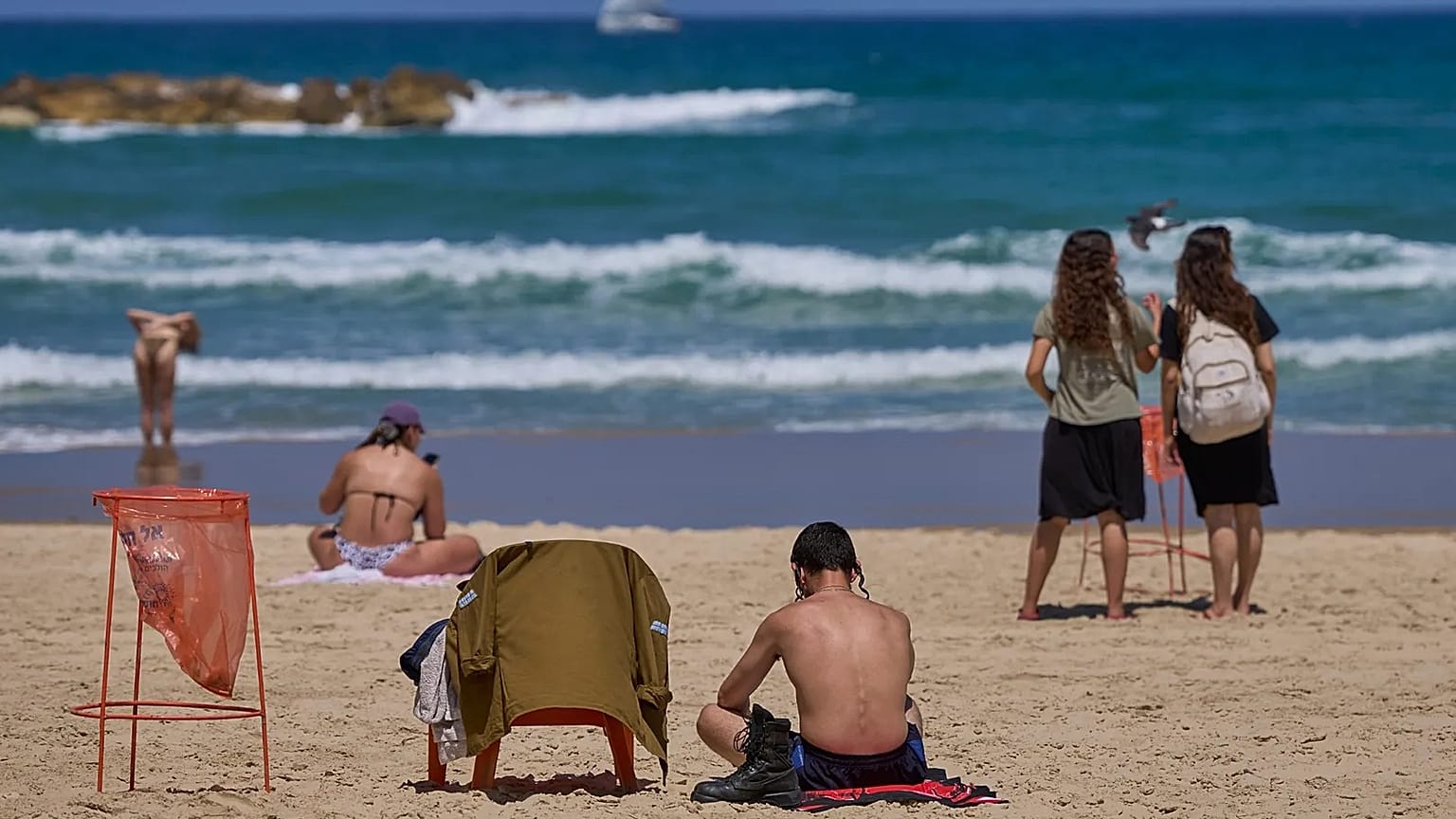
Now that summer has officially begun, millions of tourists are eagerly looking forward to their holidays and, in many cases, heading for the coast to enjoy the beach.
 ADVERTISEMENT
ADVERTISEMENT
ADVERTISEMENT
However, this year a long shadow hangs over the tourism sector because of the proliferation of bacteria in the sea.
In recent years, various parts of Europe’s coastline have experienced episodes of pollution and health alerts that have led to restrictions on access to the sea, against a backdrop of ever-warmer water temperatures and mounting tourism pressure.
“The Mediterranean is showing us what a hotter world represents,” says Hatim Aznague, an analyst for Projects, Climate Action and Energy Resilience at the Union for the Mediterranean, speaking to Euronews. “The countries that share this sea can still choose to share a solution.”
The threat of the “flesh-eating bacteria”
Particular concern centres on the Vibrio bacterium, a family of naturally occurring microorganisms found in warm, brackish coastal waters.
Most strains are harmless, but some strains such as the Vibrio vulnificus, which media coverage has dubbed "flesh-eating," can cause severe and even fatal infections in rare cases, especially in people with open wounds or weakened immune systems.
In severe cases, infection can trigger necrotising fasciitis, in which tissue around a wound rapidly breaks down.
The bacterium can also enter the bloodstream, causing sepsis, and in some cases patients require amputation. Such outcomes are very rare and tend to affect people with open wounds, liver disease or compromised immune systems.
According to the European Food Safety Authority (EFSA), “Vibrio is an aquatic bacterium that can be found in seafood,” and some strains can cause anything from gastroenteritis to severe and even fatal infections.
The European Centre for Disease Prevention and Control (ECDC) has warned of an "increased risk of Vibrio infections throughout the summer season," particularly during heatwaves and in shallow coastal waters.
The Mediterranean, a “preview” of climate change
The Mediterranean is among the fastest-warming seas on the planet, heating up roughly 20% faster than the global ocean average and scientists say that is creating conditions in which harmful bacteria thrive.
Aznague told Euronews that the Mediterranean is less a victim of climate change than a preview of it. "It is one of the fastest-warming seas on the planet," he said. "Warmer water, especially where it is less salty, at river mouths and in the lagoons they enclose, becomes more conducive to pathogenic bacteria."
Research confirms that temperature and salinity are the two primary drivers of Vibrio proliferation, meaning the Mediterranean's warming trajectory has direct implications for bacterial risk in coastal waters.
The Mediterranean's naturally higher salinity has historically suppressed Vibrio vulnificus — the strain most associated with severe infections — making the Baltic and North Sea coasts higher-risk areas for the most dangerous cases. Scientists warn, however, that as the Mediterranean warms and salinity patterns shift, that may change.
An economic impact that hits tourism directly
Beyond the health risk, the spread of Vibrio carries direct economic consequences. As Aznague puts it: "On our coasts, the shoreline is not part of the economy; it is the economy."
Beach closures and health alerts at the height of summer strike at the heart of one of Europe's most important industries. "A closed beach is a climate impact that comes with a bill attached," Aznague said, warning too of "a reputation that takes years to rebuild."
The Mediterranean is one of the world's most visited tourist regions, with Europe recording 747 million international arrivals in 2024 according to UN Tourism data — meaning any disruption to its coastlines carries significant economic weight. Hotels, restaurants and local economies depend directly on the stability of the shoreline.
According to EFSA, rising temperatures and extreme weather events are expanding the geographic range of high-risk areas, while antimicrobial resistance detected in some Vibrio strains adds a further layer of concern for public health authorities.
A present risk, not a future one
The solution, Aznague insists, lies in greater international cooperation. "It is not acceptable to compromise on our health or on the climate," he said.
For scientists and policymakers, the Vibrio bacterium has become something of a bellwether or a sign of how quickly the marine environment is changing.
As Aznague puts it, "Bacteria are not the story; they are the messengers. The story is a sea thrown out of balance by heat and pollution."