

















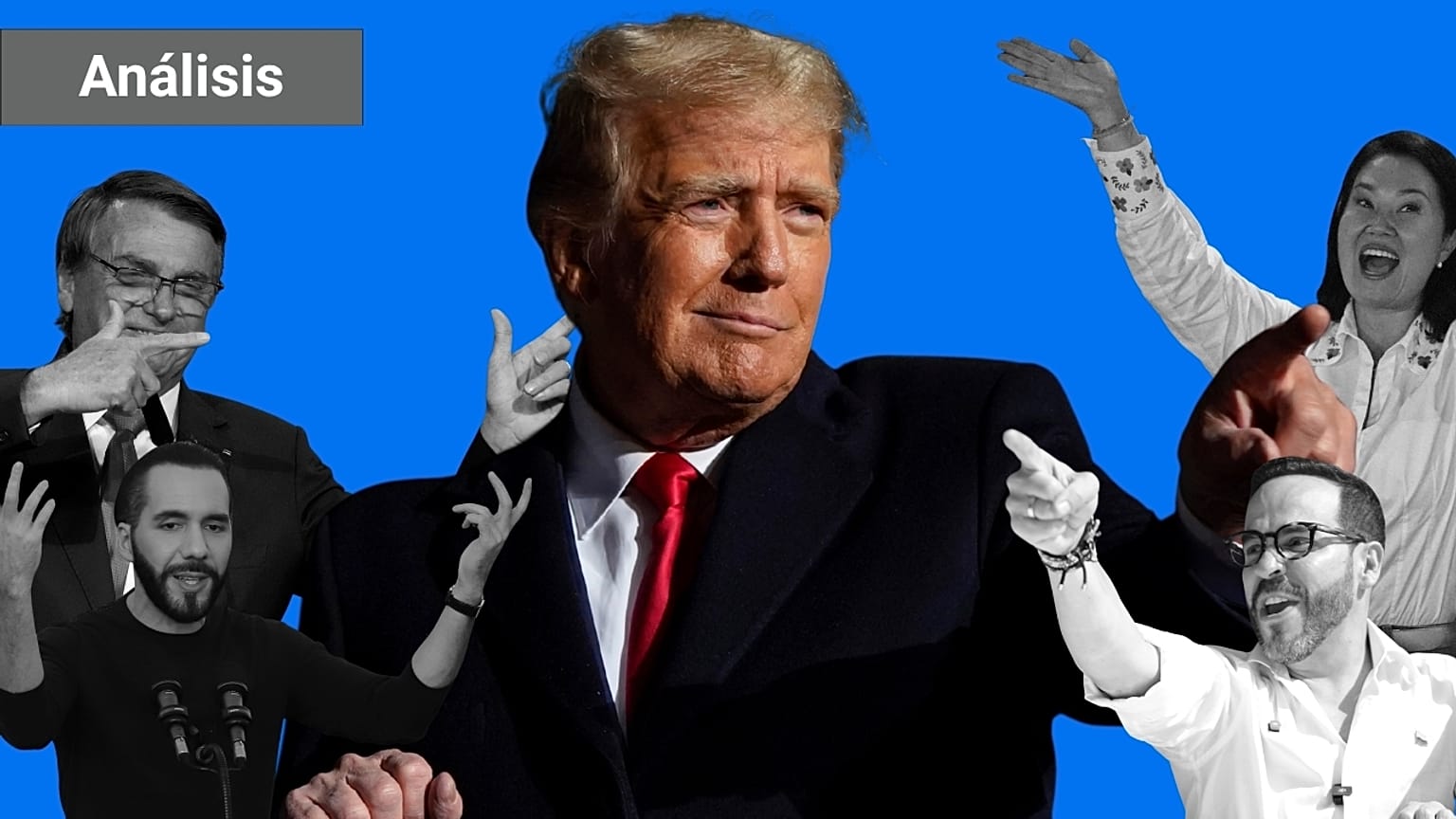













Soon after the US president first moved into the White House, his policies and outspoken backing for certain candidates inspired a new wave of Latin American leaders now shaping the continent’s future.
Some are battle-hardened veteran politicians who are no longer presidents, as is the case with Brazil's Jair Bolsonaro. Others, by contrast, built their huge popularity almost unexpectedly, like Nayib Bukele in El Salvador. All of them, however, share certain traits: nationalist rhetoric, unabashed populism and, above all, a clear role model — Donald Trump.
 ADVERTISEMENT
ADVERTISEMENT
ADVERTISEMENT
The latest examples of this rise of the right in Latin America can be found in Colombia and Peru, where Abelardo de la Espriella and Keiko Fujimori look set to bring an end to two of the few left-wing governments still remaining in a region that for years has been defined by its more socialist leanings.
In Colombia's case, the 47-year-old lawyer and businessman, who had no previous political career, won the election, defeating left-wing senator Iván Cepeda by a margin of barely 200,000 votes. On 6 August, De la Espriella will move into the Casa de Nariño, replacing Gustavo Petro, an icon of the Colombian left and one of Trump's most vocal critics.
De la Espriella, by contrast, enjoys an excellent relationship with the US president, who backed him throughout the campaign and hurried to call him on Sunday shortly after his victory at the polls was confirmed. On social media, Trump celebrated the result with a terse message alongside an article about the victory "of the candidate backed by Trump": "He won, big!"
"The Trump administration looks forward to working closely with your incoming administration to boost regional security cooperation, put an end to illegal immigration to the United States and strengthen our economic ties," US Secretary of State Marco Rubio said on social media, predicting that "the future of Colombia is yet to come".
In Fujimori's case, that affinity is more political than personal. After more than 15 years seeking the Peruvian presidency — a post also held by her father, Alberto Fujimori, before he was imprisoned for corruption and crimes against humanity, among other offences — the leader of the Fuerza Popular party is ahead in the vote count against Roberto Sánchez following a campaign centred on a tough stance on crime and irregular migration.
Fujimori has also pledged to move closer to Washington if she wins the election, in what would be her fourth attempt at the presidency. "My role, if elected president, will be to encourage the United States to become more actively involved again," she said in April, according to AFP.
The Trumpist affinity: Bolsonaro, Bukele and Milei
These are just the two latest cases in a long list which, besides those already mentioned, includes figures such as Javier Milei in Argentina, José Antonio Kast in Chile, Daniel Noboa in Ecuador, Rodrigo Paz in Bolivia and Santiago Peña in Paraguay.
This run of right-wing victories in Latin America dates back to 2019, when both Bukele and Bolsonaro won the presidency in their respective countries. Since then, voters in several countries have opted for a shift to the right.
In Bolsonaro's case, the parallels between his administration and Trump's first term became so pronounced that the two leaders not only aligned on key policies, such as easing access to guns and opposing vaccines during the COVID-19 pandemic, but the Brazilian leader also went as far as allegedly orchestrating an uprising in Brasília in 2023 that was strikingly similar to the one that took place in Washington two years earlier. The former army officer was convicted over the events and is currently serving his sentence. Trump even threatened Brazil with a 50% tariff unless the legal case against the former president was dropped.
In Bukele's case, it was his policies and governing style that caught the attention of the US president. His decision to declare a nationwide state of emergency to tackle criminal gangs, his combative tone — he once described himself as "the world's coolest dictator" — and his embrace of cryptocurrencies earned him the sympathy of key figures in Trump's circle, including Stephen Miller, whom he has met several times.
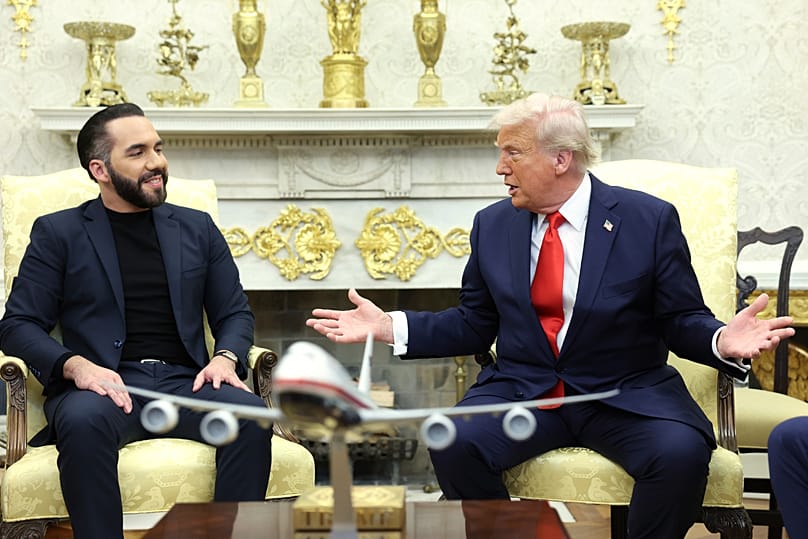
Trump has repeatedly praised Bukele's record in El Salvador, where the homicide rate fell from 108 per 100,000 people in 2015 to eight in 2022, when the state of emergency first came into force, according to World Bank data. He has described Bukele as a "great ally" and said he considers him one of his "favourite people".
Another leader with whom Trump shares not only a strong political affinity but also a close personal relationship is Argentina's president. Like Trump, Javier Milei was a television personality before entering politics and is known for his theatrics and grandiose speeches.
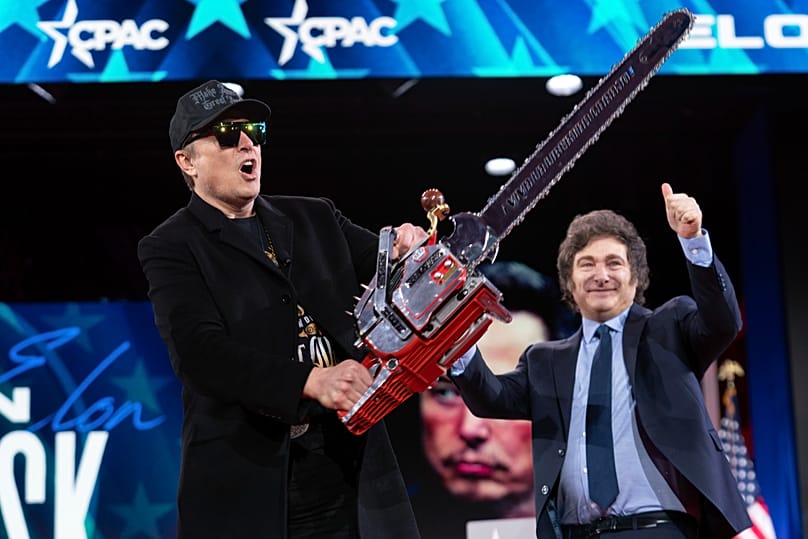
His trips to the United States, whether official or private, have been frequent, and his domestic policies have consistently received backing from the Trump administration, especially his crusade against the civil service, symbolised by his now trademark chainsaw. The prop was even adopted by Elon Musk after Trump tasked him with carrying out a similar effort in Washington.
This harmony between the two governments reached its peak last year, when the US administration, despite the Republican Party's nationalist agenda, prepared a financial rescue package worth more than €17bn for Argentina. The package was to be delivered only if Milei's party, La Libertad Avanza, won the legislative elections – which it ultimately did.
‘Donroe’ doctrine or simple political interference?
Accustomed to refusing to be bound by established norms, ever since he descended the golden escalator at Trump Tower in 2015 to announce his candidacy, the Republican has never hesitated to air his likes and dislikes, both at home and abroad.
However, what most distinguishes Trump's first administration, from 2017 to 2021, from his second term, which began in January 2025, is its willingness to take sides in other countries' electoral processes, especially in Central and South America.
This change in strategy was laid bare last November, when the White House unveiled its new National Security Strategy, which, drawing on the so-called Monroe Doctrine, advocated a return to a world divided into "spheres of influence".
"The bonds forged between the United States and its partners will benefit both sides while making it harder for competitors from outside the hemisphere to expand their influence in the region," the document reads. Many in Washington have dubbed it the "Donroe Doctrine", a reference to Donald J. Trump. "We should seek to expand our network in the region. We want other nations to see us as their partner of choice and, by various means, we will discourage them from working with others."
This interventionism has also put some of Trump's staunchest supporters in the region in a difficult position, including Kast, who took office as Chile's president in March after a campaign full of nods to the US leader. Since then, the ultra-conservative politician has sought to strike a delicate balance, maintaining good diplomatic relations with Washington while preserving his country's strong trade ties with China.
"It is not incompatible to have the best possible relations with China and with the United States," Kast insisted after meeting Trump in Miami for the inauguration of the Shield of the Americas. "We will take every necessary step to safeguard our sovereignty, our security and our trade relations."
This effort to influence foreign elections in order to promote like-minded governments, which has also been evident in other regions, including Hungary in Europe, has led Washington in recent months to openly back several candidates across Latin America, including Paraguay's Peña and Bolivia's Paz.
In most of these cases, US support has taken the form of making aid funding or greater cooperation on security and intelligence conditional on Washington's preferred candidate winning the election.
In other cases, however, the administration's involvement has been less transparent and more controversial. In Honduras, for example, an investigation published exclusively by Canal RED alleged that the US administration, with financial and political backing from Israel, manoeuvred to return former president Juan Orlando Hernández to power.
Hernández was sentenced in 2024 to 45 years in prison for conspiring to import cocaine into the United States and for accepting bribes from the Sinaloa Cartel. However, Trump pardoned him days before the 30 November 2025 election in a move that, according to the leaked audio recordings, was not an act of clemency but a down payment on a broader deal.
The recordings also allege that, under the plan, the presidency of Nasry "Tito" Asfura, who was declared the winner of the election, would serve only as a transitional stage. His task would be to remove the remaining legal obstacles facing Hernández in Honduras and pave the way for his candidacy in the next electoral cycle.
In Colombia, the election campaign was marked by attacks from the White House. Trump labelled Cepeda, the progressive candidate seen as the heir to Petro's political project in the Casa de Nariño, a "radical left-wing Marxist".
Throughout the campaign, the outgoing Colombian president repeatedly condemned Washington's "interference" in his country's election. The latest episode was the arrest by US immigration authorities of Beto Corral, a left-wing activist who campaigned for Cepeda in the United States, where he lives while his asylum application is being processed. Petro called the incident "political persecution" and accused De la Espriella of being behind the arrest.
With De la Espriella's victory in Colombia now official, another domino has fallen on the right of Latin America's geopolitical chessboard. The region has traditionally leaned to the left, but over the past decade it has increasingly swung in the opposite direction, seemingly under Trump's influence.