

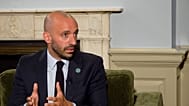















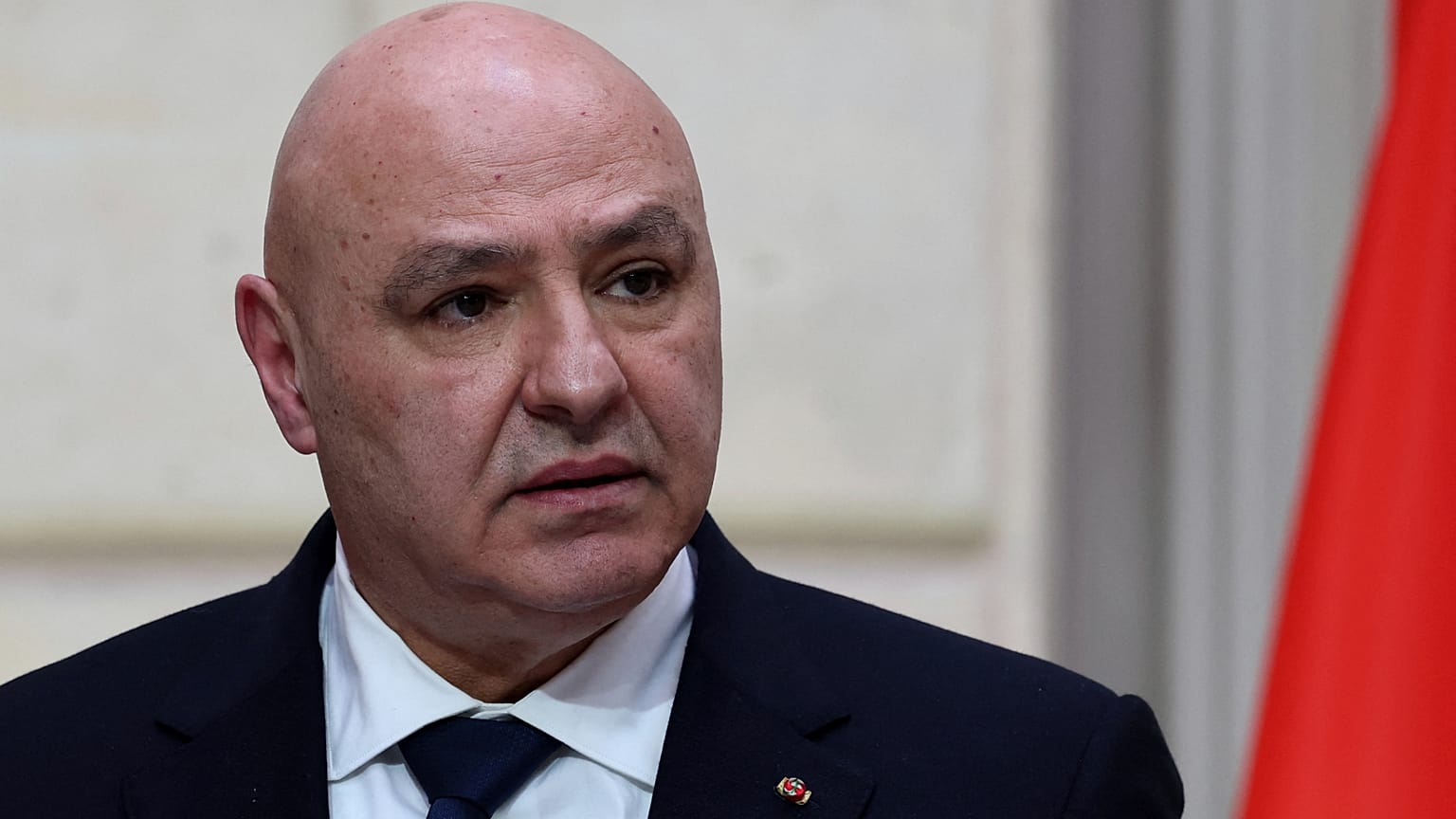













Lebanese President Joseph Aoun accused Iran of exploiting Lebanon in its conflict with the US and Israel while calling for direct peace talks with Israel and Hezbollah’s disarmament.
Lebanese President Joseph Aoun accused Iran of using Lebanon as a bargaining chip in its confrontation with the United States and Israel. At the same time, Tehran rejected these allegations through its foreign minister, who said that if Lebanon really were a bargaining chip in Iran's hands, an agreement would have been reached a long time ago.
 ADVERTISEMENT
ADVERTISEMENT
ADVERTISEMENT
In an interview with the US network CNN, Aoun addressed Iran's Revolutionary Guard, saying: "It is not your country, it is our country".
He added, "You are not trying to help us. It is the Lebanese who are paying the price for your own interests, and our interests do not coincide with yours."
Aoun stressed that he is committed to doing whatever it takes to prevent Lebanon from sliding into further escalation, insisting that Lebanese people are fed up with the repeated wars between Israel and Hezbollah, which enjoys Iranian backing and wields considerable influence inside the country.
"We are tired and we want to live in peace," he said, adding that the Lebanese deserve to live with dignity, and do not deserve to see their homes destroyed every five or 10 years.
The Lebanese president announced that his country is ready for direct negotiations with Israel to secure a ceasefire, saying: "We are ready, willing and committed to negotiate. There is a major opportunity to end the state of war between [the] Lebanese and Israelis," noting that both sides have been tired of war since 1948.
Aoun said he had sensed a strong desire for peace among all components of Lebanese society, including the Shia community, as some had told him they were weary of repeated wars. In a firm tone, he added: "They are Lebanese, not followers of Naim Qassem."
Even so, the Lebanese president criticised Israel's military strategy against Hezbollah, arguing that the party's influence can only be ended through the state and after an Israeli withdrawal, and insisting that negotiation is the only solution. 'They can invade the country or destroy it completely, but they will not achieve their objective, because Hezbollah is an idea.'
Before taking office as president, Aoun served as army commander for eight years. He was wounded in battle and still carries shrapnel in his body, and he suffers hearing damage as a result of being close to the front lines. Nevertheless, he underlined his rejection of war and preference for diplomatic avenues, saying: 'I prefer negotiation to war. I do not want my children or the people of Lebanon to live through the same suffering.'
Aoun concluded by saying that he would try to negotiate and persuade Hezbollah to disarm, considering that this is ultimately possible, but at a high cost.
The Lebanese presidency's position aligns with earlier statements by Prime Minister Nawaf Salam, who in turn urged Tehran to stop using Beirut as a tool of pressure.
Araqchi to Aoun: 'Save Lebanon from its real enemy'
Responding to Aoun's remarks, Iranian Foreign Minister Abbas Araqchi rejected the Lebanese president's accusations about Tehran's interference in Beirut's affairs.
In a post on the X platform, Araqchi wrote: 'Based on Mr Aoun's remarks, one might think that Iran is occupying one-fifth of Lebanon, has displaced a quarter of its population and is bombing his country on a daily basis,' adding: 'If Lebanon were a bargaining chip in Iran's hands, we would have reached an agreement a long time ago.'
He concluded: 'Save Lebanon from your real enemy, Mr President.'
Israeli strike kills Lebanese soldiers
At a time when the Lebanese president is signalling openness to negotiations with Tel Aviv to end the war, efforts to de-escalate suffered a setback on the ground, when an Israeli air strike targeted a Lebanese military vehicle on the Khardali–Nabatieh road, killing several soldiers, including two officers.
The Israeli army also struck a car in the town of Jarmak in the south of the country.
Beirut's southern suburbs versus northern Israel
Israel has spoken of a new equation under which Beirut's southern suburbs would be targeted if northern areas come under Hezbollah attack, prompting Iranian Foreign Minister Abbas Araqchi to warn that hitting the Lebanese capital could spark a new confrontation in the Middle East.
Hezbollah rejects any discussion of disarmament before an Israeli withdrawal. Its secretary-general Naim Qassem considers negotiations to be surrender, insisting that this approach is rejected by broad sectors of Lebanese society.
Since its establishment in the 1980s, Hezbollah has fought repeated battles with Israel, which led to Israel's withdrawal in 2000 from the border strip it had occupied since 1978.
Earlier this year, the group fired rockets towards Israel in response to a joint US-Israeli attack on Iran that resulted in the killing of Supreme Leader Ali Khamenei and a number of senior military commanders.
Two days ago, Lebanon and Israel reached an agreement to begin implementing a ceasefire, including the creation of pilot zones under the control of the Lebanese army, with a truce conditional on a complete halt to attacks by Hezbollah, as well as the withdrawal of all its fighters from the area south of the Litani River.
According to official Lebanese figures, Israeli military operations have killed more than 3,516 people and wounded over 10,670 others, and have displaced more than one million people from their areas since the end of February, the date of the assassination of Iran's Supreme Leader Ali Khamenei, which drew Hezbollah into the confrontation between Tehran, Washington and Tel Aviv.
According to the World Health Organization, military operations in Lebanon have killed more than 600 people since 17 April.