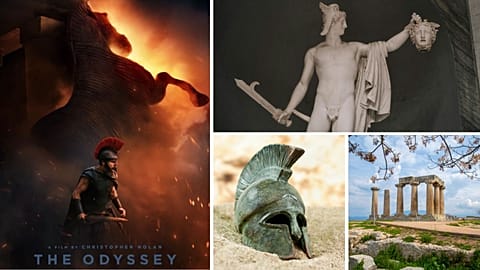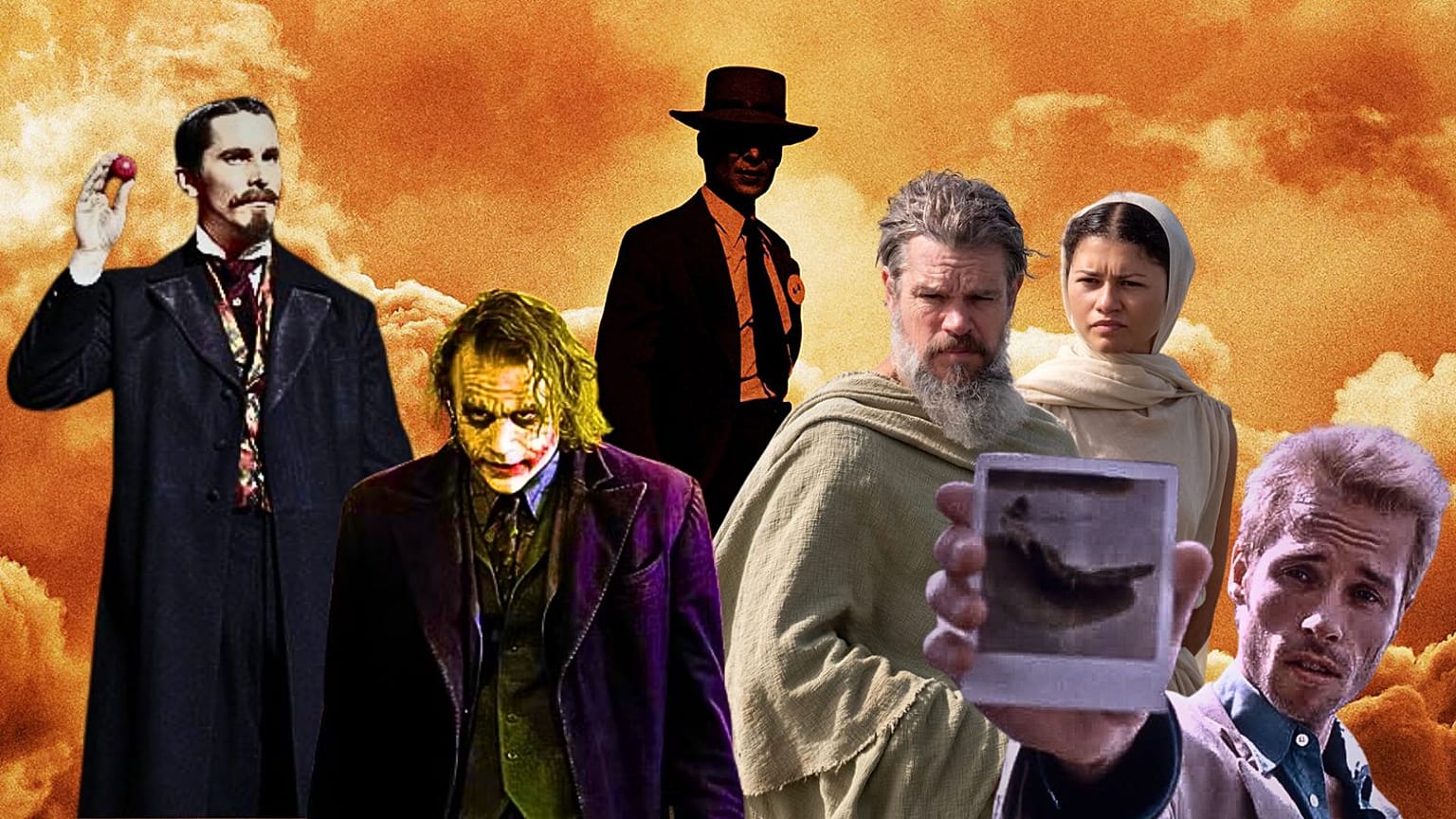













The much-anticipated return of Christopher Nolan has delighted film fans, as 'The Odyssey' has garnered critical praise and box office success. Euronews Culture offers the definitive ranking of all 13 of the acclaimed director's films.
From sci-fi thrillers to historical dramas via layered mysteries and three hugely successful Batman films, few directors inspire as much devotion as Christopher Nolan.
 ADVERTISEMENT
ADVERTISEMENT
ADVERTISEMENT
You know the fans we're talking about. The Nolanites who gush about every film and batter away recurring criticism of style-over-substance, emotional coldness, or the fact that he'd do well to forgo non-chronological narrative tampering in order to prioritise three-dimensional female characters that aren't just there to be dead wives.
Then there are those who recognise these pitfalls but can't deny that the Oscar winner continues to wow with an eclectic filmography featuring reoccurring motifs, arresting visual flourishes, and an ability to command top-notch talent both in front and behind the camera.
Whichever camp you're in, and whatever you may think of his box-office dominating latest, The Odyssey, Euronews Culture looks back and re-assesses all of the director's movies from weakest to strongest.
13) Following (1998)
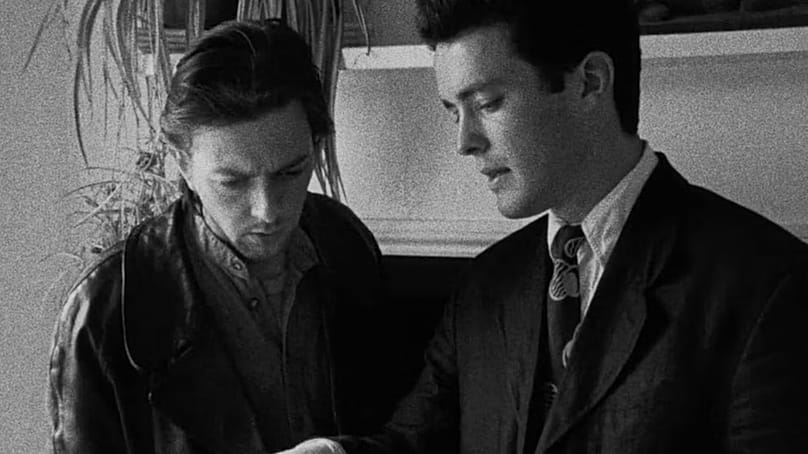
Every director has to start somewhere, and for then-28-year-old Christopher Nolan it was a 70-minute black-and-white drama about an obsessive writer. The 'Young Man' (Jeremy Theobald) follows strangers around London for inspiration and gets in over his head when he breaks his one rule: never follow the same person twice. This cerebral neo-noir is striking due to its Hitchcockian effectiveness, and features some of Nolan's treasured themes - principally topics of obsession and identity. Following is a decent entry point into Nolan's world and it's impressive to watch it with his second film (Memento) in mind to appreciate quite how the director evolved in leaps and bounds. Beyond that perspective and his debut being a micro-budget curio in his filmography (it was reportedly made for $6000), Following does remain a promising, if sluggish, character study.
12) Tenet (2020)
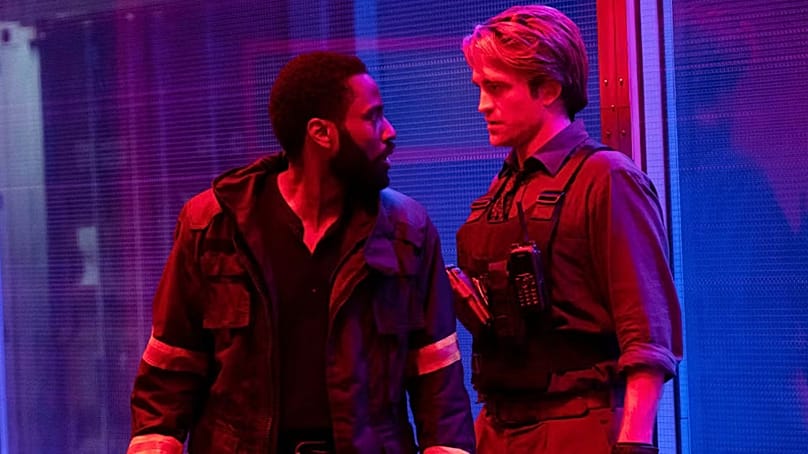
You can't accuse Tenet of not being ambitious. It's a high-concept and technically impressive espionage story which trusts the audience to keep up with time inversion and palindromic shenanigans. But it's the movie which showed that Nolan's reach exceeded his grasp. John David Washington plays a secret agent (eyerollingly dubbed “The Protagonist”) trying to prevent a war between the present and the future. It's thrilling in theory but baffling in execution. Tenet gets increasingly frustrating when it becomes a checklist of Nolan's most irritating foibles: pseudo-profundity lost in clumsy dialogue, underwritten female characters, oppressive sound mixing, and stunning style over pretentious substance. Even if you do embrace the advice given by a Tenet scientist ("Don't try to understand it, feel it"), you'll still be confronted with an emotionally cold effort which is convinced it's a lot cleverer than it actually is.
11) Insomnia (2002)
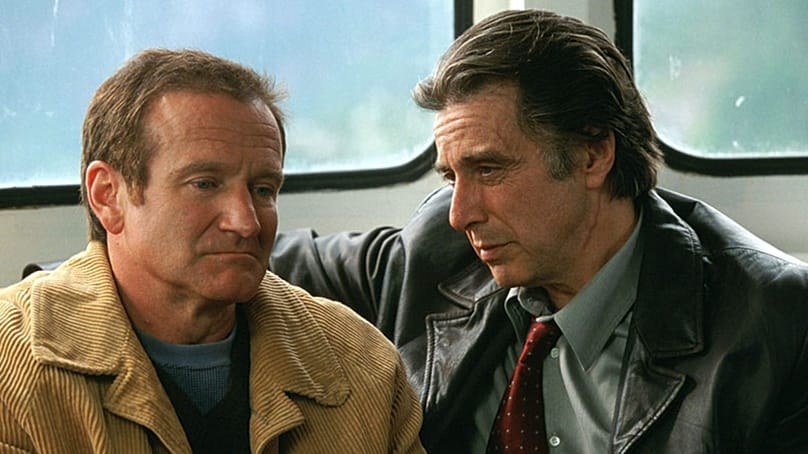
Nolan's third film may not one of his most memorable, but it's certainly underappreciated. Insomnia is a remake of Erik Skjoldbjærg’s 1997 thriller starring Stellan Skarsgård, and follows a veteran detective (Al Pacino) who teams up with a small-town investigator (Hilary Swank) to solve a Laura Palmer-reminiscent murder in a remote part of Alaska. Remote and bathed in perpetual sunlight. It’s a captivating detective drama, and what it lacks in ambitious scope it makes up for in upended tropes, an audaciously bleak ending, as well as a stellar performance from Robin Williams playing against type. Granted, Insomnia feels like it was a studio-mandated assignment for Nolan (who delivered his first film for Warner Bros.), but as far as psychological thrillers go, it deserves your time of day.
10) The Dark Knight Rises (2012)
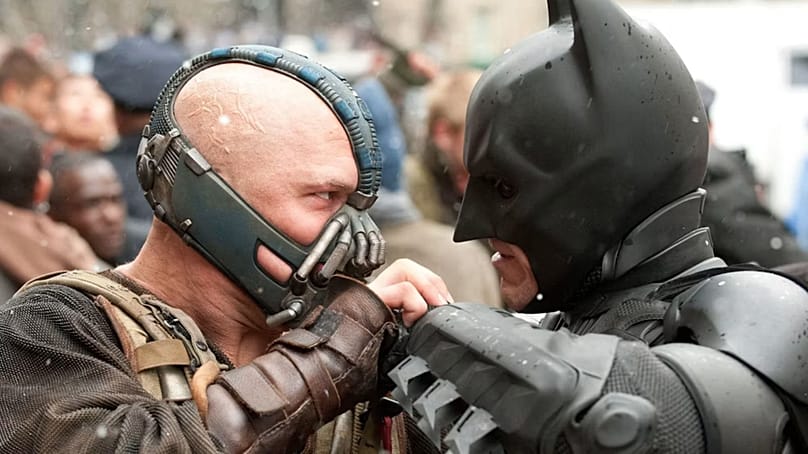
It's a shame that Christopher Nolan's Dark Knight Trilogy ended with a bit of a whimper with The Dark Knight Rises. Sure, Tom Hardy was great as Bane and Anne Hathaway impressed as Catwoman, but in making the story's scope wider (Charles Dickens' "A Tale of Two Cities" was a reference point for Nolan), something got lost along the way. The script isn't as tight, the plot holes are glaring, and some of the acting is questionable... Quite how that was the take chosen for Miranda Tate (Marion Cotillard)'s death, we'll never know... Nothing here reaches the same heights as Batman Begins or The Dark Knight. Granted, the latter was a tricky act to follow (more on that later), but it's undeniable that this closing chapter settles for satisfactory.
9) Dunkirk (2017)

From the very first shot, Dunkirk announces itself as something special. And it is: an astonishingly well-made World War II film that is split between land, sea and air. All three parts are intercut together while maintaining their individual pace. A week for land; a day for sea; an hour for air. By segmenting his depiction of the Dunkirk evacuation into these timelines and making them share a common theme (survival), Nolan delivers a technically accomplished experience whose visuals take precedent over traditional narrative storytelling. While it's a technical marvel which throws you into the action, Dunkirk does suffer from keeping the audience at an emotional distance when it comes to the many protagonists. As for the ending, some shots are jaw-dropping but their impact is dented by a clichéd ending featuring Commander Bolton (Kenneth Branagh) saying he's staying "for the French." Groan.
8) Interstellar (2014)
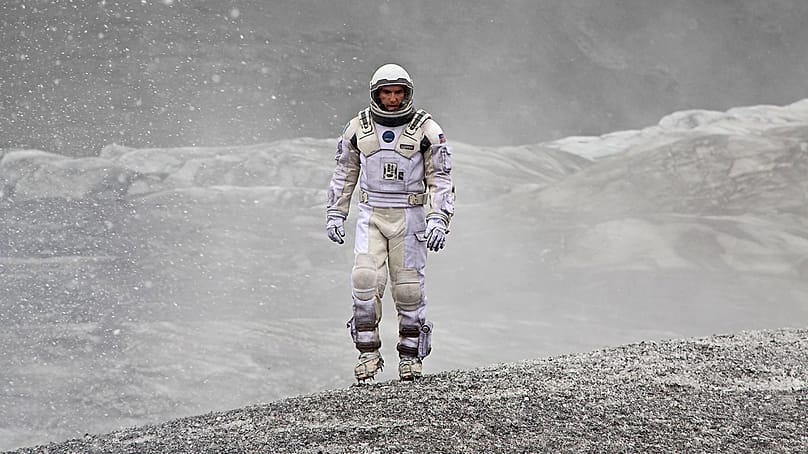
Interstellar is Christopher Nolan aiming to make this generation's 2001: A Space Odyssey, only with a more emotional core. By charting how an astronaut (Matthew McConaughey) leaves behind his children (not that you'd know, as most of the focus is on his daughter Murph) in a quest to save humanity by finding a new world to replace a dying Earth, Nolan attempts to prove some of his detractors wrong. He can put aside the coldly clinical and is capable of embracing feelings. For much of the runtime, the self-serious theoretical astrophysics blend well with the human drama, and some sequences are jaw-dislocatingly good. The "wave planet" and its time distortion is a particular highlight. The snag is that while Interstellar is never not awe-inspiring, thanks in large part to Hoyte van Hoytema's cinematography, the dialogue is distractingly on-the-nose and the final act fumbles the father-daughter story when it all goes M. Night Shyamalan in a five-dimensional space bookshelf. It's an imperfect film - made worse by countless film bros insisting that you the reason you don't love it more is because you don't understand it. But there's no denying that ambitious sci-fi never looked this spectacular.
7) The Odyssey (2026)
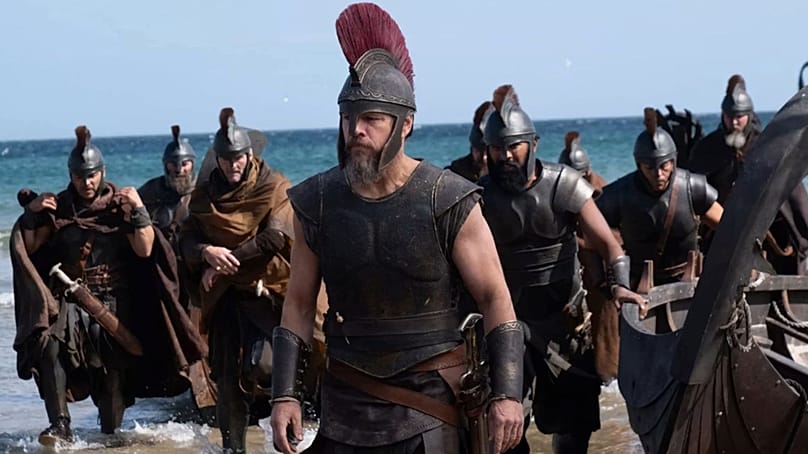
You've resurrected Batman, performed a dream heist (Inception), gone into outer-space and finally won several Oscars for your three-hour biopic about the birth of the atomic bomb... What do you do next? Embrace your inner Kubrick by fearing no scale nor scope and adapt the borderline unadaptable oldest known work of literature. As if that wasn't enough, you shoot it all in IMAX for a world first. Nolan’s take on Homer's epic is without a doubt his most ambitious undertaking, and there's so much to admire about this monumental technical achievement. Also worth singling out is his departure from the traditional Homeric world, preferring a tale in which the supernatural elements are dialled back to make way for a modernist reading of Odysseus' psyche. However, the filmmaker's proclivity for non-linear plot structures proves to be a thorn in his side. The Odyssey is often crippled by clumsy editing choices and pacing issues in its first half, and he never spends enough time on the dangerous adventures to make thrills truly register. Once it does coalesce into something more focused in the final act, you'll have felt awe but not much in the way of character-driven emotion. Even if it isn't the flat-out masterpiece many are hailing, there's no denying that no one could have accomplished something so bold.
6) Oppenheimer (2023)
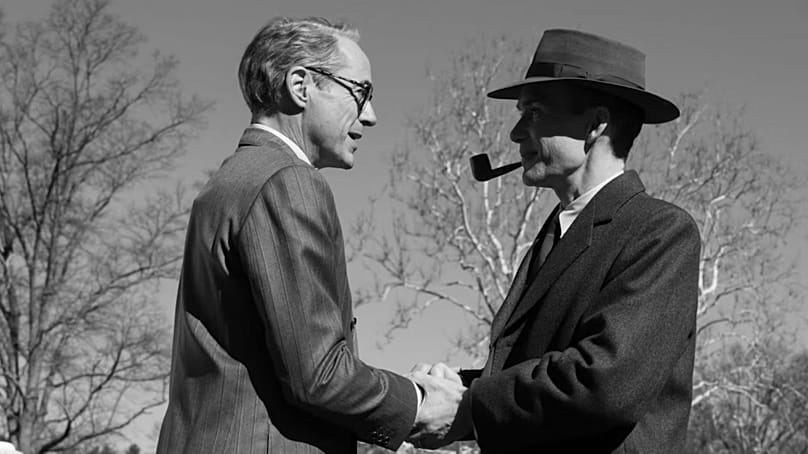
You’ve got to hand it to Oppenheimer - a three-hour biopic about a bunch of scientists, generals and lawmen talking to each other became 2023’s most unlikely blockbuster pairing with Barbie. It had no right being as gripping as it was. Based on Kai Bird and Martin J Sherwin’s non-fiction book "American Prometheus: The Triumph and Tragedy of J. Robert Oppenheimer", Nolan’s chronologically skewed epic gives spectators an exhaustive look at the rise and fall of the theoretical physicist who oversaw the Manhattan Project and introduced nuclear weapons to humanity. It's an American tragedy which benefits from the talents of an all-star cast led by Cillian Murphy and his note-perfect performance. Themes of guilt hit hard; the pace feels more deliberate compared to The Odyssey; and Ludwig Göransson's score is still his crowning achievement. One sizeable issue remains: Nolan still can’t write female roles – which is glaring here considering Oppenheimer features two complex women played by the immensely talented Emily Blunt and Florence Pugh.
5) Batman Begins (2005)
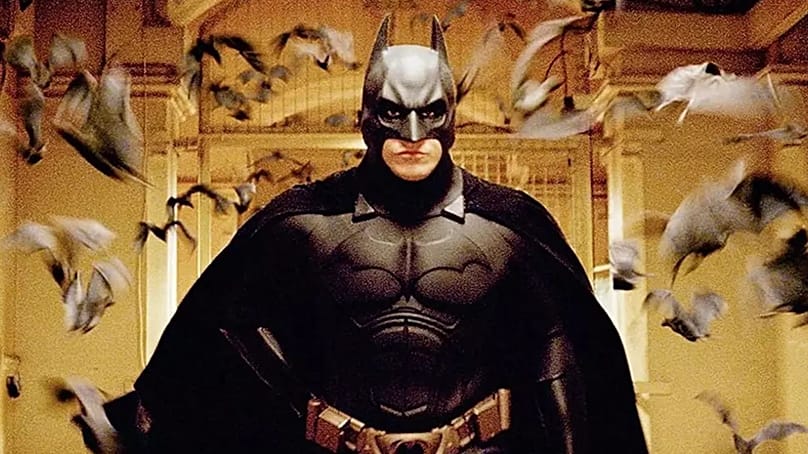
The Batman franchise was dead and buried after 1997’s Batman & Robin, and it took Christopher Nolan to revive the Caped Crusader for a new generation of cinemagoers. Starting with the very origins of Bruce Wayne before he donned the cowl, Nolan approached this superhero story much like he did The Odyssey: out with the myth and in with the character-driven story of a traumatised man. His hyper-realistic take on the Bat dispelled memories of Burton’s gothic treatment and Schumacher’s campy kitsch, and reinvented the franchise by showing that a grown-up Dark Knight was possible. Kudos to Christian Bale for understanding the assignment and making the parallels and conflicts between Bruce Wayne and Bats so engaging. It was the thrilling start of something special – but we’ll get to that in a bit.
4) Inception (2010)
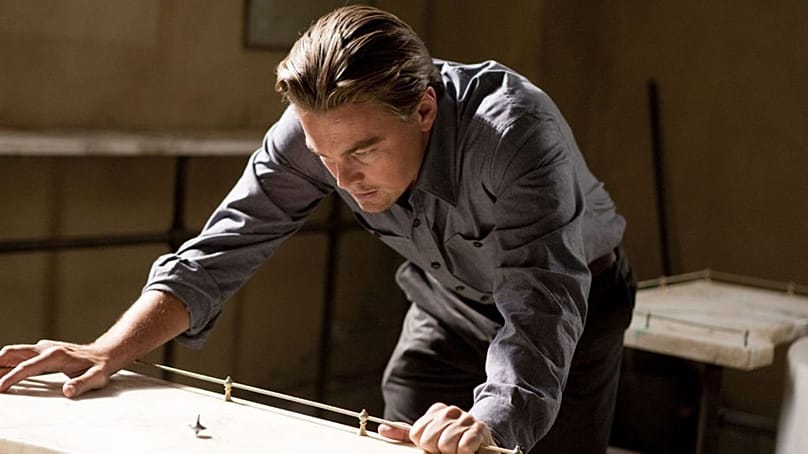
From this point in the ranking, there are nothing but triumphs. But because decisions have to be made, it's 2010's Inception which narrowly misses the podium. Following Leonardo DiCaprio as a grief-stricken widower who specializes in a form of corporate espionage involving the theft of information from a mark’s subconscious, Inception is one of the most original blockbusters of the 21st century. Getting the balance just right between cerebral and thrilling, Nolan proved that an A-list populated Hollywood action caper could be Bond-indebted and audaciously mind-melting. Moreover, the director gave the audience credit by trusting them to keep up during the matryoshkadream ride. Beyond the now parodied Hans Zimmer score and its blaring horns, Inception remains the bar to clear when it comes to films that both dazzle and challenge.
3) Memento (2000)
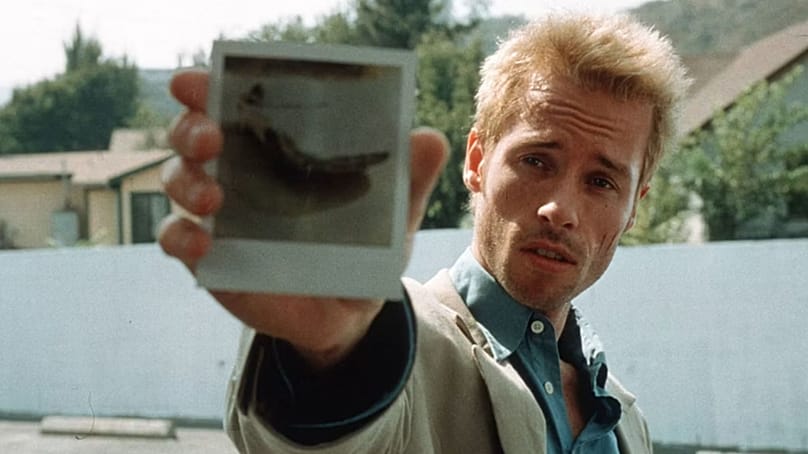
Nolan's second film is the one that put him on the map as a singular talent to watch. His sophomore effort is an engrossing and twisty noir about a man (Guy Pierce) unable to create short-term memories. As if that wasn't tough enough to deal with, our hero is trying to solve his wife's murder. Before Inception upped the stakes in terms of scope, Memento showed that Nolan was capable of making thrilling and challenging films which didn't talk down to audiences. Since its release, there have been misguided corners of the internet keen to dismiss Memento as "gimmicky". It's anything but. Beyond the chronological momentum of the monochrome scenes and the backward trajectory of the colour frames, Nolan takes the time to explore themes of grief, guilt and self-deception within a fractured mind. His film still stands as a groundbreaking mystery thriller that proves the director is at his nonlinear best when he keeps a tight grip on the narrative and never forgoes psychological depth for structural flourishes.
2) The Dark Knight (2008)
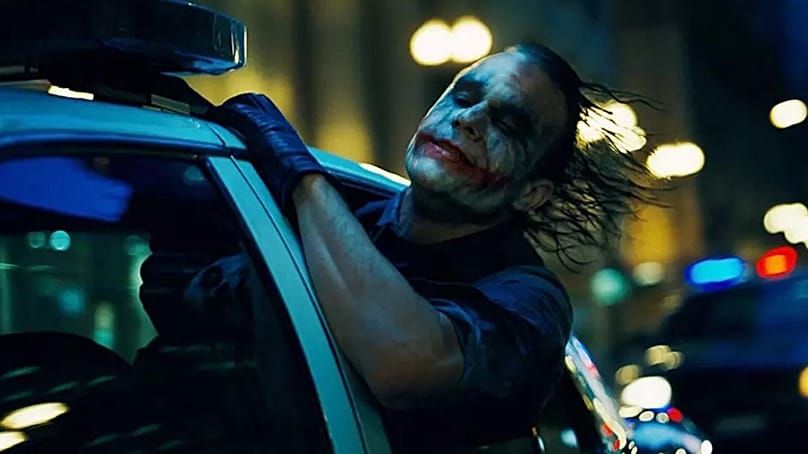
After Batman Begins, Nolan originally had no plans to return to Gotham. Everyone was glad he did, as The Dark Knight still stands to this day as one of the – if not the – greatest comic book / superhero movie ever made. Continuing his deconstruction the Batman myth, Nolan saw fit to shake things up and introduce the franchise's most beloved antagonist: The Joker. Despite initial bellyaching from fans that Heath Ledger was miscast as the Clown Prince of Crime, the latter delivered an Oscar-winning performance that was elevated to iconic following the actor's untimely death. Beyond the performances and thrills, The Dark Knight is an expansive and thematically rich blockbuster which continues to divide cinemalovers. Which is the superior middle instalment: The Empire Strikes Back or The Dark Knight ?
1) The Prestige (2006)
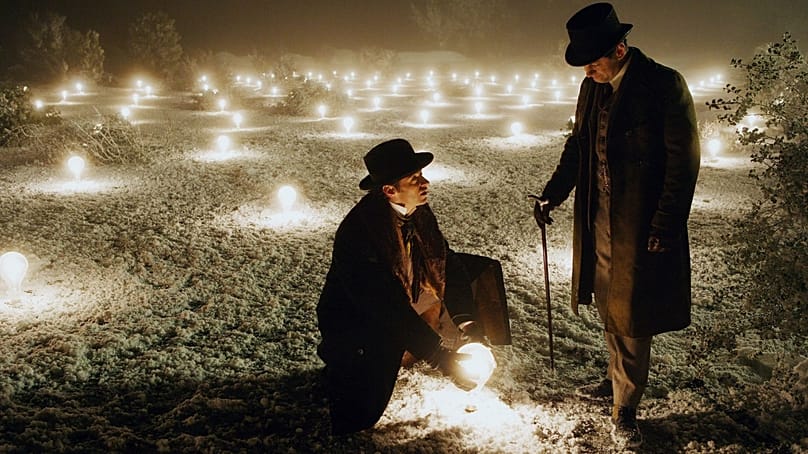
Based on Christopher Priest’s novel about dueling turn-of-the-century magicians - the charismatic Robert Angier (Hugh Jackman) and the technically skilled Alfred Borden (Christian Bale) - The Prestige didn't make much of a splash when it came out. Turning 20 this year, it takes the top spot. Structured in three fiendishly orchestrated parts mirroring (and adopting) the stages of a magic trick (The Pledge / The Turn / The Prestige), this is Nolan at his most disciplined when it comes to his time-based perspective shifts. The structure directly complements the narrative, making it a necessary formal trick. The Prestige is also Nolan at his most diligent when it comes to character development, and the way he explores themes of obsession and sacrifice hit home. Moreover, Nolan makes his film enticingly metatextual, a layered slight of hand that becomes not only about two ego-driven characters chasing the perfect illusion but about the medium of cinema itself. Fans may argue that The Odyssey is Nolan's most awe-inspiring feat, but this may just be about the scale and... whisper it... recency bias. They should consider The Prestige as the film which continues to leave spectactors open-mouthed. The twists stun upon first viewing; its layers deepen with repeated watches; and it continues to impress 20 years later. “You don’t really want to know the secret; you want to be fooled.” Too true. The Prestige is not only the greatest film ever made about magic, but Nolan's finest achievement to date.
The Odyssey is out in cinemas now.