
















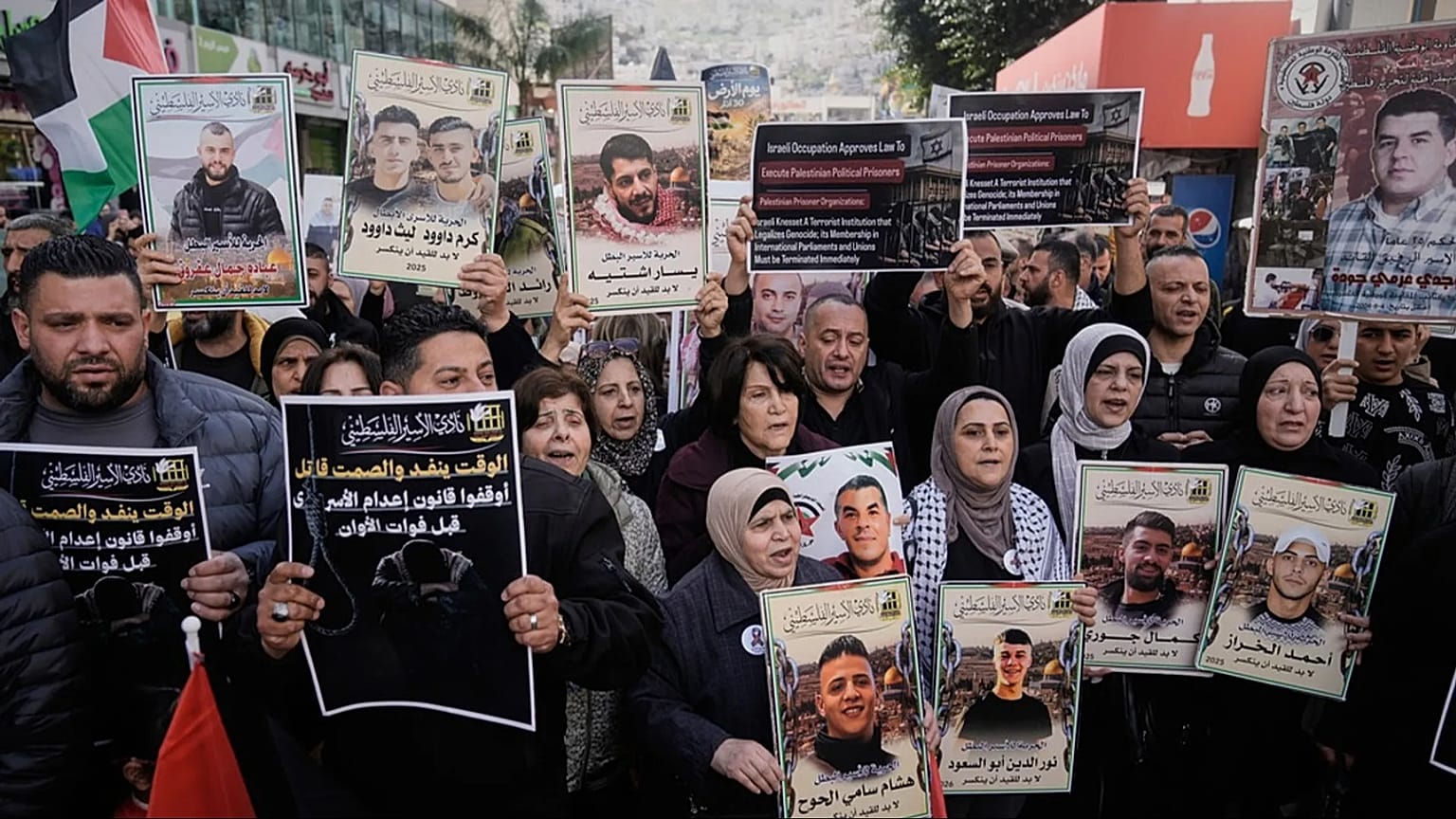














Thousands marched to protest the passing of the law, which critics have slammed as unjust and demanded it immediately been scrapped.
Palestinian shops and public institutions were closed across the occupied West Bank on Wednesday in protest against a new Israeli law permitting the execution of Palestinians convicted of deadly attacks, but not Israelis found guilty of similar crimes.
 ADVERTISEMENT
ADVERTISEMENT
ADVERTISEMENT
The law was passed by the Knesset earlier this week.
In the territory’s main cities of Hebron, Ramallah and Nablus, most stores were closed after Palestinian Authority president Mahmoud Abbas' Fatah party called for a general strike.
Entire shopping centres as well as the main market in Ramallah, the seat of the Palestinian Authority north of Jerusalem, were closed.
"It's a crazy law to be passed, it's insane," said Mohammed Gussein, a 24-year-old student at Al-Quds University, which like all Palestinian universities, was closed on Wednesday.
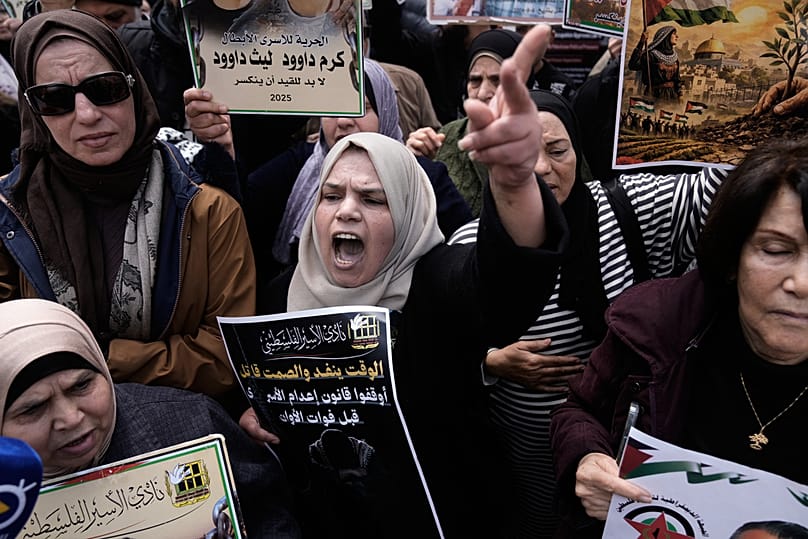
"It's completely out of touch with humanity, and completely racist," he added.
"There isn't a single person standing here who doesn't have a brother, a husband, a son, or even a neighbour in prison. There is no Palestinian family without a prisoner," said Riman, a 53-year-old psychologist from Ramallah.
"Today, we feel a lot of anger, because there is also a real weakness in solidarity with them. The occupation (Israel) is betting on the weakness of the street," noted Riman.
The new law, passed in the Israeli parliament late on Monday, would see Palestinians facing the death penalty as the default sentence if they are convicted by military courts of carrying out deadly attacks classified as "terrorism."
Because Palestinians in the occupied territory are automatically tried in Israeli military courts, the measure effectively creates a separate and harsher legal track for Palestinians.
In civilian courts across Israel, the law allows for either death or life imprisonment for those convicted of killing with intent to harm the state. While the law does not provide for retroactive application, critics say the distinction highlights a system of inequality.
Israel has historically rarely used the death penalty and applied it only in exceptional cases. The last person to be executed in Israel was the Nazi war criminal Adolf Eichmann in 1962.
Israel has occupied the West Bank since 1967 and violence there has soared since the Hamas-led attack on Israel on 7 October 2023, which triggered a two-year Israeli retaliatory offensive in Gaza, which killed thousands of people across the enclave.