

















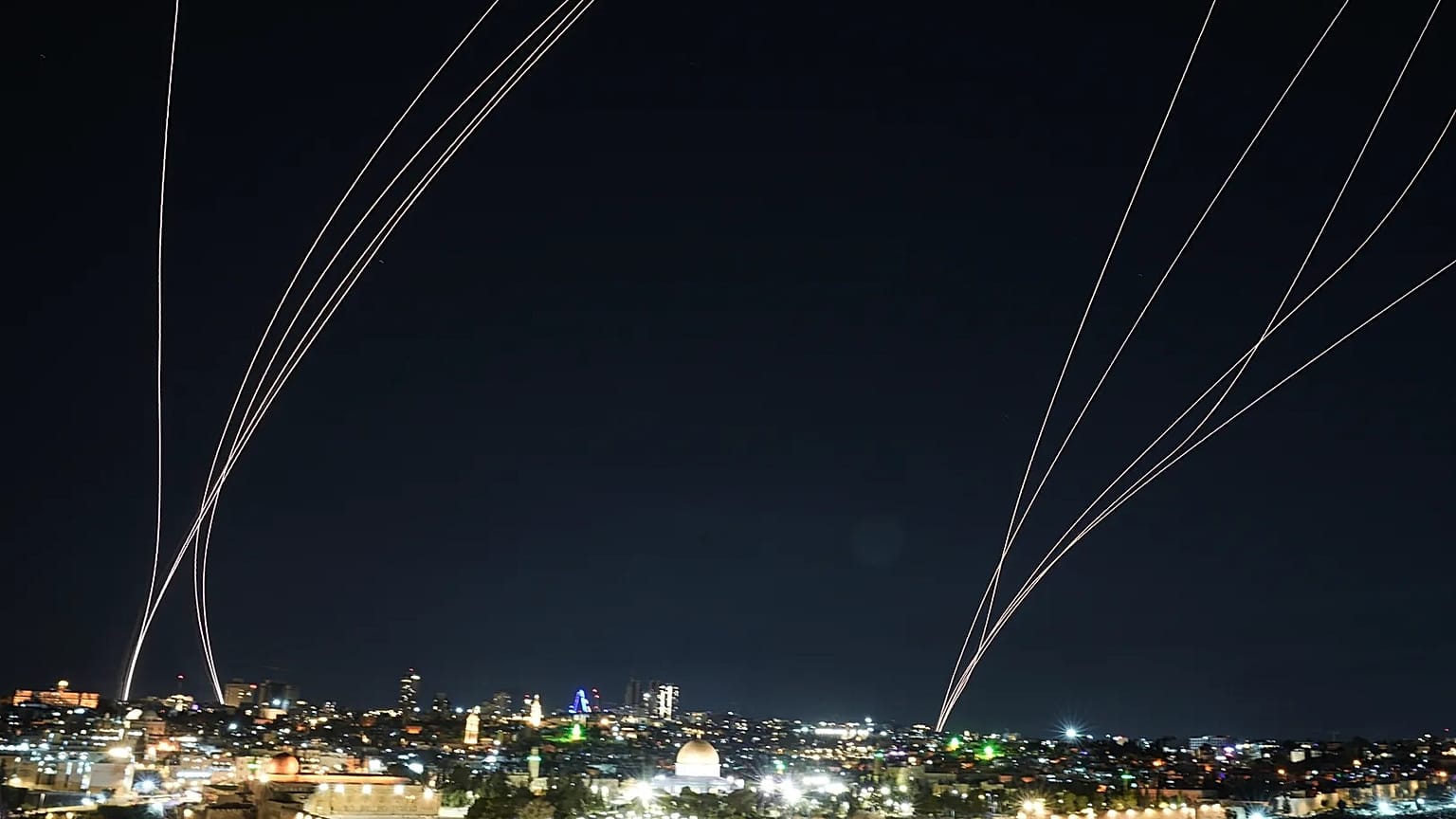













Iranian missile fire on Israel has slowed in the past two weeks to around 10-15 missiles a day, down from around 90 on the first day of the war.
Sirens have sounded repeatedly in central Israel on Wednesday night as Iran fired a major barrage of ballistic missiles at the country which was marking the start of the major Jewish holiday of Passover.
 ADVERTISEMENT
ADVERTISEMENT
ADVERTISEMENT
According to initial assessments by the military, around 10 ballistic missiles were fired at central Israel, in the largest Iranian salvo since the early days of the war.
Minutes later, the IDF said it detected another ballistic missile launch, the sixth such salvo of the day.
Israeli Army Radio said that most of the missiles fired were cluster munitions.
Cluster bombs can be exceptionally dangerous for the public as small munitions that are released may not explode on impact and pose a serious danger for passersby.
Iranian missile fire on Israel has slowed in the past two weeks to around 10-15 missiles a day, down from around 90 on the first day of the war.
US President Donald Trump claimed on Wednesday that Iran's president had asked for a ceasefire, but ruled out any truce until the vital Strait of Hormuz was reopened for crucial energy shipments.
But his assertion was flatly denied by Iran, with foreign ministry spokesman Esmaeil Baqaei rejecting it as "false and baseless.”
Tehran continues to insist there are no ongoing negotiations with Washington to end the war, and launched fresh missile attacks on Israel and US-allied Gulf nations on Wednesday.
"We will consider when Hormuz Strait is open, free, and clear. Until then, we are blasting Iran into oblivion or, as they say, back to the Stone Ages!!!" Trump wrote on his Truth Social platform.
Trump's tone has see-sawed between combative and conciliatory since the war began.
Late on Tuesday, he said that the month-long conflict could be over in "two weeks, maybe three."
Pezeshkian had said Iran had the "necessary will" for a ceasefire, but only if it received guarantees that hostilities would not restart.
Iran's Revolutionary Guards said on Wednesday that Hormuz, the narrow strait through which one-fifth of the world's oil normally passes, would remain closed to the country's "enemies."
The Guards also confirmed they hit an oil tanker in the Gulf they said belonged to Israel. A British maritime security agency said the vessel was struck off Qatar, reporting damage but no casualties.
Energy crisis
Optimism sparked by Trump's comments on the timeline for the end of the war pushed oil prices down on Wednesday and stock markets rallied in Europe and Asia.
But Iran's chokehold on Hormuz, through which Gulf oil and gas exports reach global markets, has sent energy prices soaring and unleashed global economic turmoil.
Average US gasoline prices topped $4 (€3.45) a gallon for the first time in four years this week, while European inflation spiked and governments around the world started to unveil support measures.
Britain said on Wednesday that it would host a meeting of about 35 countries this week to discuss how to reopen the strait.