





























The comments come after a prime-time address at the White House in which US President Donald Trump threatened to bomb Iran "back to the Stone Ages, where they belong."
Iran has threatened "crushing" attacks on the United States and Israel, after US President Donald Trump vowed to bomb the Islamic Republic "back to the Stone Ages."
 ADVERTISEMENT
ADVERTISEMENT
ADVERTISEMENT
Tehran will continue fighting until the US and Israel face "permanent regret and surrender," Ebrahim Zolfaqari, spokesperson of the Khatam al-Anbiya central headquarters, said in comments carried by the semi-official Tasnim news agency.
He said Iran would step up military operations and launch "more crushing, broader and more destructive" attacks on its enemies.
Those comments come after a prime-time address at the White House in which Trump said the US was "very close" to achieving its objectives but warned attacks would intensify if Iran did not reach a negotiated settlement.
"Over the next two to three weeks, we are going to bring them back to the Stone Ages, where they belong," he said.
Trump used his platform to attempt to reassure war-weary Americans the offensive was worth the effort, but also spent much of the 20-minute speech repeating many things he had already said in recent weeks and providing few new details.

Safe havens
The conflict has drawn in Gulf countries once seen as a safe haven in a volatile region, with air defences in the United Arab Emirates responding to missile and drone threats on Thursday.
The war has also highlighted the importance of the Strait of Hormuz.
Iran's Revolutionary Guards have vowed to keep it shut to the country's "enemies" while Trump has made reopening it a condition for a ceasefire.
The war continues to disrupt oil and shipping, with British Foreign Minister Yvette Cooper stressing the "urgent need" to reopen the Strait of Hormuz, where one-fifth of the world's oil usually passes.
While Trump has urged oil-importing countries to seize the waterway, virtually closed since the war began, French President Emmanuel Macron said on Thursday that a military operation to liberate the strait was "unrealistic".
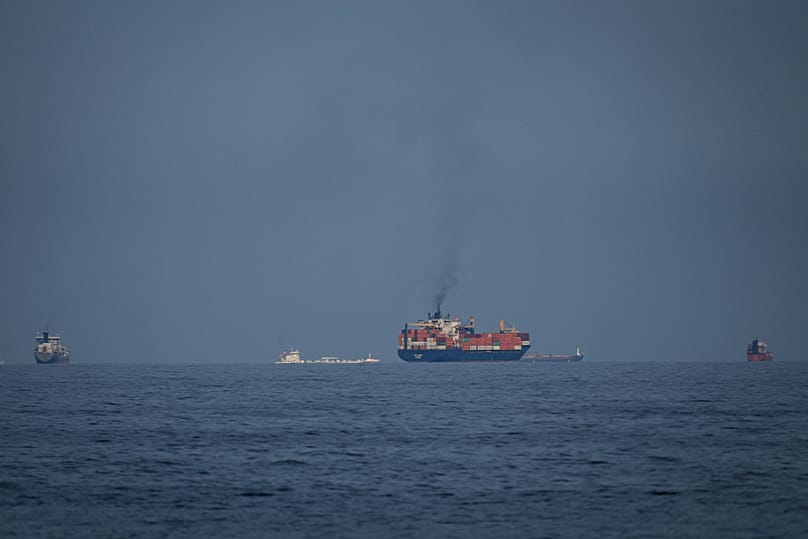
China is a major importer of oil through the shipping lane. Its foreign ministry blamed the US and Israel for being the "root cause" of the blockage.
Trump's speech did nothing to reassure markets, as oil prices spiked and stocks tumbled.
The World Bank's Managing Director Paschal Donohoe said the institution was "extremely concerned" about the war's impact on inflation, jobs and food security.
The economic fallout is being felt worldwide, with airlines in China saying they will hike fuel surcharges and Malaysian civil servants being asked to work from home.
Even the Himalayan kingdom of Bhutan is feeling the impact, with the government saying "external conditions beyond our control" had forced a hike in fuel prices.