




























Researchers will also trial a prototype ‘Early Warning System’ for glacier change in Greenland, as ice melt continues to accelerate.
An international team of scientists is determined to understand just how quickly Greenland’s melting glaciers are pushing the Atlantic Ocean towards a “critical climate tipping point”.
 ADVERTISEMENT
ADVERTISEMENT
ADVERTISEMENT
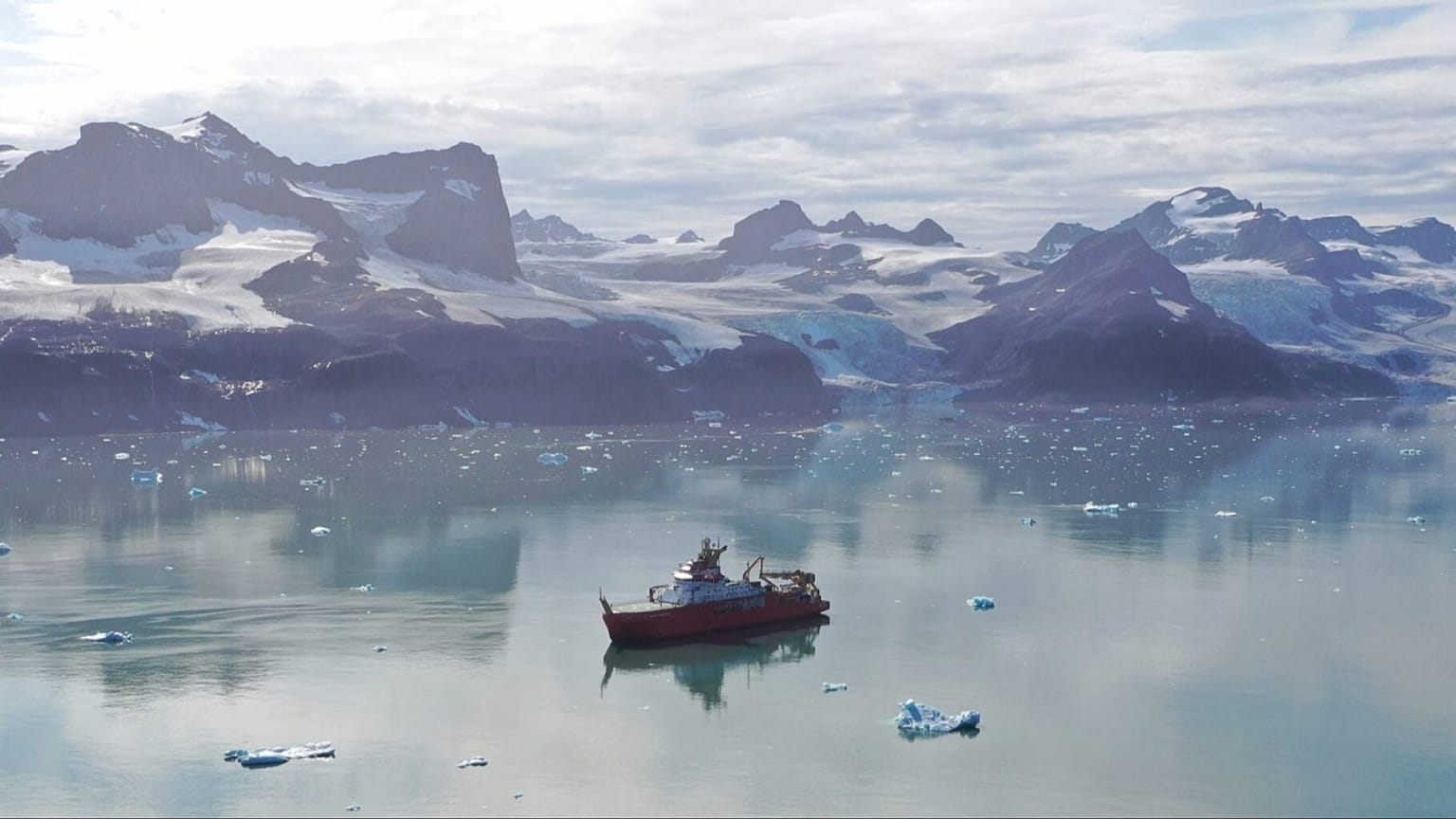
As part of a five-year project known as GIANT (Greenland Ice sheet to Atlantic Tipping Points), researchers from 17 partners – led by the British Antarctic Survey (BAS) – will head to the autonomous island this summer for a two-month expedition.
Funded by the Advanced Research and Invention Agency (ARIA), researchers hope to grasp the level of meltwater being released from Greenland's fjord glaciers, how it enters the North Atlantic Ocean, and how this process impacts the global climate system.
Why Greenland’s tipping point is a concern for everyone
Greenland’s shrinking ice caps have already contributed around one-fifth of global sea level rise, as heat-trapping emissions send temperatures soaring.
According to the National Snow and Ice Data Centre, the Greenland ice sheet holds enough water to raise global sea levels by 7.4 metres if it were to melt completely. For every centimetre of sea level rise, around six million people on the planet are exposed to coastal flooding.
Greenland’s melting ice also discharges vast quantities of freshwater into the ocean, which scientists worry may impact a major Atlantic Ocean current system called the Subpolar Gyre. This system carries heat from the tropics to the North Atlantic, regulating temperatures and weather across Europe and North America.
However, fresh meltwater may “cap” the Subpolar Gyre, blocking the formation of warmer, dense water that powers the wider global ocean conveyor belt that moves heat and nutrients around the world. Some estimates warn that the Subpolar Gyre could change in the next four years.
Inside the race to understand Greenland’s melting glaciers
Despite the stark implications, scientists currently don’t have a clear picture of how Greenland’s fjord glaciers and the island’s 200 narrow fjords actually interact with the surrounding ocean.
It’s why researchers are travelling to Greenland this summer armed with a “sophisticated suite” of technologies including airborne drones, autonomous marine robots, satellites and instruments that can be embedded directly into glacier ice.
The coordinated observing system will allow researchers to get up close and personal with the glaciers, scanning individual cracks in the ice all the way up to the flow of meltwater and icebergs into the North Atlantic.
This data will then be fed into multiple computer models and will be used to develop a prototype Early Warning System that could signal advance notice of any rapid glacier change.
“This is a massively ambitious project and is urgent,” says Dr Kelly Hohan, co-creator of GIANT and a climate scientist at BAS.
“We know Greenland is losing ice at an unprecedented rate and this will impact the surrounding ocean – from the coastal fjords [that are] so important to Greenland’s communities – to the large currents that bring heat to Western Europe.”
GIANT will focus on two types of glaciers in Greenland that offer “contrasting but complementary insights” into their stability. This includes tidewater glaciers near Kangerlussuaq in South-East Greenland and Petermann Glacier in North-West Greenland.
“Trying to build modelling systems that can capture abrupt glacier change is bold and risky,” says Professor Paul Holland, who is leading the computer modelling efforts for GIANT.
“The science is intricate and there’s a real chance we won’t be able to predict sudden ice losses.”
Even if the project doesn’t pan out as planned, Holland argues that scientists will still have improved their skill of climate forecasting and understanding of how Greenland might affect the ocean in the future.
An Early Warning System for Greenland’s glaciers
Researchers hope that by working towards an Early Warning System, governments can be better prepared to adapt to the consequences of climate change.
This online system would combine satellite observations, field data and statistical glacier modelling to predict when ice loss into the North Atlantic might suddenly increase.
Sarah Bohndiek of ARIA’s Forecasting Tipping Points programme, says scientists are currently unable to forecast when climate tipping points might be crossed – leaving us “poorly equipped to handle the potentially irreversible consequences” of breaching these thresholds.
“Developing an early warning system is necessary to provide governments, industry and society more broadly the information they need to build resilience and accelerate proactive climate adaptation,” she adds.