




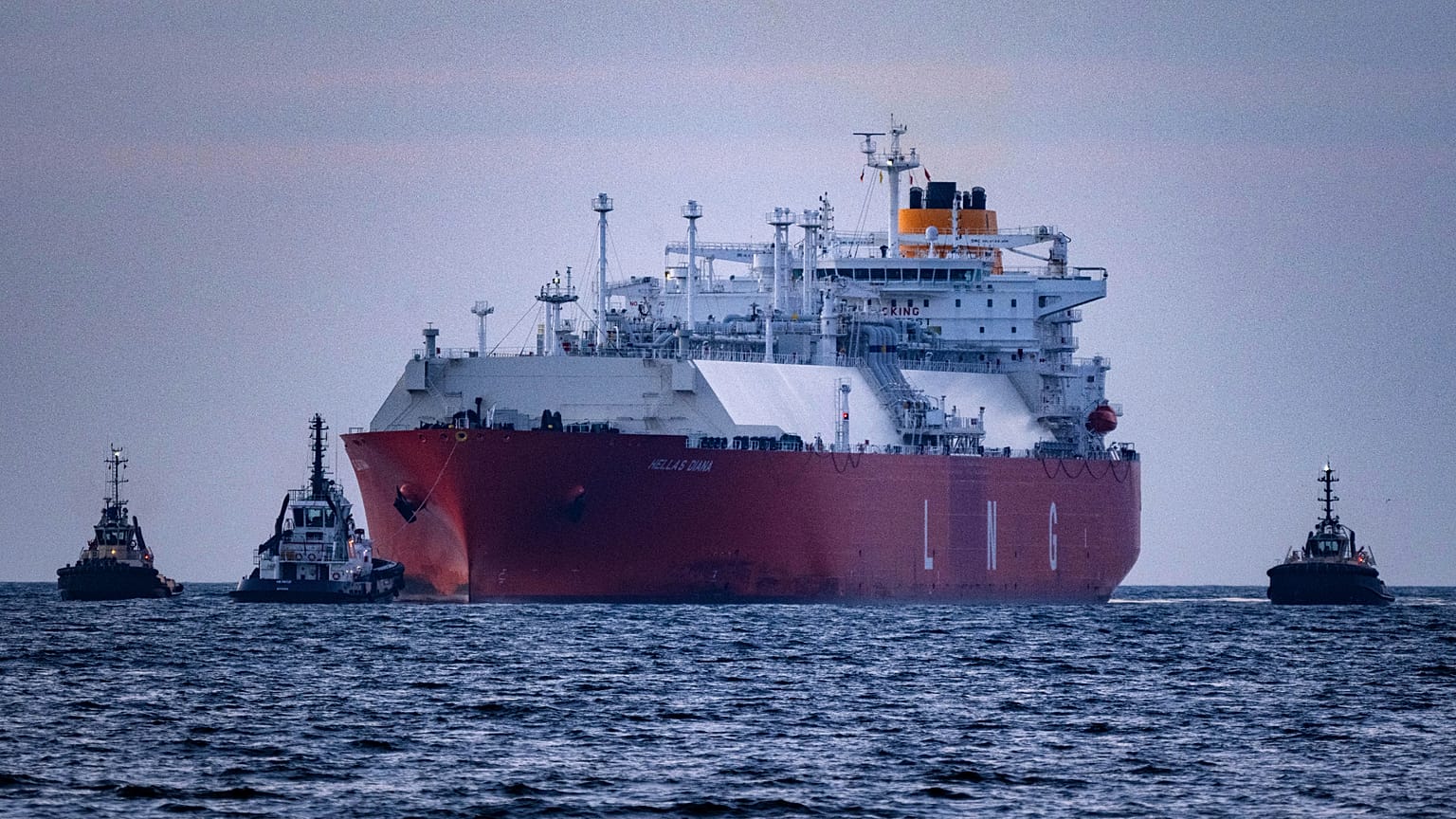













Germany is now supplying natural gas to Ukraine via an LNG terminal in the island of Rügen. The move was announced by the Ukrainian energy company Naftogaz.
Germany has begun supplying gas to Ukraine for the first time through the LNG terminal on the largest German island of Rüge, according to a statement by the Ukrainian energy company, Naftogaz, on Monday.
 ADVERTISEMENT
ADVERTISEMENT
ADVERTISEMENT
The terminal, dubbed the “German Baltic”, regasifies liquified natural gas shipped in by tankers, including supplies from the US, before feeding it into Germany’s pipeline network for transport across Europe.
This LNG terminal has substantially increased its activities during the winter heating season.
Germany supplying Ukraine
Deutsche ReGas, the German operator which runs the LNG terminal on the island of Rügen, also confirmed the news.
“We are particularly proud […] to be making a direct contribution to Ukraine's energy security,” said Ingo Wagner, CEO of Deutsche ReGas.
The company highlighted that the Rügen facility is the only privately financed and operated LNG terminal in Germany supplying Ukraine.
The shipments are routed via Poland and are expected to help cover Ukraine’s energy needs in the near future, Deutsche ReGas stated.
CEO Wagner described that the deliveries are proof of the terminal’s “strategic importance” for Central and Eastern Europe.
Naftogaz's CEO, Sergiy Koretskyj, added that Ukraine’s winter demand has been intensified by the war.
“This winter has been the most difficult since the start of the war due to the constant attacks on the gas infrastructure and the extreme cold,” Koretskyj explained.
Ukraine’s energy system has repeatedly come under attack since Russia launched its full-scale invasion, with Kyiv also reporting strikes on other critical infrastructure.
“This new partnership opens up a new reliable import route for Ukraine for the current year, and this agreement is just the first step on the way to a long-term partnership,” Koretskyj said, adding that Naftogaz is working to diversify supply sources and routes to ensure stable deliveries.
Germany’s LNG build-out
Germany now has five LNG terminals in operation, all on the North Sea and Baltic coasts.
Two floating terminals operate near Wilhelmshaven, with others located near Brunsbüttel, Lubmin and at the port of Mukran on the island of Rügen.
At these locations, the liquified natural gas is delivered by tanker and regasified on site before being forwarded via the terminals.
According to experts in the gas and hydrogen industries, this is one way of securing the supply, as LNG liquified gas can be transported to Germany independently of existing pipeline structure.
Germany — like the rest of Europe — has been searching for alternative energy sources since Russian gas imports were halted more than four years ago following Moscow’s full-scale invasion of Ukraine.
Liquefied natural gas (LNG) imports quickly emerged as a key stopgap to secure supply, particularly during the winter heating season.
According to Germany’s Federal Ministry for Economic Affairs, the United States accounted for 96% of German LNG imports last year.
Some experts view the shift critically, warning that Europe may have swapped one dependency for another after only recently reducing its reliance on Russian gas.
Data from Germany’s Federal Network Agency show that gas delivered via LNG terminals in Wilhelmshaven, Brunsbüttel, Lubmin and Mukran made up 10.3% of Germany’s total gas imports in 2025.
The bulk of Germany’s natural gas still arrives by pipeline from Norway, with the Netherlands and Belgium also supplying significant volumes.
Natural gas imports via the LNG terminal on the island of Rügen have recently risen sharply.
At the beginning of February, Deutsche ReGas reported that the energy terminal in Mukran had regasified the largest volume of gas of all floating LNG terminals in Europe for the past three months.