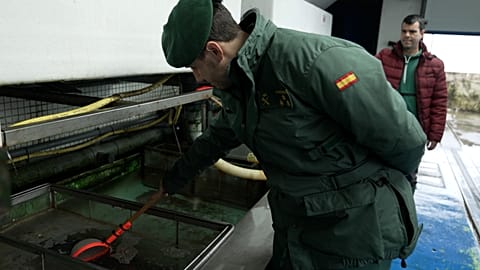

















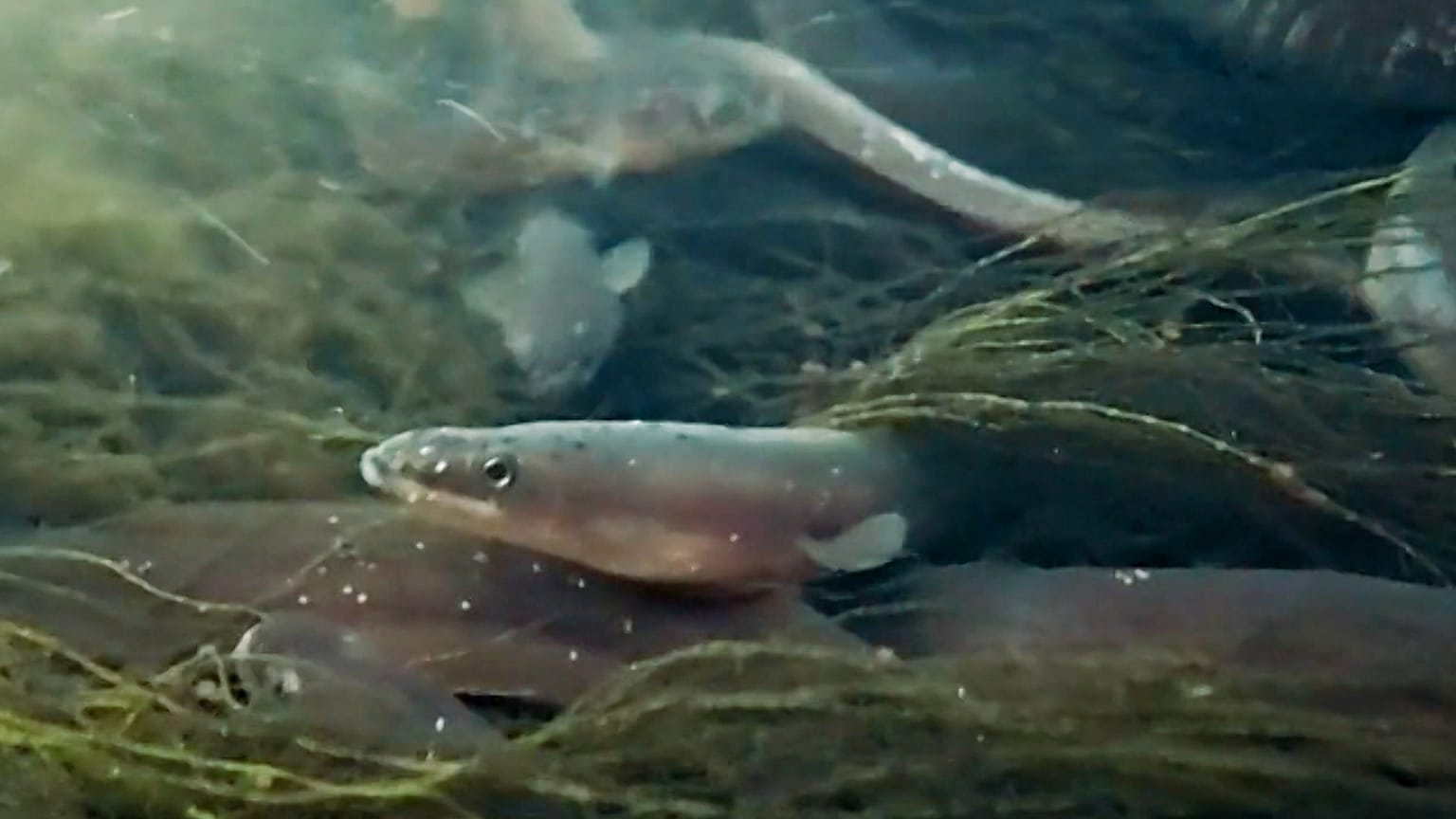














A growing number of international chefs have publicly removed eel from their menus. Fishing and trade of the European eel remain legal within the EU, despite repeated warnings from scientists that the species could soon disappear.
“Gastronomy cannot endorse the collapse of biodiversity. Would we put pandas on our menus? Well, the eel is more endangered than the panda,” former three-Michelin-star French chef Olivier Roellinger told Euronews.
 ADVERTISEMENT
ADVERTISEMENT
ADVERTISEMENT
Scientific reports show that the European eel population - once abundant in rivers across the continent - has collapsed by around 90% in recent decades.
Roellinger has launched the campaign “Anguille, non merci” (“Eel, no thank you”), with French NGO Ethic Ocean. The initiative has been backed by several thousand renowned chefs, including Thierry Marx and Mauro Colagreco, as well as restaurant associations such as Relais & Châteaux.
Other organisations like Euro-Toques have taken similar steps. In Spain, 10 Michelin-starred chefs, including Andoni Luis Aduriz, Joan Roca and Yolanda León, recently took a stand.
A European debate
“From the moment politicians fail to take action, citizens must take responsibility,” Roellinger said.
Despite scientific recommendations calling for a complete halt to catches, eel fishing and trade remain permitted in the EU. Because eels have not yet been successfully bred in captivity on a commercial scale, all farmed specimens originate from wild stocks.
The European Union has asked member states to implement recovery plans for the species and set a target of allowing at least 40% of adult eels to escape to the sea to reproduce.
France, Europe’s largest glass eel fisher, plans to maintain quotas until 2027. Spain’s government has recently proposed banning eel fishing altogether but faces strong opposition from some Provinces, who argue that recovery efforts should focus instead on combating poaching and restoring rivers.
The billion-euro illegal eel trade
The European eel remains a prized delicacy, particularly in northern Europe in the form of fillets, and in France and Spain, where it is sometimes consumed at the juvenile stage as glass eel.
“When a species is endangered, the first measure for any sustainable fishery is to set a minimum size limit to allow the animal to reproduce,” Roellinger insisted.
To reduce pressure on the species, the EU banned all exports of European eel in 2009. However, Europol estimates that tonnes of glass eels are smuggled each year to East Asia, home to the world’s largest aquaculture eel farms.
DNA tests conducted in shops and restaurants have also revealed that European eel has been illegally imported into the EU, mixed with other species such as the American eel and the Japanese eel.
The Japanese eel, along with the American variety, is listed as “Endangered” on the International Union for Conservation of Nature (IUCN) Red List. The European eel is considered “Critically Endangered.”
New international commitments
Overfishing is one of the many drivers behind the decline of eel species, alongside pollution, climate and ocean current changes, habitat loss and man-made migration barriers.
The European eel is currently the only eel species listed under CITES, the Convention on International Trade in Endangered Species of Wild Fauna and Flora, meaning that annual reports must be submitted on the state of the species.
At the COP20 meeting of CITES in Samarkand, Uzbekistan, last November, the European Union and Panama proposed listing all eel species under the convention, putting forward that if the availability of a given eel species declines, trade pressure shifts to other species.
“The global decline of eel species is scientifically well-documented. We remain convinced that urgent, coordinated international action is needed to protect eel species worldwide. We will continue working through multilateral channels to strengthen conservation and combat illegal trade”, Jessika Roswall, EU Commissioner for Environment, told Euronews.
The proposal was not adopted by the signatory countries, but a resolution on eels was approved. Resolutions provide long-term guidance to member states.
“This resolution includes that Parties need to collaborate on matters relating to traceability and enforcement and acknowledges that there are areas in terms of knowledge gaps, regarding for example the different life stages of a specific species, the identification of process products, or how management interventions could contribute to conservation and sustainable use”, Thea Carroll, Chief of the Science Unit at the CITES Secretariat, told Euronews.
''We will consolidate this information and submit it to our scientific committees, which will decide whether there's a need for further recommendations to be made to parties”, she said.
Read more