




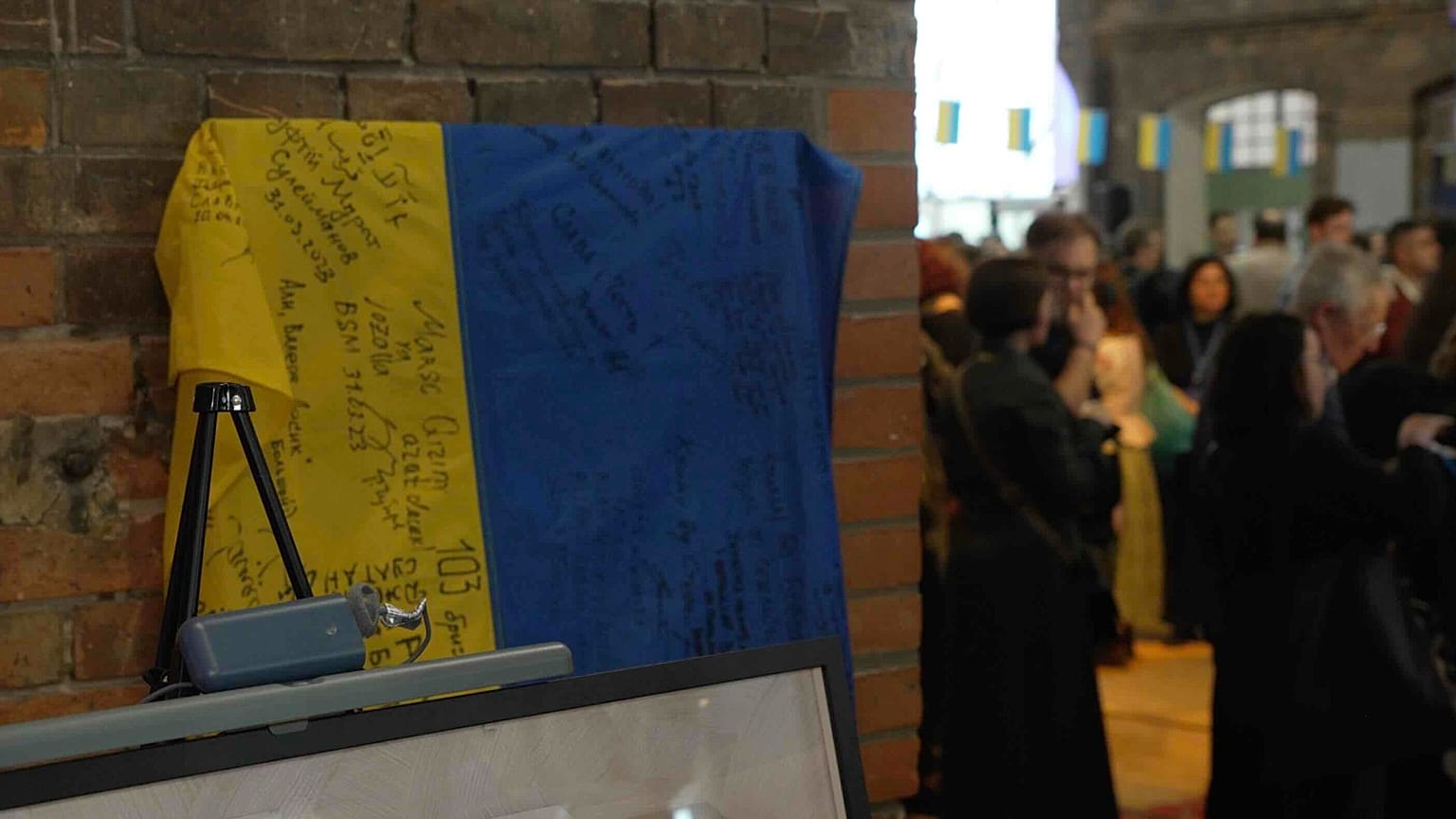














As Russia's full-scale invasion of Ukraine enters its fifth year, supporters of Kyiv gathered at Café Kyiv in Berlin to keep attention on the war.
On the eve of the anniversary of Russia's full-scale invasion of Ukraine, Berlin presented itself as a hub of solidarity with Kyiv.
 ADVERTISEMENT
ADVERTISEMENT
ADVERTISEMENT
Politicians, activists, and entrepreneurs met on Monday night at Café Kyiv, an event organised by the Konrad Adenauer Foundation. German Chancellor Friedrich Merz and Nobel Peace Prize laureate Oleksandra Matviichuk were among the speakers.
The event also brought together a wide range of European and Ukrainian initiatives, including the German drone company Quantum Systems.
Their shared aim was to keep attention focused on Ukraine four years into the war — and to show that support across Europe has not faded.
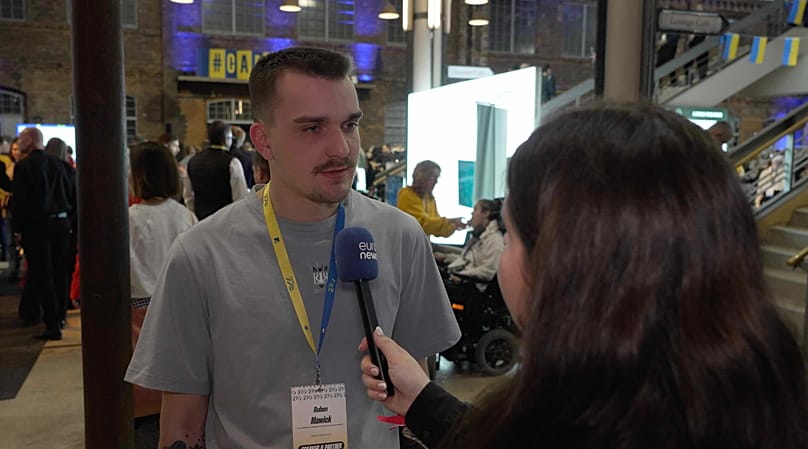
Among those who have taken that support beyond words is 22-year-old Ruben Mawick.
Since the second year of the invasion, he has repeatedly travelled to Ukraine, spending weeks at a time volunteering as a paramedic.
"It was important to me to do something for the people there," he told Euronews.
"I never thought my life was worth more than that of a Ukrainian child. I just wanted to do my small part to make Europe safer."
On 9 September 2023, Mawick and three other volunteers were hit by a Russian anti-tank missile near Bakhmut. Their vehicle was struck. Two of the volunteers, Emma and Tonko, were killed. Mawick and another volunteer, Johan, survived.
Despite the attack, Mawick continues to return to Ukraine for weeks at a time. Fear is inevitable, he says — you know what can happen. But being wounded did not diminish his resolve. If anything, he says, it has only strengthened his desire to help.
From artillery war to drone war
The war has changed significantly since 24 February 2022.
What began largely as an artillery and missile offensive has increasingly turned into a drone war. As a result, danger is no longer confined to the front line. Areas far behind it —sometimes up to 50 kilometres away — are now within reach.
Alongside drones, Russian forces have also made increasing use of so-called "double-tap" attacks.
The tactic involves launching a second, deliberately delayed strike at the same location, targeting rescue workers, emergency crews or bystanders who arrive after the first blast.
Such attacks are widely considered to violate international humanitarian law, including Common Article 3 of the Geneva Conventions, and may constitute a war crime under the Rome Statute of the International Criminal Court (ICC).
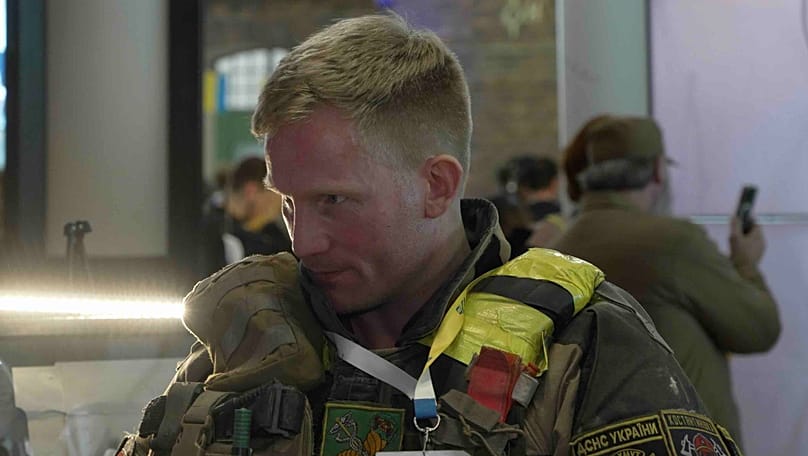
Nils Thal, a firefighter from Nuremberg in southern Germany, has also gone to Ukraine to help several times since the start of the full-scale invasion. He told Euronews that he has witnessed these attacks several times.
"The fire brigade missions were double taps from the very beginning," Thal said.
At first the strikes were often carried out with ballistic missiles, he added, but over time drones were used more frequently.
In 2024, Russia started using glide bombs more frequently.
Nowadays, Thal said, attacks are often combined — with Geran-2 or Shahed drones often used for the second strike.
Ukrainian air defences are "particularly active" during such missions, he said.
"We are regularly warned when new attacks are approaching," Thal added.
Rescue operations are then paused and emergency crews take cover — sometimes several times during a single mission. According to Thal, "it's rare that there is only one strike." Additional attacks often follow, although many are intercepted by air defences.
Merz condemns war as 'the lowest point of barbarism'
Opening Café Kyiv, Merz delivered a stark condemnation of Russia's war.
He cited the 19th-century French writer Astolphe de Custine, who once described Russia as a country where "the deepest barbarism" exists alongside "the highest civilisation".
That contrast, Merz argued, can still be seen today — in Russia's culture, music and literature on the one hand, and the brutality of its war on the other.
"Yet we must also recognise," Merz said, "that this country has reached the lowest point of the lowest barbarism under its current leadership."
Merz stressed that Ukraine was not only defending its own territory.
"They are defending their freedom, and they are defending ours," he said, arguing that the war concerns the foundations of Europe's peace order — including the principle that no country has the right to expand by force at the expense of another.
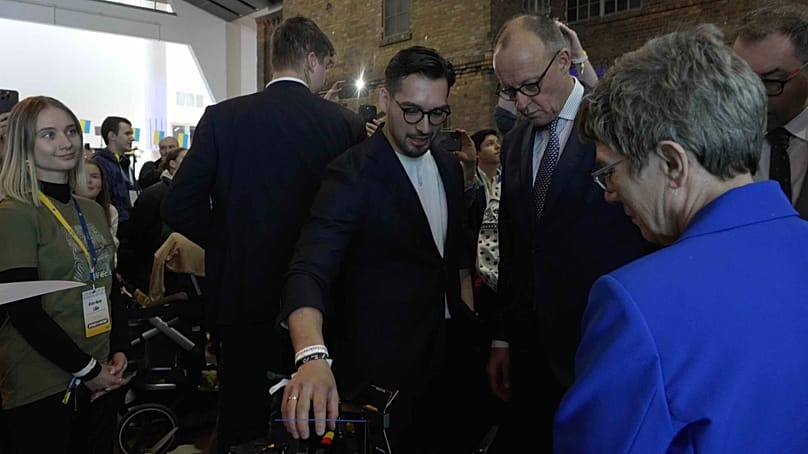
Berlin and the EU would therefore continue to support Ukraine, Merz said.
Since the start of the full-scale invasion, Germany has provided billions of euros in both civilian and military aid, aimed at enabling Kyiv to defend itself while laying the groundwork for a just and lasting peace.
Any such peace, he stressed, must meet clear conditions.
Ukraine's sovereignty must be preserved and "only Ukraine itself can decide on territorial questions — no one else," according to Merz.
Civilian toll rises despite peace talks
In an interview with Euronews, Matviichuk warned that the human cost of the war is increasingly being overshadowed by political negotiations to end the conflict.
Paradoxically, the number of civilians killed and injured has risen sharply during what many have described as a year of intensified diplomacy, the Nobel laureate said.
According to the UN mission in Ukraine, at least 2,514 civilians were killed and 12,142 injured in 2025 — a 31% rise compared to 2024 and around 70% higher than in 2023.
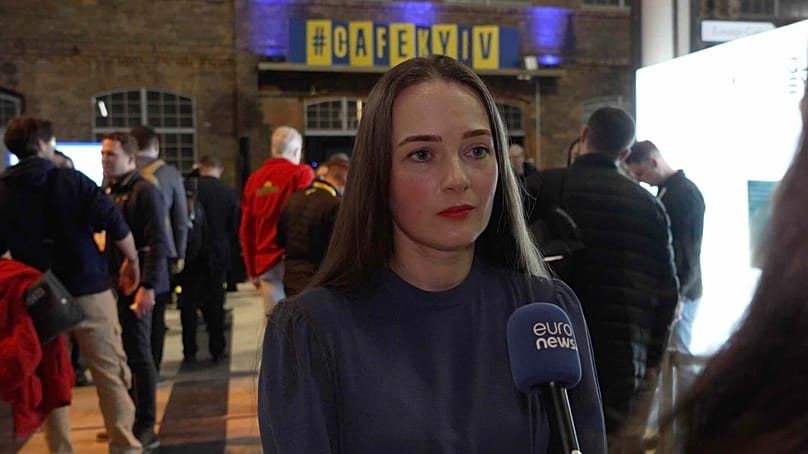
"We have to honestly ask ourselves how it is possible that the year of negotiations has become the deadliest period for Ukrainian civilians since the start of the full-scale invasion," Matviichuk said.
Too often, she argued, the talks focus on raw materials, territory or geopolitical interests. Politicians talk about minerals or land, but not about people, she added.
That "human dimension" must return to the centre of peace negotiations, Matviichuk said. She pointed to Ukrainian prisoners of war held in Russian prisons, who she said face daily torture and sexual violence, and cited continued attacks on civilian infrastructure.
Russia, she said, is deliberately targeting the country's power grid so that people are "literally freezing in their homes without heating, water or electricity".
If Moscow sees that human suffering carries no consequences, she warned, the Kremlin will conclude "that there are no red lines".