




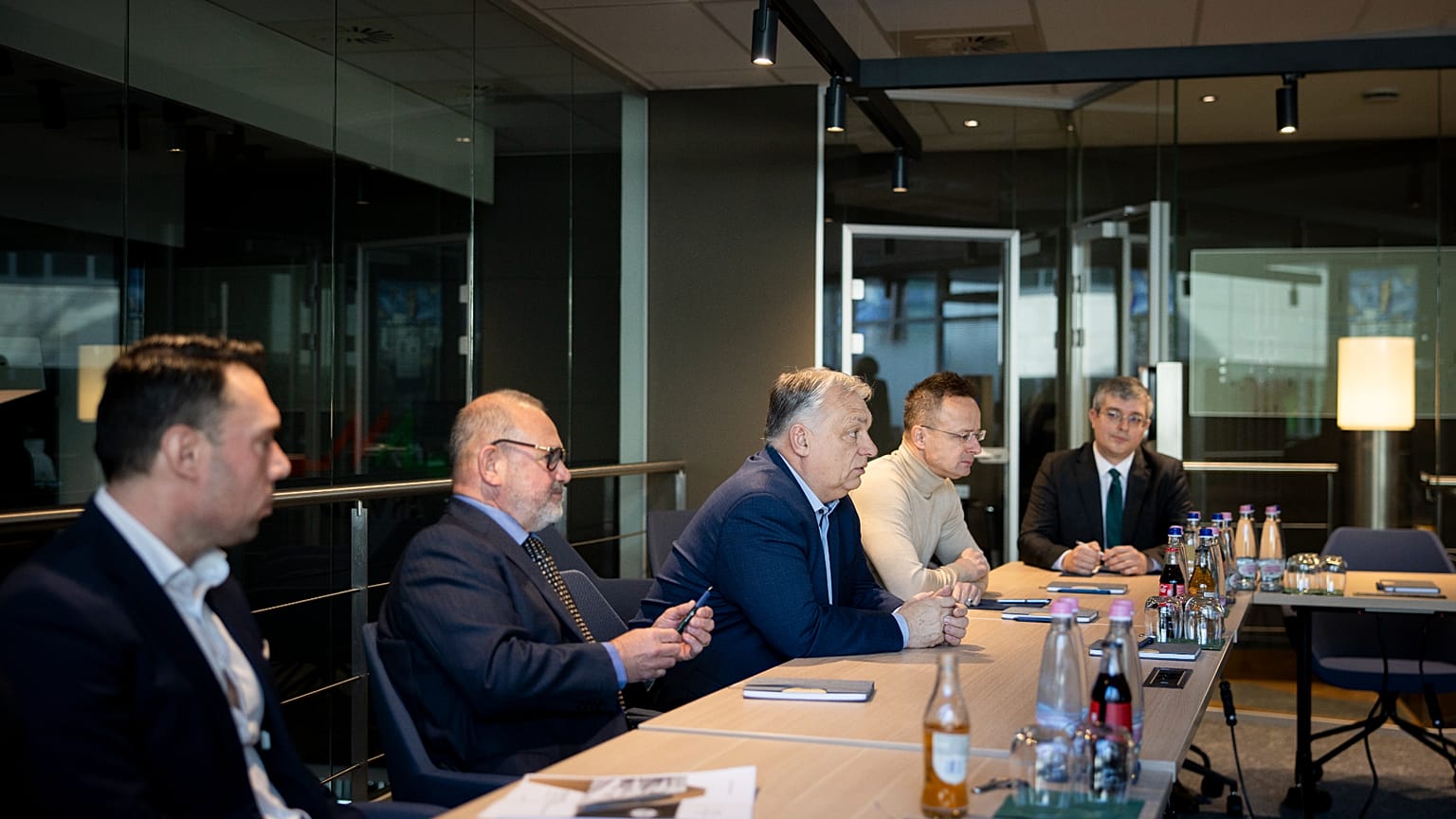














No EU loans can be handed to Ukraine until oil deliveries to Hungary are resumed, Prime Minister Viktor Orbán said after a meeting with the Energy Security Council.
Hungary will block the adoption of the 20th package of sanctions against Russia, Péter Szijjártó announced on Sunday after a meeting with the Energy Security Council. The Foreign Minister added that the EU would continue to block the packages until Ukraine repairs the Druzhba pipeline damaged in a Russian strike and resumes oil supplies to Hungary.
 ADVERTISEMENT
ADVERTISEMENT
ADVERTISEMENT
Szijjártó said that the new sanctions package, which Hungary will not support, will be adopted at a meeting of foreign ministers on Monday. The Energy Security Council also discussed the issue of electricity supplies to Ukraine. Almost half of Ukraine's electricity imports come from Hungary.
In this context, the minister said that since the Hungarian people and civilians in Transcarpathia would be affected if this were to stop, they should proceed with particular caution.
Prime Minister Viktor Orbán said that the diesel delivery service, which was halted this week, would not be restarted, and that the EU would not support the disbursement of the €90 billion war loan to Ukraine, which the bloc had already decided on.
Ukraine rejects and condemns "ultimatums and blackmail" by the Slovak and Hungarian governments over energy supplies to Ukraine, the Kyiv foreign ministry said on Saturday.
Slovak Prime Minister Robert Fico said on Saturday that "if oil supplies to Slovakia do not resume by Monday, he will ask the relevant electricity company (SEPS) to stop emergency electricity supplies to Ukraine".
Deliveries to Slovakia and Hungary were stopped at the end of January. Ukraine claims that oil supplies were suspended because of a Russian drone attack on the Druzhba pipeline.
Nearly every country in Europe has significantly reduced or entirely ceased Russian energy imports since Moscow launched its war in Ukraine on 24 February, 2022. Yet Hungary and Slovakia, both EU and NATO members, have maintained and even increased supplies of Russian oil and gas, and received a temporary exemption from an EU policy prohibiting imports of Russian oil.
Russian missiles and drones in recent months have pounded Ukraine’s energy grid, plunging people into frozen darkness in one of the country’s coldest winters on record.
In a statement on Saturday, Ukraine's Foreign Ministry said it “rejects and condemns the ultimatums and blackmail" by Hungary and Slovakia, and that the two countries were “playing into the hands of the aggressor.”
“Such actions, in the context of massive and targeted Russian strikes on Ukraine’s energy infrastructure and Moscow’s attempts to deprive Ukrainians of electricity, heating, and gas during extreme cold weather, are provocative, irresponsible, and threaten the energy security of the entire region,” the ministry wrote.
Hungary’s nationalist Prime Minister Viktor Orbán, who maintains the closest relationship with the Kremlin of any EU leader, has long argued Russian fossil fuels are indispensable for his economy, and that switching to energy sourced from elsewhere would cause an immediate economic collapse — an argument some experts dispute.
Orbán has frequently threatened to scuttle the bloc’s efforts to sanction Moscow over its invasion, and has blasted attempts to hit Russia’s energy revenues that help finance the war. He has also vetoed EU efforts to provide military and financial assistance to Ukraine.