

















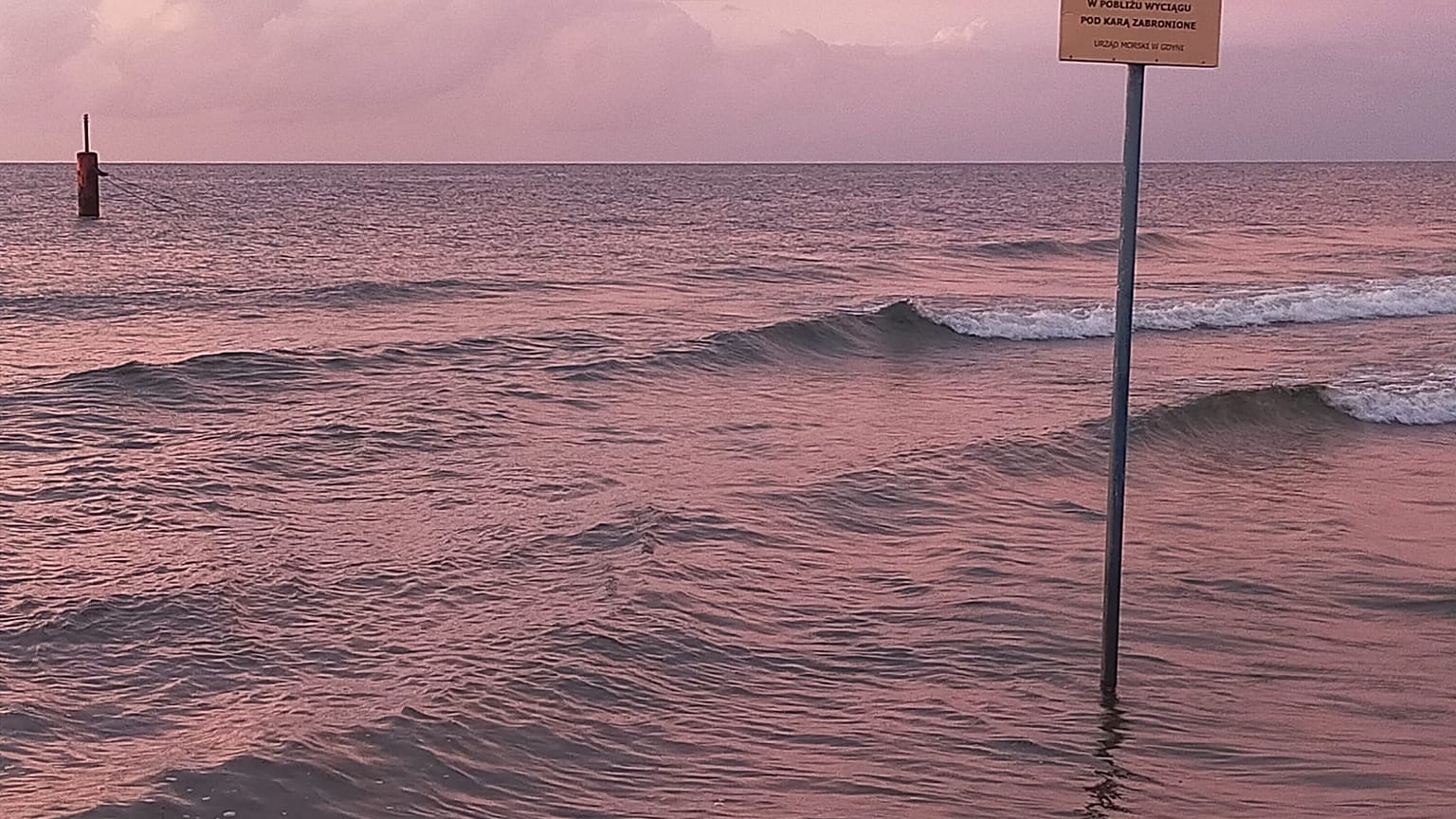













At the beginning of February, the water level in the Baltic Sea dropped sharply. Experts tell Euronews it is a result of climate change.
While global water and ocean levels are rising, the Baltic Sea lost 275 billion tonnes of water at the beginning of February. It is now 67 cm lower than the average recorded in 1886.
 ADVERTISEMENT
ADVERTISEMENT
ADVERTISEMENT
The situation, although it has not happened for 140 years, is caused by atmospheric factors. On the surface, these should not be a cause for concern, but, as Dr Tomasz Kijewski of the Institute of Oceanology of the Polish Academy of Sciences told Euronews, such a deviation is a glaring example of the impact of climate change on the environment. The Arctic plays the first fiddle here.
'The open refrigerator effect'
If water levels are rising, why has so much water disappeared in the Baltic Sea basin? Experts explain that it is the result of strong winds, a high pressure zone and the absence of significant atmospheric fronts.
"The long-lasting strong easterly winds persisting since the beginning of January have pushed water masses through the Danish Straits towards the North Sea, resulting in a drop in levels throughout the basin," reads a post by the Institute of Oceanology of the Polish Academy of Sciences. "As long as this meteorological configuration continues, water is being 'held down' at the south-eastern end of the basins, with levels locally decreasing."
The violent winds and harsh winters that allow these conditions to occur are not proof that, as some claim, climate change does not exist. In fact, the complete opposite is true. As Tomasz Kijewski points out, the phenomenon of climate change itself is not sudden warming, but the numerous weather anomalies that are caused, among other things, by melting glaciers in the Arctic.
"The persistence and extent of the high, which also extended over the North Sea, making room, as it were, for the large volume of water flowing out of the Baltic Sea, is responsible for the scale of the phenomenon," he says. "We are talking about 275 cubic kilometres of water! This exceptional situation did not happen in isolation from the large-scale processes we observe in the Earth's atmosphere. The most important of these in this context is the disintegration of the polar vortex, a circulation of air in the upper layers of the atmosphere (10-50km) which, colloquially speaking, is responsible for keeping the Arctic cold. This vortex is linked to the jet stream, the rapidity of which and the course of this current are responsible for the migration of lows and highs. Hence, deviations such as blocked highs, Arctic frost waves or heat waves in the north are the result of disturbances to this jet stream, and hence the warming of the Arctic."
As he explains, the mass of frigid air that has always existed over the Arctic and has, as it were, sealed it off from the rest of the world is beginning to 'unseal', having a significant effect on the temperature of atmospheric currents.
"We jokingly call it the open fridge effect," says the biologist. "When we open the fridge, air escapes down the bottom and we get cold feet."
In the case of the Baltic Sea, a combination of anthropogenic and human-independent factors is causing the sea to gradually dry out.
"The total volume of rainwater in the area is increasing," according to the expert. "Since the last glaciation, the Earth's crust has been slowly rising, making this sea slowly shallower. This also favours shallowing. Shallow bodies of water are more likely to heat up as a result of global warming, and waters carried by regulated rivers bring more fertiliser compounds into the sea, especially phosphorus, which favours cyanobacteria. The sum of these factors is not conducive to species richness. The water will become sweeter and warmer, which in turn favours algal blooms. Algae, in turn, take away oxygen, which is needed by other living organisms."
Arctic is warming 'four times faster compared to the global average'
Anna Sowa from the Institute of Oceanology of the Polish Academy of Sciences, now working at the Experyment Science Centre in Gdynia while doing her research on the Arctic, noted that species from lower latitudes are expanding their ranges northwards. "This phenomenon is called borealisation and this type of change has already been recorded in various Arctic habitats," - she says in an interview with Euronews. "The new arrivals may start to compete with the local Arctic fauna, which could lead to a reduction in the abundance of Arctic species or even their complete displacement."
During her research between 2004 and 2020, she noted a marked decrease in the density of the endemic bryophyte species Harmeria scutulata. "This allowed me to conclude that with climate change, there is also a reorganisation of species communities in the Arctic hard bottom ecosystem."
The Arctic area is particularly vulnerable in terms of climate change, she says, because "the warming reported there is occurring about four times faster compared to the global average". Rising temperatures may be acting directly on marine organisms, the researcher says, but beyond that, "it is also causing cascading changes such as melting glaciers and sea ice, turbidity of waters associated with increasing suspended solids run-off from rivers and melting glaciers, desalination of surface waters and increasing acidification of waters resulting from increased dissolved CO2 concentrations in water".
"A vibrant reef is turning into an underwater wasteland"
What challenges do the seas and oceans currently face and can they still be saved?
According to biologists, the rise in temperatures cannot be stopped, but the extinction of some species can be partially halted. One of the greatest tragedies of the seas and oceans today is the mass extinction of coral reefs, which provide survival and shelter for at least 25% of all marine species. Biologists point out that a 1.5 °C warming will destroy 70-90% of coral reefs. However, it is not only warming that is affecting the loss of biodiversity in the oceans.
"What worries oceanographers most is the warming of the global Ocean (i.e. all the salt waters that are connected to each other - the Baltic is part of the Ocean)," Kijewski says. "Both energy buildup, affecting climate change, and violent weather events are cause for concern. The most spectacular example is coral bleaching, which entails the annihilation of entire coral reef ecosystems. At elevated temperatures, coral polyps shed symbiotic algae that produce a dangerous excess of oxygen. This in turn leads to starvation of the polyps and the entire ecosystem collapses like a house of cards. Within a few weeks of an oceanic heatwave occurring (by up to 2°C), a vibrant reef turns into an underwater wasteland."
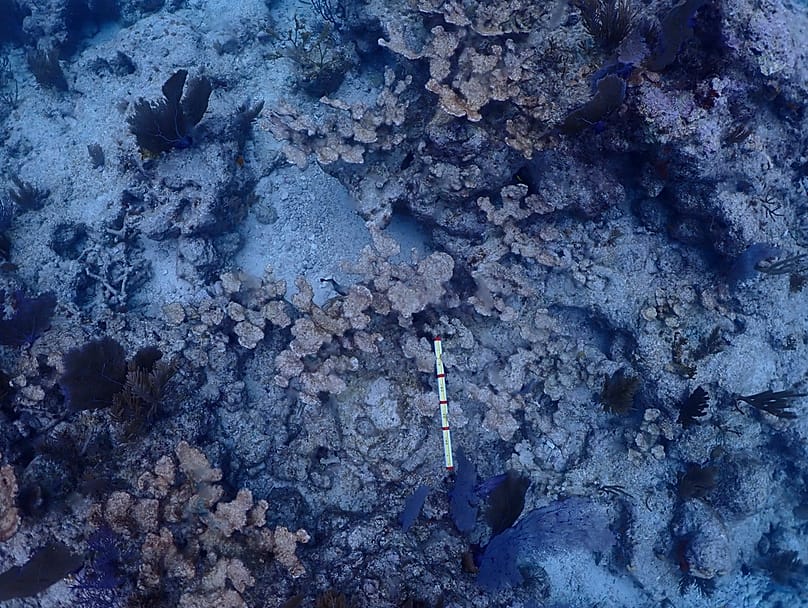
The disappearance of ecosystems in turn translates into the collapse of the fishing industry, says the expert. Similarly, the exploitation of underwater metal resources - so-called rare earth mines on the ocean floor - involves environmental degradation on a larger scale than land-based open-pit mines."It is not only the bottom that is destroyed, but the overburden - that part of the excavated material that on land is stored in heaps - in the Ocean disperses throughout the depths, eliminating access to light and space for ocean creatures."
The Baltic Sea: A reputation for pollution
The Baltic is a sea with a reputation as one of the most polluted. However, according to Kijewski, the basin's worst period of pollution is behind it."Since the common policy of the Baltic States, coordinated by HELCOM and the EU, has led to the installation of biological wastewater treatment plants and generally increased attention to the state of the environment, pollution of the Baltic has largely been halted. A prime example is the Bay of Puck, which until recently was virtually extinct, and for the past two decades we have seen a spontaneous return of seagrass meadows and even seaweed there. The state of plastic pollution is also low, which, unlike the rest of the Ocean, has not increased during the last 30 years."However, he says, the peculiarities of the Baltic's hydrology require a long time for the water to undergo a purifying exchange. An event such as the current low is conducive to this purification, but it will still take another 30 years for the Baltic Sea to undergo significant self-purification. However, it will still be under pressure from climate change and global warming.One example is the cod population, which is currently in a critical state. "There are not many typically marine creatures in the Baltic Sea, such as starfish. There are only a few species of mussels. Most ocean animals cannot function in such low salinity. Cod, although adapted to Baltic water, have to spawn in the bottom water, which is saltier and colder, so much so that anaerobic conditions develop near the bottom and in a few decades the areas friendly to cod eggs have more than doubled. It is true that no extinction of any species in the Baltic Sea has been recorded, but the ecological capacity of this sea is shrinking for everyone - except blue-green algae."
Is there any way we can help the seas and oceans? According to Tomasz Kijewski, the only and most effective thing we can do is "not interfere". Experts agree: man's incompetent interference with the oceans has already caused enough lasting damage.