




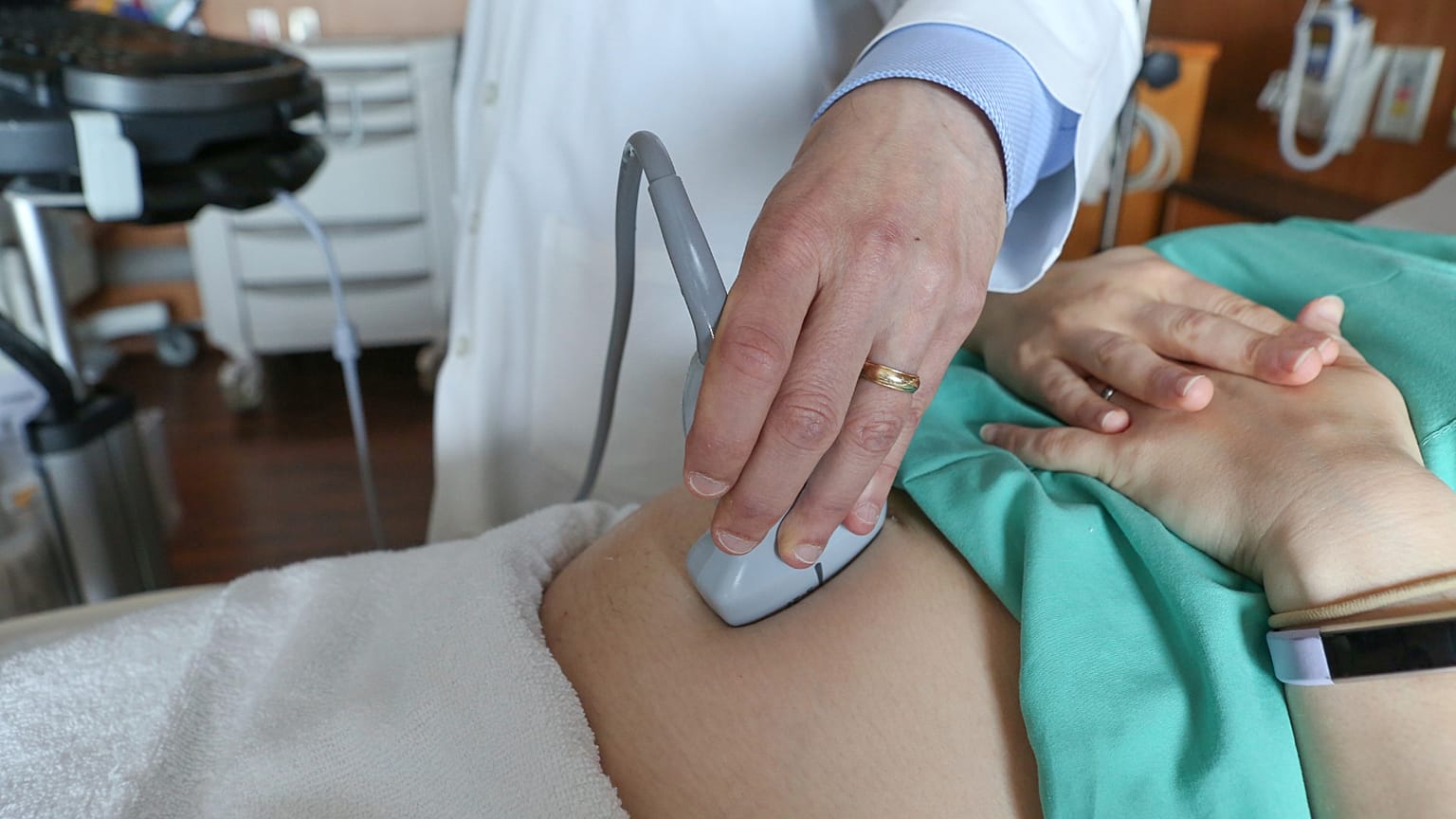













A parliamentary committee has unveiled a plan to tackle France’s collapsing birth rate. But with experts and the public sceptical, the proposals are proving deeply divisive.
Lucie remembers feeling uneasy when she heard that the French government was planning to send a letter to adults aged 29 and over about infertility.
 ADVERTISEMENT
ADVERTISEMENT
ADVERTISEMENT
The letter is still being drafted, its contents have not been made public but the initiative has already sparked strong criticism, even from abroad.
"I found the approach extremely awkward and it's not the right way at all to raise awareness," she tells Euronews.
At 27, Lucie is in a relationship and hopes to have children one day, but feels weighed down by the pressures of everyday life.
"The issue goes deeper than just fertility rates. It's hard to find housing, hard to make ends meet. I think sending a letter to push us to have children is terrifying."
It is a feeling many shared with Euronews, as France faces an unprecedented demographic turning point.
In 2025, the country recorded more deaths than births for the first time since WWII.
According to France's national statistics office (INSEE), 645,000 babies were born last year, compared with more than 850,000 in 2010. Over the same period, 651,000 deaths were registered.

A family policy 'big bang'
Against that backdrop, a parliamentary committee on the causes and consequences of the fall in births — launched at the initiative of the centre-right Horizons party — presented 37 proposals on Wednesday evening, calling for a "big bang" in family policy.
The authors stress caution: no "natalist" messaging, but a promise of support for future parents.
"There is still a very strong desire for children in France. Our work is not about sending any kind of natalist message, but about supporting parents who want to have a child," insists Constance de Pélichy, a centre LIOT MP and president of the committee, in an interview with Euronews.
Several studies suggest that people in France say they would like an average of 2 to 2.3 children per woman, well above the current fertility rate, which fell to 1.55 children per woman in 2025, but still higher than the EU average of 1.38.

Revamped parental leave system
The most eye-catching proposal is a universal monthly payment of €250 per child, paid from the first child until the age of 20, open to everyone, replacing part of the existing patchwork of benefits.
The investment is estimated at €10 billion a year. According to the report, this broad overhaul could be rolled out by 2030.
That would be a major shift, as France's main family allowance system currently starts from the second child.
For Jean-Philippe Vallat, director of family policy at the National Union of Family Associations (UNAF), the approach is moving in the right direction. "We fully agree with this approach. The report focuses on the material and financial obstacles that many adults face today," he says.
He also welcomes "a fairly universal approach that reflects the issues parents have been raising with us for years."

But the report goes further. It proposes a new interest-free home loan to help families buy a home or expand their existing one, "on the occasion of each birth," in response to what the report says is an increasingly cited barrier to having kids, which is housing.
It also calls for a major expansion of childcare options and stresses the need to better support all ways families organise care, including when they rely on relatives, such as grandparents, to complement formal childcare arrangements.
On parental leave, the report proposes merging existing schemes into a single, unified parental leave.
The idea is to allow parents to stay with their child until they start nursery school, with better pay during the first year.
After maternity and paternity leave, the new system would pay 70% of salary for four months, then 50% for six months, up to the social security earnings cap.
Constance de Pélichy, however, argues for a different model: a shorter but better-paid "universal birth leave," proposing 38 weeks paid at 80% of salary.
Divisive proposals
The plan is far from winning consensus, among both the general public and experts.
Lise, 30, who lives with her partner, doubts the impact of the €250 payment: "€250 is basically the diaper budget — it doesn't really change anything."
Alexis, a young father in the western Vendée region, welcomes certain measures but also remains sceptical: "Housing help could be a solution. Parental leave could help too… But overall, the whole system needs rethinking. I think taxes are too high and that's what stops us from having a second child today."
For Pauline Rossi, an economist and professor at École polytechnique, the plan risks benefiting higher-income households the most.
"Universal family allowances inevitably benefit better-off families. As economists, we try to target certain populations. Universality is the opposite of efficient public spending," she tells Euronews.

She argues that family policies often have only limited effects on birth rates. "In the academic literature, economists mainly talk about childcare and nurseries. That's what most influences the decision to have an additional child."
UNAF also shares that concern about childcare. Jean-Philippe Vallat points to a lack of detail in the report: "There are proposals around a 'Marshall Plan' for childcare and nurseries, but it remains quite vague on the question of cost, which today is very important."
Rossi also stresses that financial support tends to have more influence on parents who already have children. "It's more with second or third children that the financial dimension really matters."
In other words, the State may sometimes influence decisions "at the margin" among families who are already parents, but it is much harder to sway adults who are still hesitating about having their first child.
In Paris, Mélanie and Florian illustrate that tension: she wants children, he doesn't.
Mélanie believes that "lower inflation, lower unemployment and more stable politics" would be more decisive in restoring confidence.
Florian, meanwhile, prefers even more concrete measures: "Making diapers free and cutting nursery prices," while admitting it would not change his mind about having children.
Across the many interviews gathered by Euronews, a common demand emerges: to "restart" births, many would rather see other conditions improved — lower inflation, more jobs, higher wages and more affordable everyday prices.
Why the declining birth rate worries policymakers
The trend also raises questions about France's ability to finance its social model. Pauline Rossi puts it bluntly: "The fact that birth rates are falling is worrying for funding pensions and public spending."
On top of public finance pressures, there is also a labour-market concern: in sectors already facing shortages, a smaller working-age population can make recruitment harder and weigh on economic growth.
Economists note, however, that birth rates are not the only lever: productivity, employment rates, immigration and labour policies can also mitigate the impact. But these adjustments take time and often involve politically sensitive choices.
Rather than trying to boost fertility directly, Rossi points to three possible, and painful, options.
"Either you cut pensions and reduce health reimbursements, or you reduce living standards for working people, or you make people work longer," she says.