




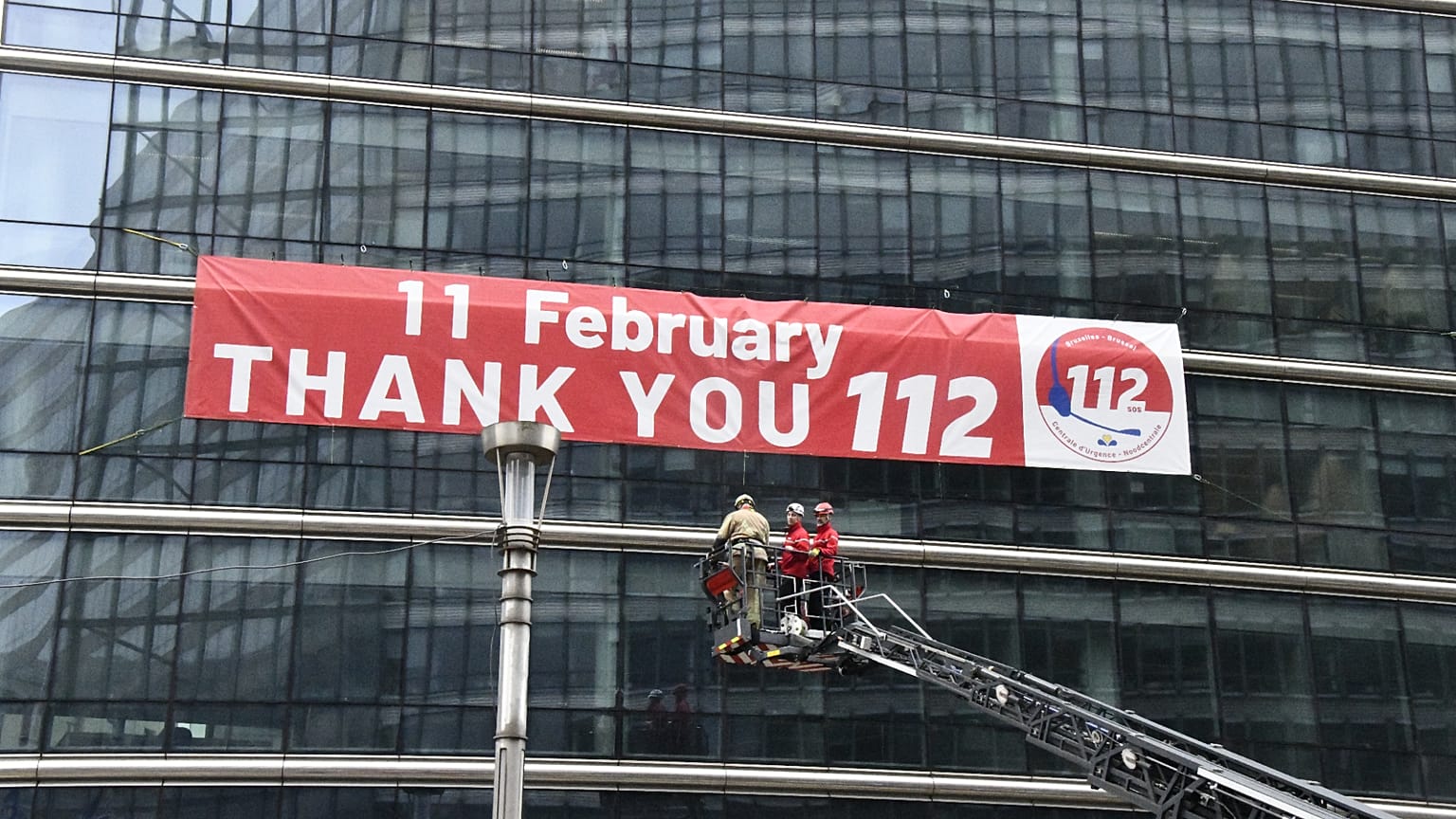














If you were in an emergency, would you know which number to call? Today marks European 112 Day, dedicated to raising awareness of the EU's emergency number, and the people on the other end of the line.
Whether in Belgium, Italy or Latvia, those in need of an ambulance, the fire brigade or police can call one and the same number — 112 — and receive help. On 11 February every year, tribute is paid to the staff who respond to these emergency calls.
 ADVERTISEMENT
ADVERTISEMENT
ADVERTISEMENT
On this occasion, Euronews went behind the scenes at one of the 10 Belgian 112 emergency centres to see how this crucial link in the emergency response chain operates.
"We can never lose time, never, not with the ambulances, not with the fire brigade," Jana Goemaere, an operator at the Brussels emergency call centre, told Euronews. "At such a moment when somebody's in real danger, every moment counts."
To mark European 112 Day, each operator received a little gift from the home affairs ministry as a token of appreciation: a stress ball.
This may prove useful, given the demanding nature of the job. Operators are the first point of contact when responding to major and complex incidents.
"When we get a call, it's important to ask ... I won't say as many questions, because we are limited in time, but the right questions," Goemaere said, emphasising the challenge of assessing the situation in a fast-paced environment.
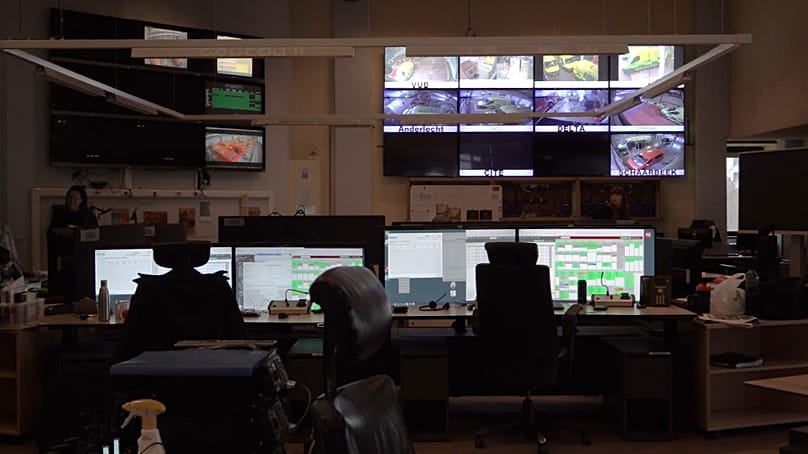
She explained that, in many cases, people call 112 looking for medical advice.
"First of all, we're not doctors," she said, "and secondly, we are not there with them, we're on the phone on the other side of the line".
Cross-country number, regularly misused
European 112 Day was established by the European Union in 2009, not only to pay tribute to operators, but also to promote the existence of this number and its correct use.
People can dial 112 free of charge anywhere in the EU to reach the fire brigade, medical emergency services or police, even without a sim card.
"The benefit is that when you're in another country, like Italy or Spain, and you have an emergency at that moment, you don't have to think about what the number is [in this country]," Goemaere said. "It's the same number for the whole of Europe."
She added that this unified system makes it easier for operators in Belgium, for example, to work with other centres in the bloc and many other European countries, such as the UK, Switzerland or Turkey.
Operators in Belgium responded to more than 2.5 million calls in 2025. However, not all cases were related to emergency incidents.
"There are people who misuse the number 112," Goemaere continued, pointing to the regular occurrence of prank calls to the emergency services.
"Teenagers think it is funny to call 112 and order pizza or ask what time it is," she noted, stressing that this could keep the line busy. "And at that moment, if another call is waiting and it is someone who had a heart attack, for example ... we cannot take that call right away".
Goemaere added that, in such situations, the operator would not hesitate to direct the police to the callers' home as a warning. "We tell them, if you don't stop calling, we will send the police. We have your location, we have your address, and then, sometimes, they stop calling."
In other cases, calls are made by accident, for example, when toddlers get hold of a parent’s phone or by pocket dialling.
Working closely together
The Brussels emergency call centre is embedded in the main fire station of the Brussels Fire Brigade, and in the same room as the fire brigade's dispatch centre.
This unique proximity has on many occasions resulted in a more efficient deployment of emergency services.
Goemaere pointed out that one of the key benefits of working so closely together is the direct and immediate line of communication.
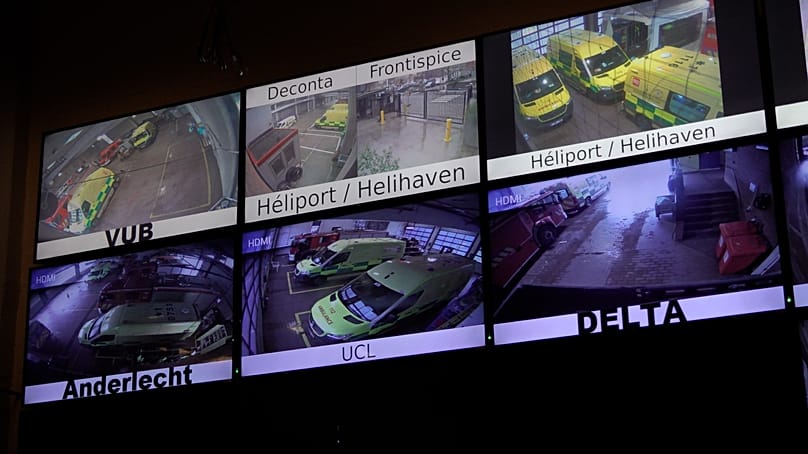
Moments later, when receiving a call, the young Belgian operator simply stood up and yelled "Gas leak!", sending response teams into motion.
"Here, they can send out the fire brigades immediately, and I think in other 112 emergency call centres in Belgium, they are separated, and it takes time to dispatch. At that moment here, we don't lose time."
Emergency apps exist, too
Aside from the emergency phone number, several European countries also have official apps for the 112 emergency number, including Germany (nora), Italy (Where Are U), Spain (My112), Sweden (SOS Alarm) and Belgium (112 BE).
These applications improve the rapidness of emergency responses and are more accessible, spokesperson for the Brussels Fire Brigade, Walter Derieuw, told Euronews.
"We encourage people to install the 112 BE application on their phone, because it offers many advantages," he said.
For example, instead of calling one number and selecting the service people want by dialling the right number — one for the fire brigade, two for medical assistance, and three for the police — the right choice can be selected on the app.
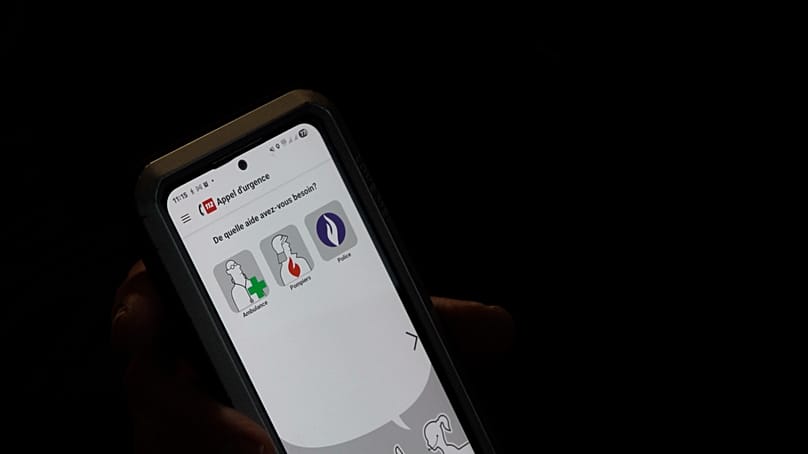
"The app also allows you to pinpoint your exact location, making it easier for us to find you, there is a chat function for people who are hard of hearing or have a speech impediment, and there is also an alarm function, which can be activated by the 112 operator to make it easier to find you if you are unconscious," Derieuw explained.
However, he lamented that, despite the time it saves and the advantages it offers, the app remains little used.
"It is downloaded a lot, but we have noticed that its use leaves something to be desired. Only 4% or 5% of requests are made via the application."