




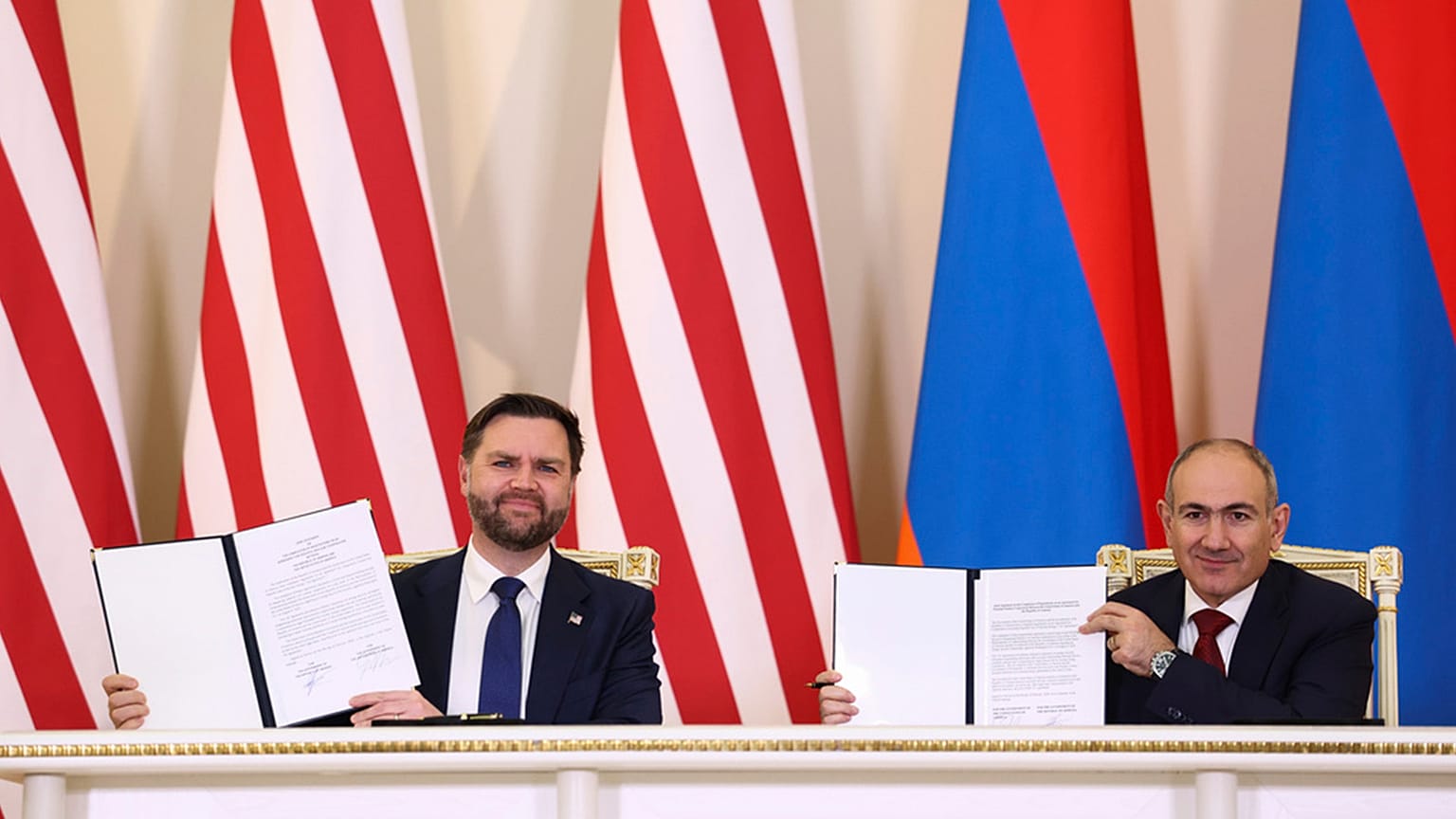














US Vice President JD Vance visits Armenia and Azerbaijan to promote a new trade corridor, TRIPP, after the two sides signed a historic peace deal following decades of conflict.
US Vice President JD Vance arrived in Armenia on Monday for talks on further consolidating a peace process with Azerbaijan, becoming the first sitting US vice president or president to visit the country.
 ADVERTISEMENT
ADVERTISEMENT
ADVERTISEMENT
Vance held discussions with Armenian Prime Minister Nikol Pashinyan in Yerevan before heading to Azerbaijan's capital Baku on Tuesday, with Washington seeking to advance a trade corridor that would reshape the South Caucasus.
"We are not just making peace for Armenia. We are also creating real prosperity for Armenia and the United States together," Vance said at a joint news conference with Pashinyan.
The two leaders signed a civil nuclear energy agreement, which Pashinyan said "will open a new chapter in the deepening energy partnership between Armenia and the United States".
Vance announced a US drone technology sale to Armenia worth $11 million (€9.2m).
Pashinyan called the visit "truly historic" and said he had "great hope" that US President Donald Trump would "rightfully" receive the Nobel Peace Prize for mediating the Armenian-Azerbaijani peace process.
Vance is promoting the Trump Route for International Peace and Prosperity (TRIPP), a proposed 43-kilometre corridor across southern Armenia linking Azerbaijan to its Nakhchivan exclave.
The route aims to connect Central Asia and the Caspian basin to Europe while bypassing Russia and Iran, strengthening US commercial interests in the region.
Washington has framed the project as a confidence-building measure following a peaceful end to decades of conflict between Armenia and Azerbaijan.
At a White House summit in August 2025, Trump brokered an agreement between Armenia and Azerbaijan that saw the two countries commit to renouncing claims to each other's territory and to refraining from using force.
At the same time, Moscow is watching closely as Yerevan quietly exits its sphere of influence.
Armenia — historically Russia's closest ally in the South Caucasus — has frozen its participation in a Moscow-led security pact and moved to deepen ties with the US and the EU.
Russia's influence across the former Soviet Union has been strained since its full-scale invasion of Ukraine, which has alarmed many countries that were for decades either friendly to or dominated by Moscow.