




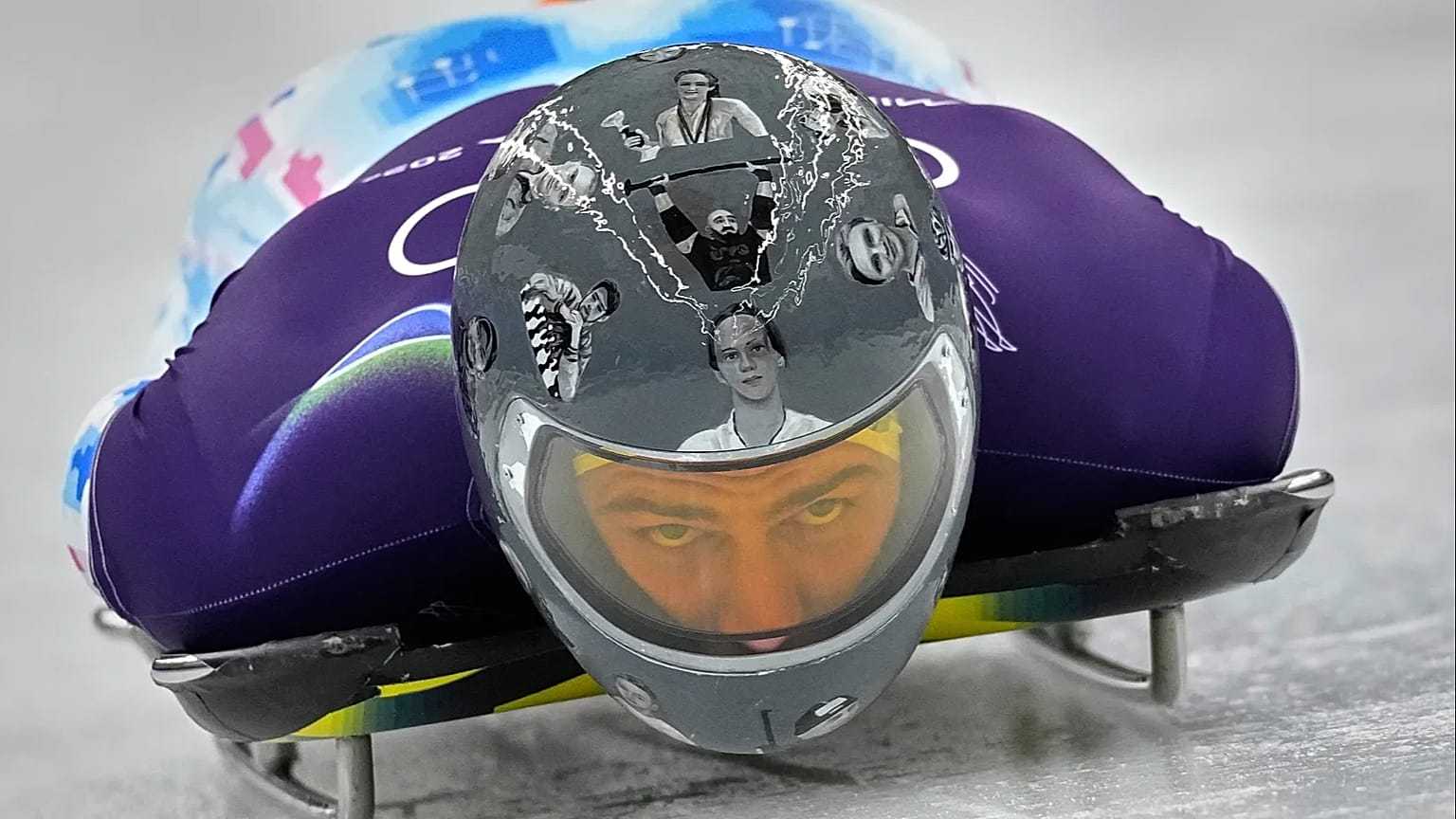













The IOC confirmed the decision on Tuesday, stating that Heraskevych's helmet contravened IOC guidelines about political symbols. However, the committee would "make an exception" to allow him to wear a black armband instead.
Ukrainian skeleton racer Vladyslav Heraskevych said that he has been barred from using a custom helmet at the 2026 Winter Olympics that honours Ukrainian athletes killed in Russia’s war.
 ADVERTISEMENT
ADVERTISEMENT
ADVERTISEMENT
The helmet features portraits of Ukrainian athletes killed since Russia’s full-scale invasion in early 2022. It does not display any slogans or political symbols.
Heraskevych said the IOC has banned the use of the helmet both from official training sessions and competitions at Milano-Cortina.
The Ukrainian athlete described it as “a decision that simply breaks my heart”.
"The feeling that the IOC is betraying those athletes who were part of the Olympic movement, not allowing them to be honoured on the sports arena where these athletes will never be able to step again," Heraskevych said in a post on X.
Heraskevych also said that there have already been precedents, both in modern times and in the past, when the IOC allowed such tributes, but “this time they decided to set special rules just for Ukraine”.
“We are preparing an official request to the IOC and will fight for the right to compete in this exact helmet,” he added.
The IOC has responded to the news Tuesday, with spokesperson Mark Adams stating that Heraskevych's helmet contravened IOC guidelines about political symbols.
However, Adams said the committee would "make an exception to the guidelines to allow him to wear a black armband during competition to make that commemoration".
Meanwhile, Heraskevych wore a "memorial helmet" during training on the Olympic track on Tuesday despite the ban, Ukrainian public broadcaster Suspilne reported.
Ukraine’s foreign ministry said over 650 Ukrainian athletes and coaches have been killed during Russia’s full-scale invasion of Ukraine, now nearing its four-year mark.
In an earlier post, Heraskevych said the design was meant to honour only a small portion of the many athletes who have died since the war began. "I race for them," he said.
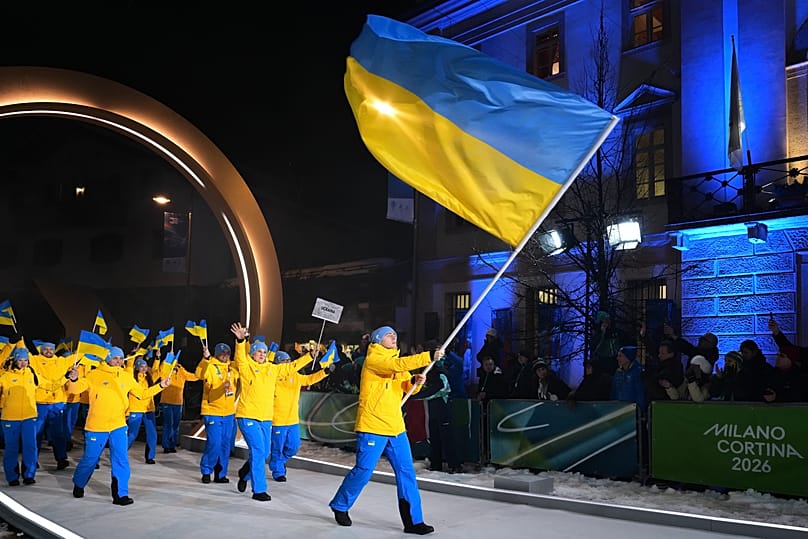
‘The price of the struggle’
Ukrainian President Volodymyr Zelenskyy weighed in on the IOC’s decision regarding Heraskevych's war victim helmet.
Ukraine’s president thanked the athlete for "reminding the world the price of our struggle", as he also listed a few names of the Ukrainians featured on his helmet.
The helmet features “figure skater Dmytro Sharpar, who was killed in combat near Bakhmut, Yevhen Malyshev, a 19-year-old biathlete killed by the occupiers near Kharkiv, and other Ukrainian athletes whose lives were taken by Russia’s war,” Zelenskyy posted across his social media channels.
“This truth cannot be inconvenient, inappropriate, or called a 'political demonstration at a sporting event.' It is a reminder to the entire world of what modern Russia is," Zelenskyy said.
"And this is what reminds everyone of the global role of sport and the historic mission of the Olympic movement itself – it is all about peace and for the sake of life. Ukraine remains faithful to this. Russia proves the opposite.”
History of symbolic gestures
While the IOC insists that its amendments to Article 50 which prohibits "all political, religious or racial propaganda" do allow some expressions before competitions as long as they are in line with Olympic values and not disruptive, critics have pointed out that the committee has a history of wide-ranging responses to similar symbolic gestures.
At the Tokyo Summer Olympics in 2021, the Australian women's football team unfurled a red-black-and-yellow Aboriginal flag — which is not one of the official national flags — and was not sanctioned by the IOC as it was interpreted as an act of solidarity.
The opposing New Zealand team took a knee during the same pre-match event.
Chinese cyclists wore badges featuring Mao Zedong’s image at the same Olympics and received only a warning after the Chinese Olympic Committee assured the IOC it would not happen again.
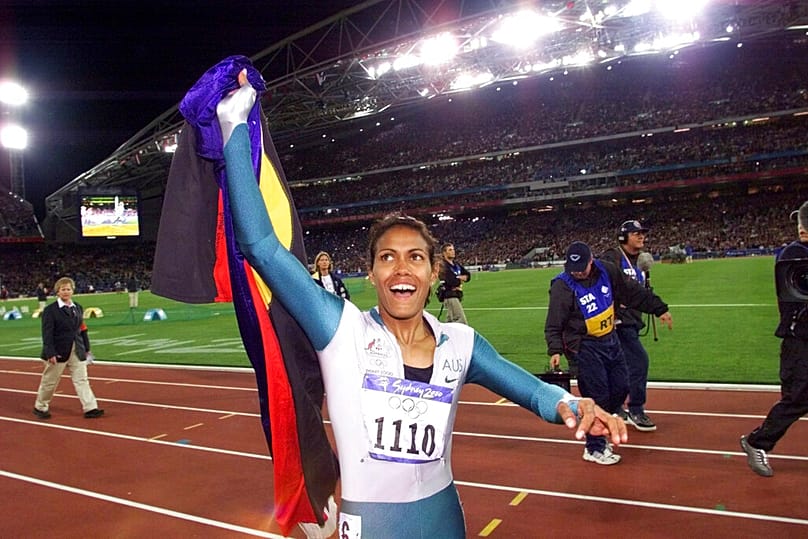
After winning gold in the women’s 400m at the Sydney 2000 Olympics, Australian sprinter Cathy Freeman carried both the Australian and the Aboriginal flag during her victory lap. Freeman, who was the first-ever Indigenous Australian athlete to win Olympic gold, was not sanctioned or suspended.
The most notable case took place in 1968, when US sprinters Tommie Smith and John Carlos raised black-gloved fists on the podium to protest racial injustice.
Smith, Carlos, and Australian silver medalist Peter Norman all wore human-rights badges on their tracksuits.
The IOC deemed this a political gesture leading to the exclusion of the US athletes from the Games, while they kept their medals.
The two were expelled after the IOC president at the time, Avery Brundage, threatened to remove the entire US track and field team from the competition over their actions.
Brundage, who was the subject of infamy for having no objections to the Nazi salute during the 1936 Berlin Olympics, argued that the salute was a national one, as opposed to Smith and Carlos’, which was not representative of a nation.
Over the years, the three have been largely recognised for what the IOC later dubbed an “act of racial protest”.
Although Norman was also reprimanded by Australian Olympic authorities for his support of the US athletes, he was posthumously issued an apology by the Australian parliament in 2012 and awarded the AOC Order of Merit by the Olympic Committee in 2018.
Heraskevych, who was Ukraine’s flagbearer during the opening ceremony in Milan last Friday, held up a “No War in Ukraine” sign at the Beijing Olympics just days before Russia began its full-scale invasion in February 2022.
He was not sanctioned at the time, with the IOC stating it was interpreted as a "general call for peace."
Euronews has reached out to the International Olympic Committee for comment. The IOC responded by stating that "the question has been addressed during today's press briefing."