




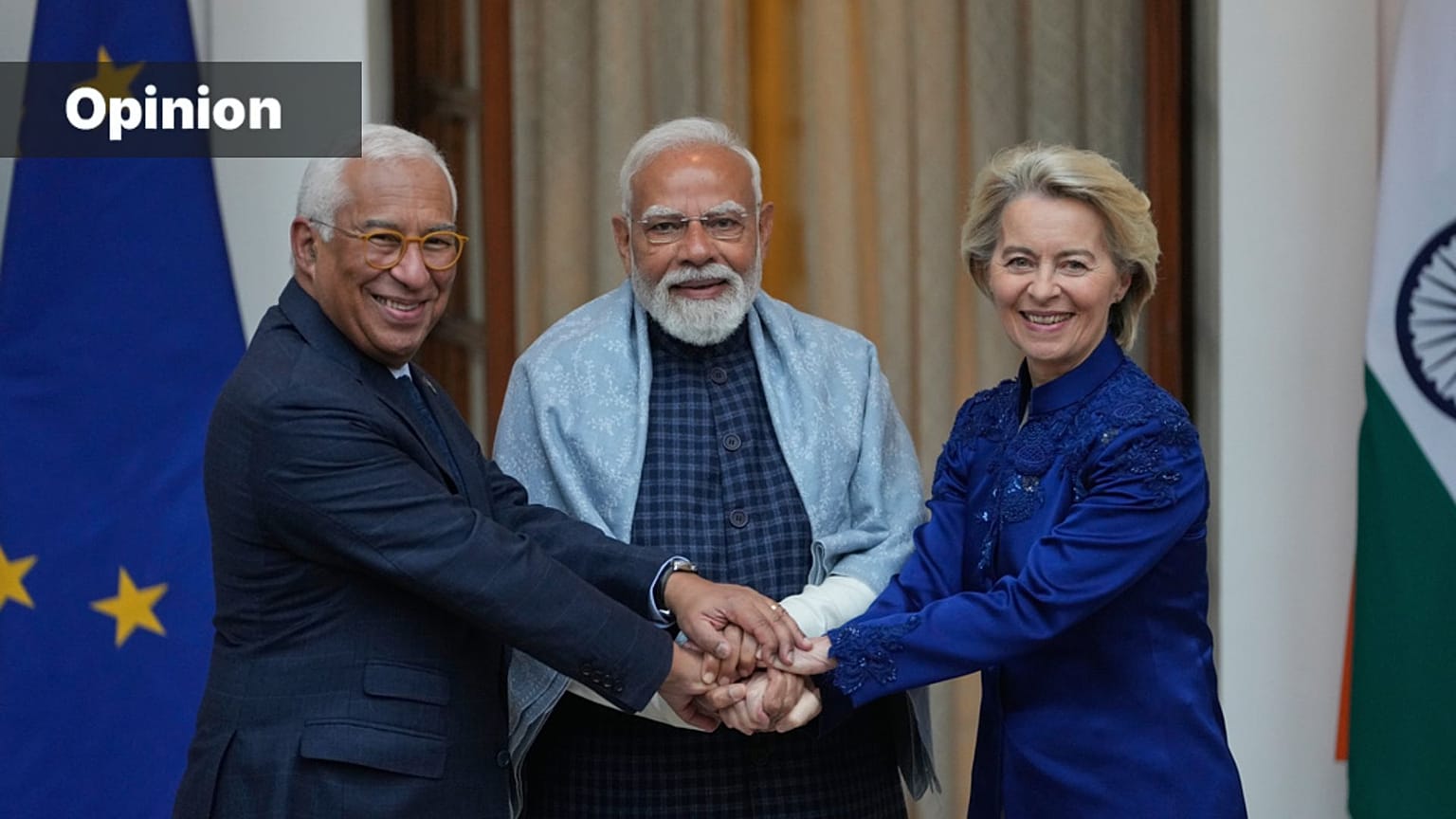













After years of faltering talks, the EU and India have struck a landmark free trade deal that goes far beyond tariffs. In an era of weaponised interdependence, it signals a new geoeconomic logic: openness on negotiated, strategic terms, writes Daniela Schwarzer in an opinion article for Euroviews.
After two decades of stop-start negotiations, the EU and India have clinched what was called the "mother of all deals": a free trade agreement that would cut or eliminate tariffs on 97% of EU goods exports to India and grant preferential access in the other direction for 99% of Indian exports by value.
 ADVERTISEMENT
ADVERTISEMENT
ADVERTISEMENT
That the deal came together at all, despite widely diverging positions, marks a shift on both sides.
Red lines were crossed and concessions accepted: tariffs on European cars, for instance, will remain at 40%, while India agreed to a phased elimination of tariffs on key industrial goods.
The agreement reflects a shared assessment that more is at stake than trade alone. It illustrates a new cooperation logic shaped by strategic necessity in a more contested global economy.
In a world where economic ties are increasingly weaponised and the rules-based order is fraying, Europe and India are choosing to lock in interdependence on negotiated terms and to use it as a platform for strategic cooperation.
For Europe, which is under enormous pressure to diversify economic ties, this deal marks a good start to what should become a year of more strategic partnerships.
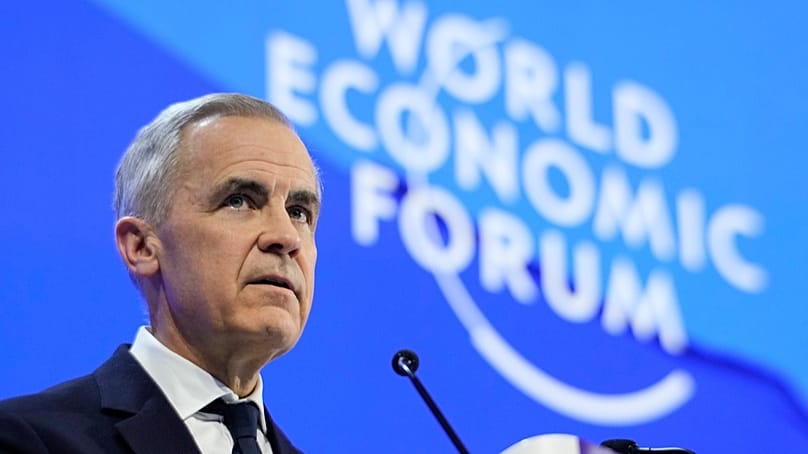
In fact, the trade deal reflects the logic put forward by Canada's Prime Minister Mark Carney in Davos.
There he argued that we are living through a rupture, not a smooth transition, with great powers increasingly weaponising tariffs and exploiting supply-chain dependencies, concluding that middle powers must build resilience together without abandoning values.
The EU-India deal is a clear expression of that by helping to reduce vulnerability to coercion while keeping markets open where openness still serves strategic autonomy.
Why this deal matters for both sides
For India, the agreement is a signal of seriousness about becoming a top-tier manufacturing and services power without surrendering its political non-alignment.
For Europe, it offers better access to one of the world's largest and fastest-growing markets, while helping diversify supply chains and standards partnerships amid fragmentation. EU leaders expect major duty savings and an expansion of EU exports over time from the deal that covers roughly 15% of global goods trade.
But the EU's real opportunity extends beyond selling more machinery, chemicals, or pharmaceuticals.
It lies in anchoring European firms and standards in India's next decade of infrastructure build-out, from grid modernisation and storage to industrial decarbonisation and high-end engineering, while ensuring European companies are not structurally disadvantaged compared to competitors with preferential market access.
This deal is about tomorrow's growth in sectors where scale, standards and trusted partnerships determine who gets the deals. It links India's growth trajectory with Europe's need for resilience, scale, and trusted partners.
Potential significance beyond tariffs
Beyond these long-term trade perspectives, there are further "next chapters" for engagement with India.
The EU-India Trade and Technology Council is already advancing work on semiconductors and interoperability of digital public infrastructure, among other areas.
The trade agreement can now make this operational: trusted supplier ecosystems, joint R&D pathways, and regulatory cooperation that lowers transaction costs for innovation.
Closer cooperation on AI and trusted data sharing could help to develop alternatives to both US- and China-dominated approaches to AI.
Secondly, leaders endorsed a broad strategic agenda, including clean energy and climate resilience cooperation. If implemented seriously, the deal can advance decarbonisation by focusing on new investment and market incentives rather than regulatory pressure – through clean manufacturing, standards for green materials, and investment pipelines that crowd in private capital.
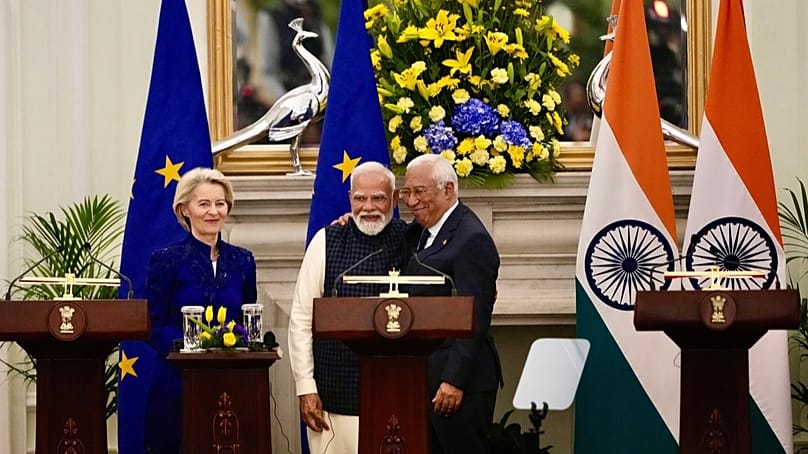
Thirdly, the summit also featured a new EU-India security and defence partnership, underscoring that in geoeconomic times, economic integration and strategic cooperation move together.
The participation of the EU military staff in India’s Republic Day Parade symbolised closer ties, especially in the Indo-Pacific. At the same time, India’s tensions with China and Pakistan could, in future crises, place the EU in difficult political positions, including vis-à-vis Beijing.
Demographics add another layer of complementarity. The EU is facing a demographic crisis, with close to 13 million economically active people set to retire in Germany alone by 2036. India is projected to have a surplus of 245 million high-skilled workers by 2030.
The EU-India Common Agenda on Migration and Mobility could provide a framework for a just and fair migration policy that can address crucial gaps, especially in the digital space.
Part of Europe's geoeconomic strategy
Taken together, the EU has not merely signed a trade deal with India. It has established a powerful benchmark for a broader geoeconomic partnership in an era of fragmentation and coercion.
Recent transatlantic tensions have increased Europe's risk awareness and sharpened its interest in avoiding binary choices between Washington and Beijing.
In this situation, India could offer a strategically indispensable third vector, even if its strategic approach does not always fully align with European preferences.
It is thus of highest importance that the ratification process now runs smoothly, including the European Parliament, EU member states and India's domestic sign-off.
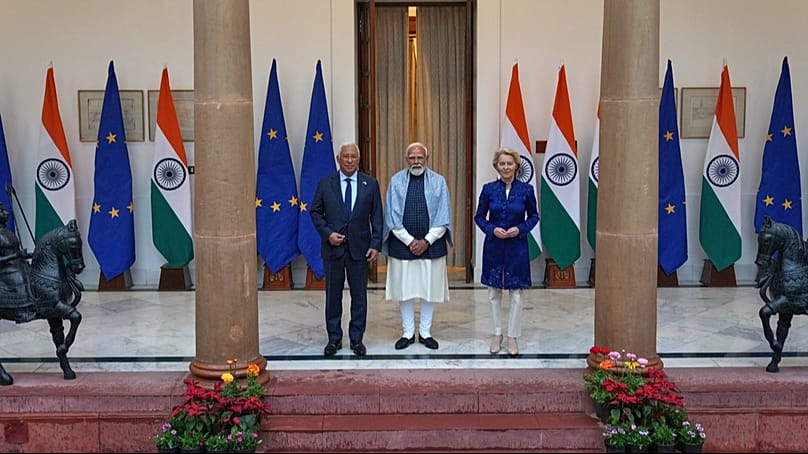
If Europe wants this deal to be more than a headline, it needs to treat the EU-India deal as a strategic project with measurable milestones for market access, cooperation on top transition challenges in energy and industry, and finally, concrete steps towards tech and supply-chain partnerships.
However, an FTA can only set the framework. It is crucial to build cooperation at the company level and across key geo-economic industries, despite obstacles such as market fragmentation, limited market knowledge among European firms, and continued protectionist practices that will not disappear automatically with an FTA.
If that succeeds, the agreement becomes a pillar of Europe’s economic security strategy in an era when, as Mark Carney puts it, the old assumptions no longer hold.
Daniela Schwarzer is a Member of the Board at Germany’s Bertelsmann Stiftung.