




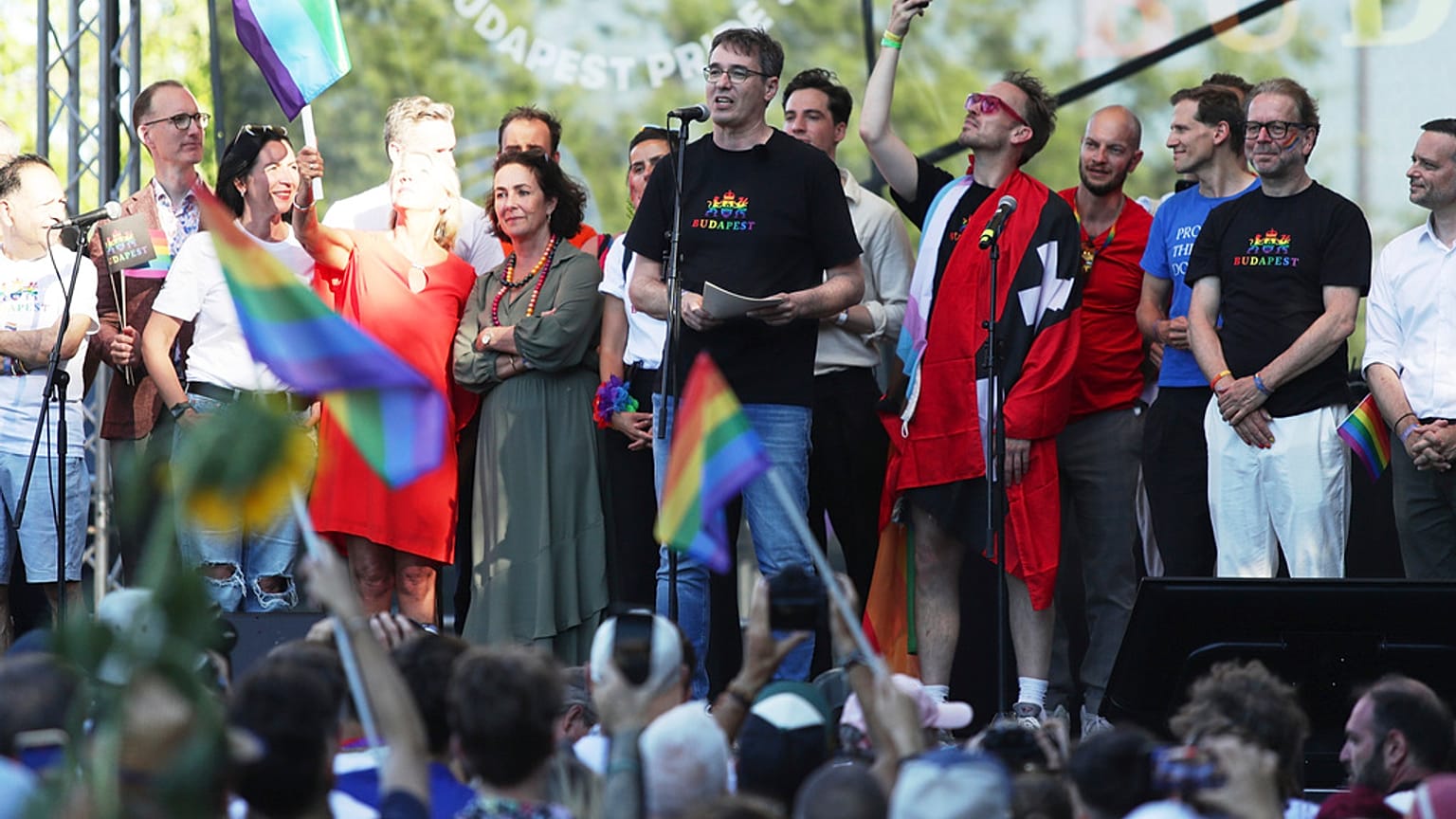













According to the prosecutor's office, the mayor of Budapest organised and led a public meeting despite a police injunction, in violation of the law on freedom of association and assembly.
Hungarian prosecutors have charged Budapest Mayor Gergely Karácsony on Wednesday with violating assembly laws after he organised and led a Pride march in June 2025 despite a police prohibition order.
 ADVERTISEMENT
ADVERTISEMENT
ADVERTISEMENT
The Budapest V and XIII District Prosecutor's Office filed charges against Karácsony for breaching the law on freedom of association and assembly, proposing a fine. The case has been referred to the Pest Central District Court, where a decision may be taken without trial.
According to the indictment, Karácsony announced on 16 June 2025 in a social media video that Budapest municipality would organise a Pride rally in the Hungarian capital on 28 June. The event was open to the public.
Budapest Police Headquarters issued a decision on 19 June prohibiting the rally, citing Hungary's amended Child Protection Act and a previously announced event as the reasons for the ban. Karácsony was informed of the decision but did not appeal or challenge it in court, prosecutors said.
Despite the prohibition, Karácsony organised the rally, published public calls for participation and personally led the march from City Hall Park in District V to the Technological University Quay in District XI, according to the charges.
Karácsony responded to the indictment on Facebook, writing: "This is the price we pay for standing up for our freedom and the freedom of others. They cannot deter us, they cannot stop us."
According to the mayor, Budapest Pride was attended by hundreds of thousands of people and celebrated freedom.
"I will never accept that freedom of expression or love should be a crime and will stand up for freedom and human rights despite all threats," Karácsony wrote.
Hungary's parliament amended the Child Protection Act in 2021 to ban the dissemination of content depicting or promoting homosexuality or gender reassignment to minors.
The law has drawn criticism from the European Union and human rights organisations, while the government says it protects children.
The friction around last year's Budapest Pride was part of an ongoing confrontation between the opposition mayor and Hungary's state-level government led by Prime Minister Viktor Orbán and his party, Fidesz.
Hungarian Justice Minister Bence Tuzson stated at the time that the march does fall under the Assembly Act — which Karácsony invoked in defence of the Pride despite a March 2025 amendment allowing authorities to ban events seen as going against the Child Protection Act —and is therefore prohibited.
Tuzson said that Karácsony could face one year in prison and a fine for organising the event.
Right before the march, Orbán warned that anyone involved in the banned Pride event march would face "legal consequences" and urged people not to take part.
"If someone does something like this, then there is a clear legal procedure, which must be followed", Orbán said.
"But we are a civilised country, we don't hurt each other, we've never had a civil war here, maybe a little bit in 1956, but we don't hurt each other even if we don't agree. It's not part of Hungarian political culture," he added.