


















International Holocaust Remembrance Day is observed across the world on 27 January, the anniversary of the liberation of Auschwitz-Birkenau, the most notorious of the Nazi death camps.
Holocaust survivors, politicians and regular citizens commemorated International Holocaust Remembrance Day on Tuesday, gathering at events held across Europe to reflect on the killing of millions of people by Nazi Germany.
 ADVERTISEMENT
ADVERTISEMENT
ADVERTISEMENT
International Holocaust Remembrance Day is observed across the world on 27 January, the anniversary of the liberation of Auschwitz-Birkenau, the most notorious of the Nazi death camps.
The UN General Assembly adopted a resolution in 2005 establishing the day as an annual commemoration.
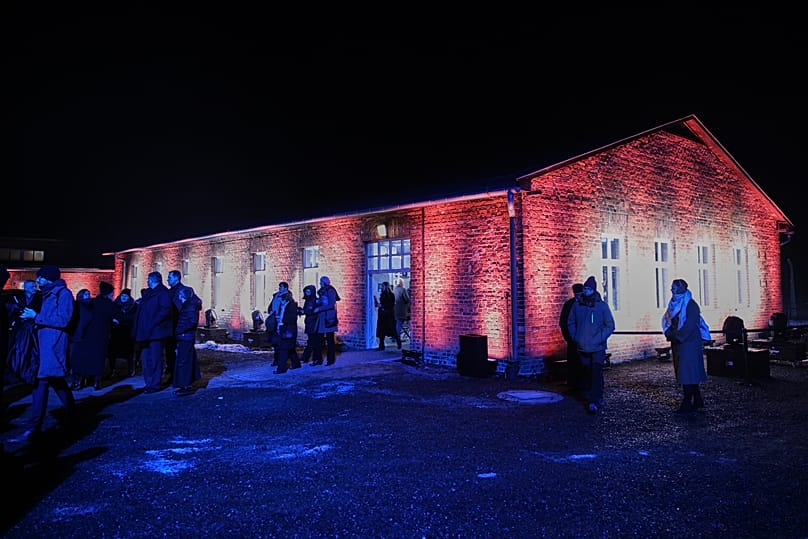
At the memorial site of Auschwitz, located in an area of southern Poland which was under German occupation during World War II, former prisoners laid flowers and wreaths at a wall where German forces executed thousands of prisoners.
Poland's President Karol Nawrocki joined survivors for a remembrance ceremony at Birkenau, the vast site nearby where Jews from across Europe were exterminated in gas chambers.
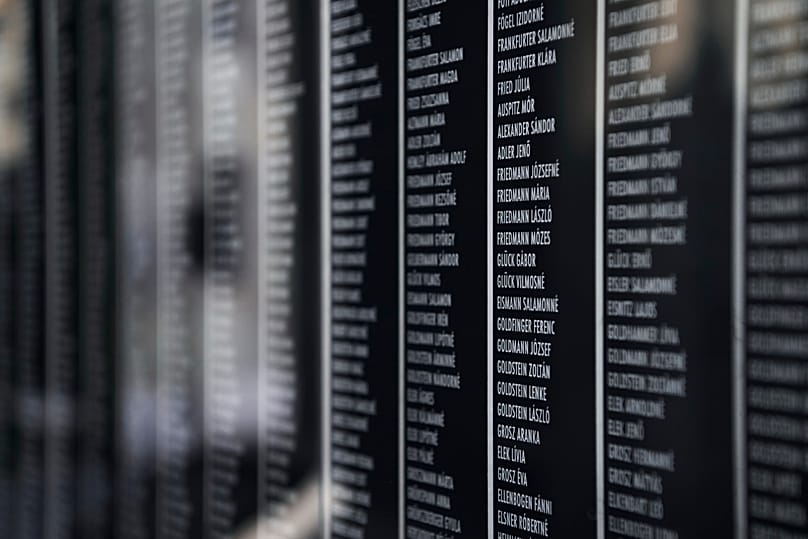
Candles burned and white roses were placed at the Memorial to the Murdered Jews of Europe, a field of 2,700 grey concrete slabs near the Brandenburg Gate in the heart of Berlin, which honours the 6 million victims and stands as a powerful symbol of Germany's remorse.
In the Czech Republic, a candlelight march is planned for the evening in Terezín at the site of the former Nazi concentration camp Theresienstadt.
Thousands of Jews died there or were sent from there to Auschwitz and other death camps.
Nazi German forces killed some 1.1 million people at Auschwitz, most of them Jews, but also Poles, Roma and other minority groups.
The camp was liberated by the Soviet army on 27 January 1945. In all, some 6 million Jews were killed in the Holocaust, in ghettos, concentration camps and often shot at close range in the fields and forests of Eastern Europe.
Israel, home to more Holocaust survivors than any other country, marks its remembrance day, Yom HaShoah, on the anniversary of the April 1943 Warsaw Ghetto Uprising, emphasising the heroism of the Jewish insurgents who resisted Nazi terror.
Shrinking community of Holocaust survivors
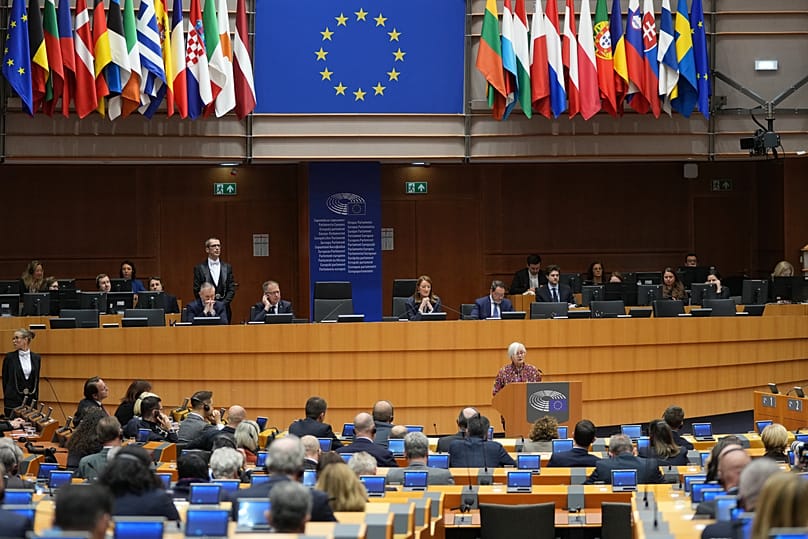
An annual gathering took place at the upper house of the Czech Parliament with Holocaust survivors.
Pavel Jelinek, a 90-year-old survivor from the city of Liberec, a Czech city with a pre-war Jewish population of 1,350, told those gathered that he was now the last living of the 37 Jews who returned to the city after the war.
There are an estimated 196,600 Jewish Holocaust survivors still alive globally, down from 220,000 a year earlier, according to information published last week by the New York-based Conference on Jewish Material Claims Against Germany.
Their median age is 87, and nearly all, some 97%, are "child survivors" who were born in 1928 and later, the group said.
Though the world's community of survivors is shrinking, some are still telling their stories for the first time after all these years.
In London, a Holocaust survivor addressed the British Cabinet in what Prime Minister Keir Starmer described as a first.
Government members wiped away tears as 95-year-old Mala Tribich described how Germany's invasion of Poland in 1939 destroyed her childhood.
She recalled being forced into hard labour at the age of 12 as the first Nazi ghetto was established in her hometown of Piotrkow Trybunalski and spoke of the hunger, disease and suffering there.
The Nazis killed her mother, father and sister. She was sent to Ravensbrück and then to Bergen-Belsen, where she was liberated by the British Army in April 1945.
She urged the Cabinet members to fight antisemitism.
"Soon, there will be no eyewitnesses left," she told them. "That is why I ask you today not just to listen, but to become my witness."
'Unity that saves lives is needed'
Many leaders also reflected on the upheaval in today's world.
Kaja Kallas, the European Union's foreign policy chief, warned about rising antisemitism and new threats.
She noted that AI-generated content is now being used "to blur the line between fact and fiction, distort historical truth, and undermine our collective memory."
Ukraine's President Volodymyr Zelenskyy, whose country has been under attack from Russia for almost four years, said that just as the world united to defeat the Nazis in 1945, it "must act the same way now."
"Whenever hatred and war threaten nations, unity that saves lives is needed," Zelenskyy said.