
















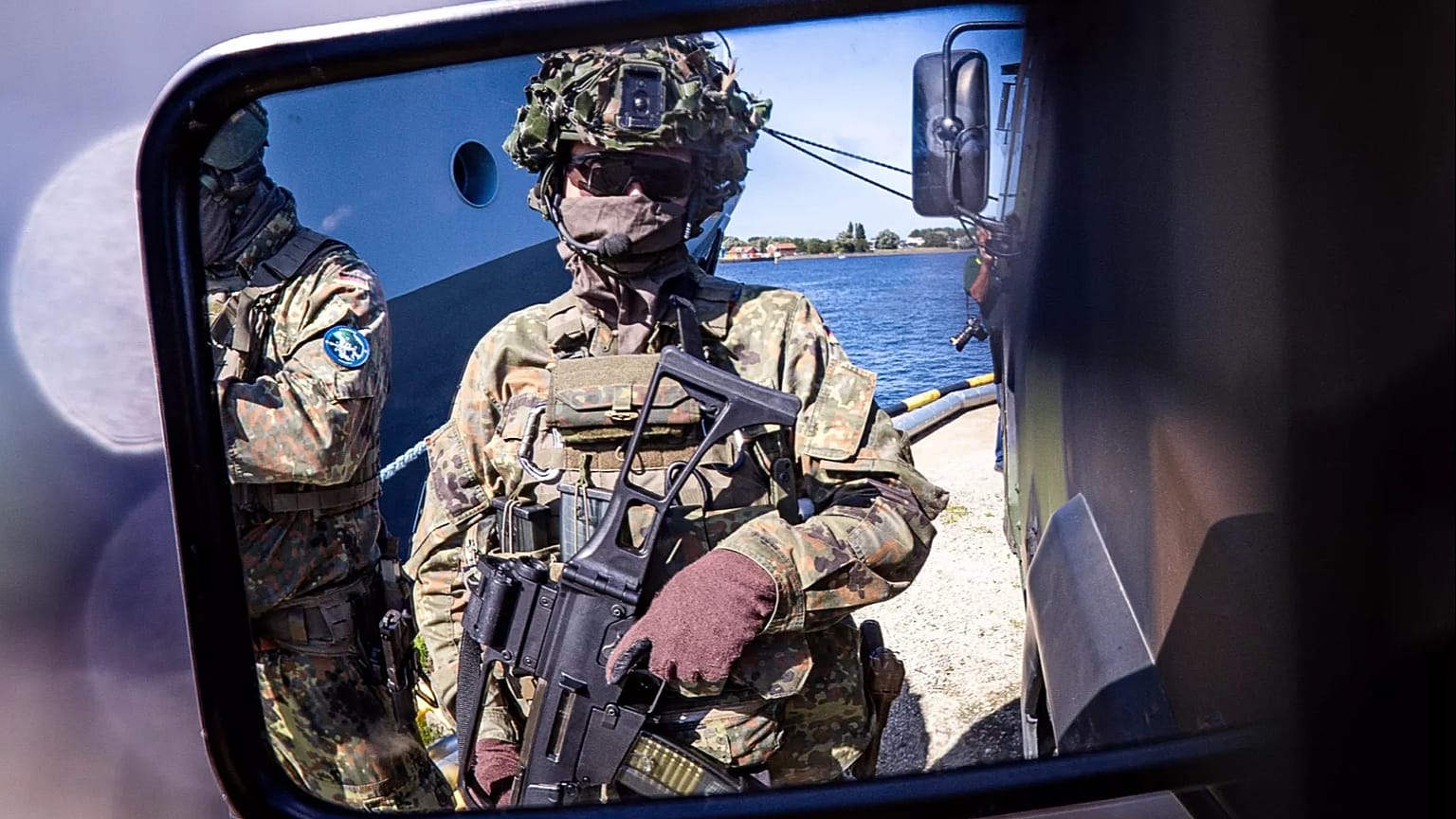













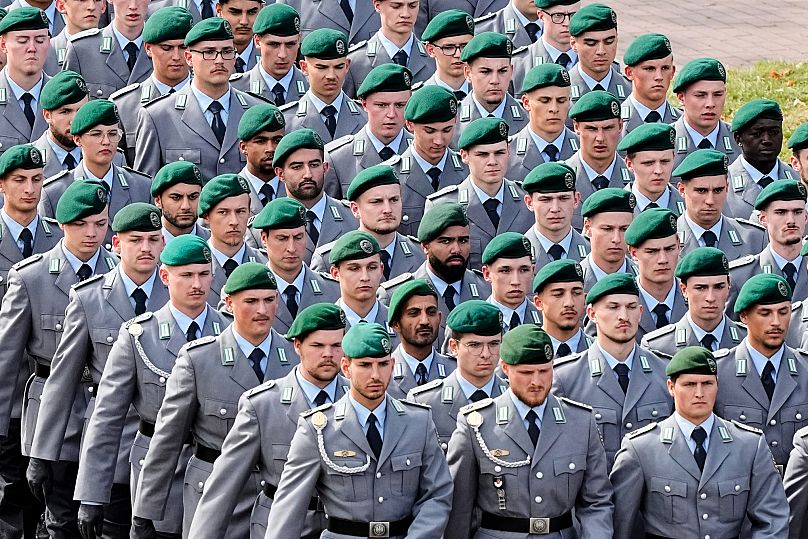
According to the Saxony State Command, the 5th Operations Company with around 100 soldiers will be deployed to the state for the operation.
Germany's military is preparing to launch a test operation which will see it drop information leaflets using helium balloons to practice "tactical direct communication procedures" in the event of an emergency.
 ADVERTISEMENT
ADVERTISEMENT
ADVERTISEMENT
The leaflets issued by the Bundeswehr from 25 January to 4 February are intended to pass information to people living in an affected area who would otherwise be difficult to reach.
According to the Saxony State Command, the 5th Operations Company with around 100 soldiers will be deployed to the state for the operation.
Its aim is a "stand-off product distribution," the distribution of material from the air or from a safe distance without direct contact with the affected area.
The helium balloons that will be used are capable of reaching heights of up to 5,000 metres. However, it is unclear exactly where they will take off from, as this depends on weather conditions and will be determined on a daily basis.
No further information on the operation has been shared for security reasons, except for the confirmation that major cities will be "deliberately avoided."
Germany's neighbouring countries have already been informed in advance in case balloons are blown into Poland or the Czech Republic due to weather conditions.
Anyone who finds a leaflet printed with a symbol and information text during the "Colder Iron 2026" exercise can report the discovery via the contact address provided and then dispose of the leaflet.
Leaflet drops in warzones
Leaflet drops are often used in emergencies, either to communicate with people in exceptional situations or to spread propaganda.
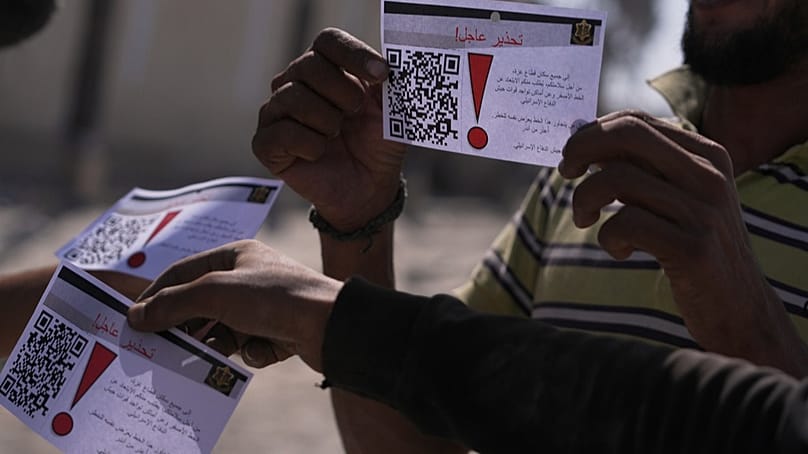
The Israeli army's leaflet drops in the Gaza Strip and Lebanon advising evacuations are among the most recent examples.
The Reuters news agency reports that Israeli forces dropped leaflets in the south of Gaza on Wednesday for the first time since a ceasefire between Israel and Hamas began last October.
Dozens of Palestinian families were urged to evacuate immediately in English, Hebrew and Arabic. The leaflet drop was confirmed by the Israeli Defence Forces (IDF).
In an article for the Lieber Institute West Point, Major Jon Griffiths, prosecuting officer at the British Service Prosecuting Authority and doctoral student at the University of Reading in England, categorises such measures in terms of international law. He argues that the Israeli armed forces fulfil their duty to take precautionary measures in the event of attacks with warnings such as leaflets, phone calls, text messages and media announcements.
Although critics question the actual protective effect of these warnings, Griffiths emphasises that international humanitarian law stipulates a duty to act, not to succeed.
The decisive factor here is that warnings are timely, comprehensible and addressed to those affected. Precise details of the location and time are not absolutely necessary and could be omitted if military reasons or additional risks to civilians argue against this.
Whether and how many people may have been "saved" by leaflet drops in Gaza is unclear, as there are no reliable figures.
Leaflets as a means of psychological warfare
In addition to communication, leaflets can also be used for propaganda, such as in World War II. There, they were used to combine true information, exaggeration and disinformation in order to psychologically influence both soldiers and civilians.
At the time, the leaflets were often aimed at clearly defined target groups, sometimes even individual units and were dropped millions of times by aeroplane, balloon, artillery or rocket.
In particular, calls for surrender, detailed instructions to lay down arms or the depiction of a supposedly good life in captivity were sent to the opposing side by the warring parties with the help of the leaflets.
At Munich's Ludwig Maximilian University, 2,024 leaflets of this kind were exhibited, including a copy that phonetically reproduced the English sentence "I surrender" for German-speaking soldiers.
Historian Benedikt Sepp explained that due to the language barrier, many soldiers did not know how to surrender. This is why, for example, leaflets with the words "Ei ssörrender" were distributed.