
















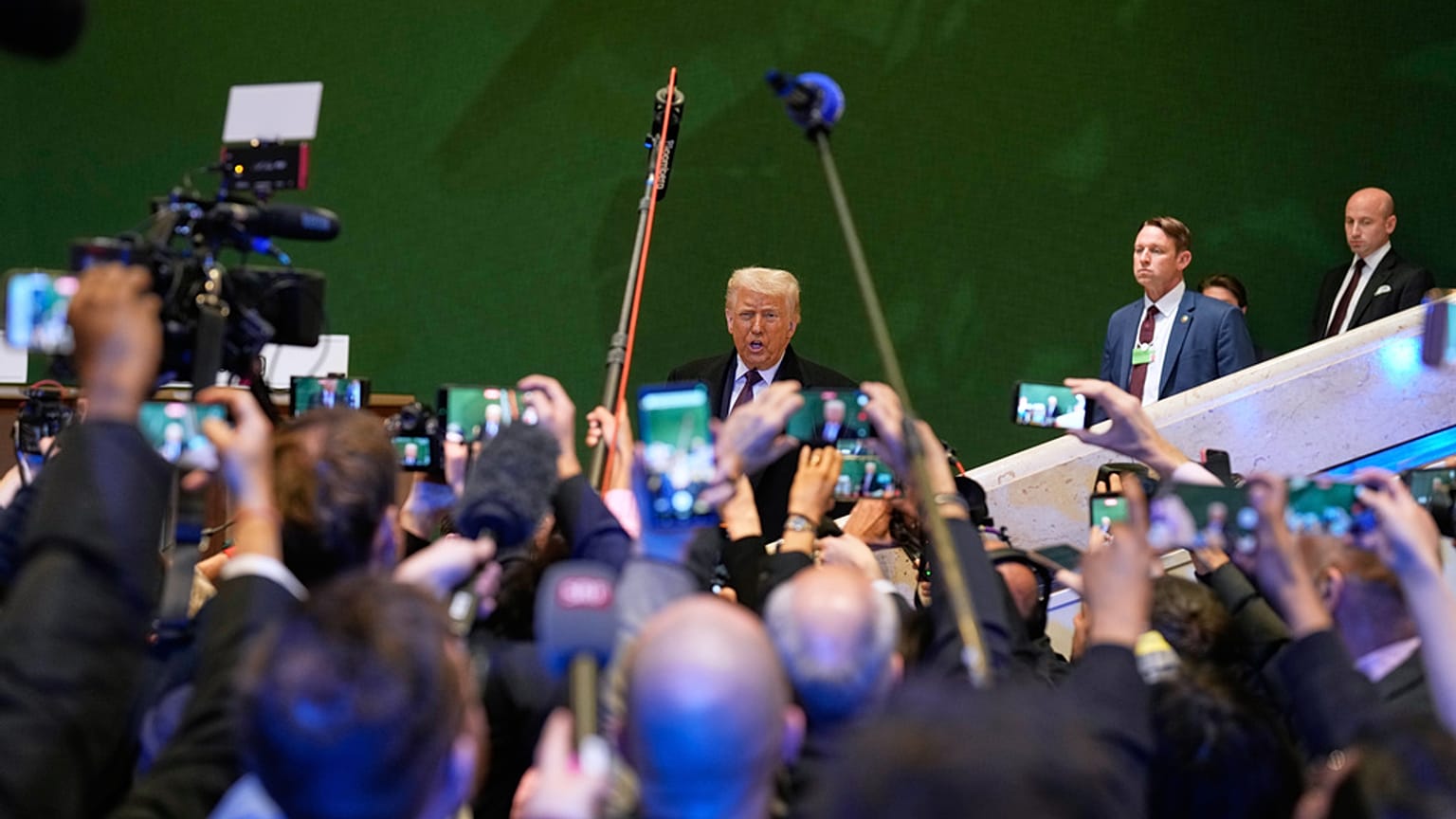













The yearly gathering in the Swiss Alps resort town has been dominated by escalating tensions between the US and its European allies, with leaders warning of a crumbling world order, rising unilateralism and AI's threat to the world's workforce.
This year's World Economic Forum in Davos has been largely dominated by US President Donald Trump, who presented his Board of Peace initiative on Thursday after a Greenland-heavy special address the day before.
 ADVERTISEMENT
ADVERTISEMENT
ADVERTISEMENT
The talk of the Swiss Alps resort town revolved around escalating tensions over US threats to impose tariffs on European allies over Greenland, with leaders warning of fracturing alliances and the erosion of the rules-based international order.
Anxiety over Trump's arrival loomed over the first few days of the proceedings through his social media posts and leaked private messages, including a letter to Norwegian Prime Minister Jonas Gahr Støre linking his Greenland demands to his failure to win the Nobel Peace Prize.
The US president, who arrived midweek with the largest delegation ever despite Air Force One troubles on his way across the pond, excluded the possibility of a hostile takeover of the Arctic island which is part of the Kingdom of Denmark, albeit still insisting on an acquisition.
Here are the most talked-about statements from the annual gathering of the world's top political and business elites so far:
On Greenland and Europe's failures
Trump delivered his long-awaited address on Wednesday, stating that the US is seeking immediate negotiations over Greenland while ruling out the use of military force to acquire the Danish territory.
"We probably won't get anything unless I decide to use excessive strength and force where we would be, frankly, unstoppable. But I won't do that," Trump said. "I don't want to use force. I won't use force."
He warned NATO members they faced a choice on Greenland: "You can say yes and we'll be very appreciative. Or you can say no and we will remember."
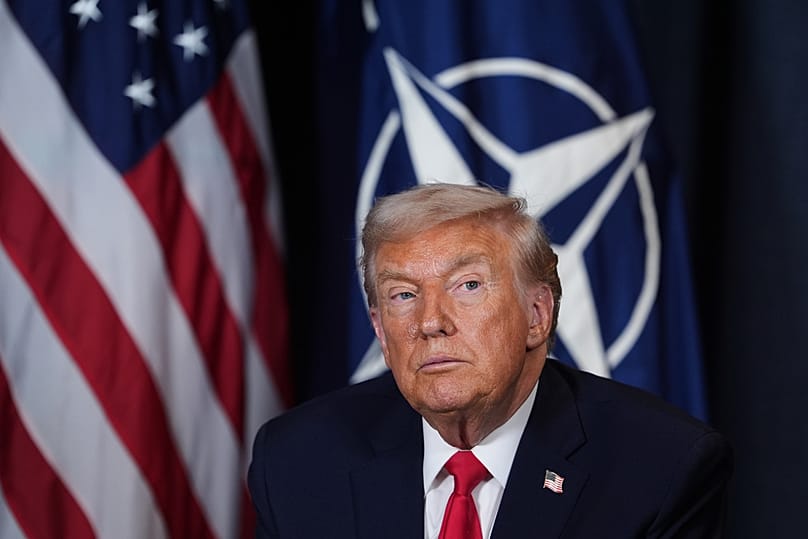
Trump criticised Europe, declaring parts of the continent "no longer recognisable" and asserting it was "not heading in the right direction."
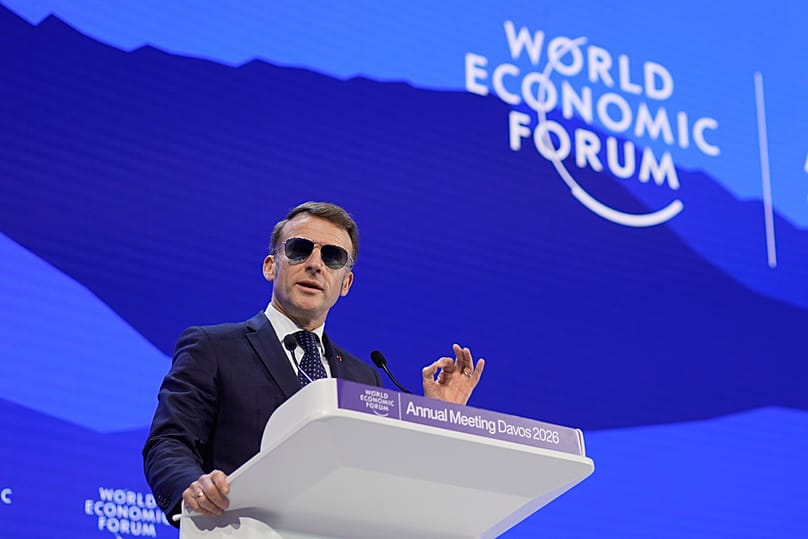
Trump also poked fun at French President Emmanuel Macron's aviator sunglasses worn during his Tuesday address. "I watched Emmanuel Macron yesterday with those beautiful sunglasses," Trump said, drawing pockets of laughter from the audience.
While the crisis over the acquisition of Greenland was far from over, some greeted Trump's message with a sense of relief after he explicitly said any use of force was out of the question.
"We heard firsthand everything that the president believes, and it was useful to be here to understand it completely, so no threat of force for Greenland. This was a good message," Croatian Prime Minister Andrej Plenković told Euronews.
According to Plenković, the solution to the impasse is "to talk to each other."
"There is no other way," he said. "I think the transatlantic partnership is important, has been historically important, and we should do everything we can to ensure it remains important."
Former US Vice President Al Gore dubbed the speech a "classic Trump performance."
"It's significant that he appeared to back down on his threat to use military force on Greenland," Gore told the journalists gathered outside the venue after Trump's address.
"I think a lot of it was just a little bit of a sideshow to make up for the fact that he withdrew his threat to take military action on you. What other relationship between the United States and Europe, you said, is it permanent or damaged? Only time will tell."
In another much-awaited special address, Ukrainian President Volodymyr Zelenskyy delivered a scathing critique of European inaction on Thursday, declaring the continent "looks lost" and remains trapped in endless repetition of failing to defend itself or decisively support Ukraine.
"Everyone remembers the great American film Groundhog Day, but no one would want to live like that," Zelenskyy said. "Repeating the same thing for weeks, months, and of course, years. And yet that is exactly how we live now."
He expressed frustration with Europe's response to the Greenland crisis, questioning the deployment of a handful of troops to the Arctic island.
"If you send 14 or 40 soldiers to Greenland, what is that for? What message does it send? What is the message to Putin, to China? And even more importantly, what message does it send to Denmark, your close ally? Forty soldiers will not protect anything."
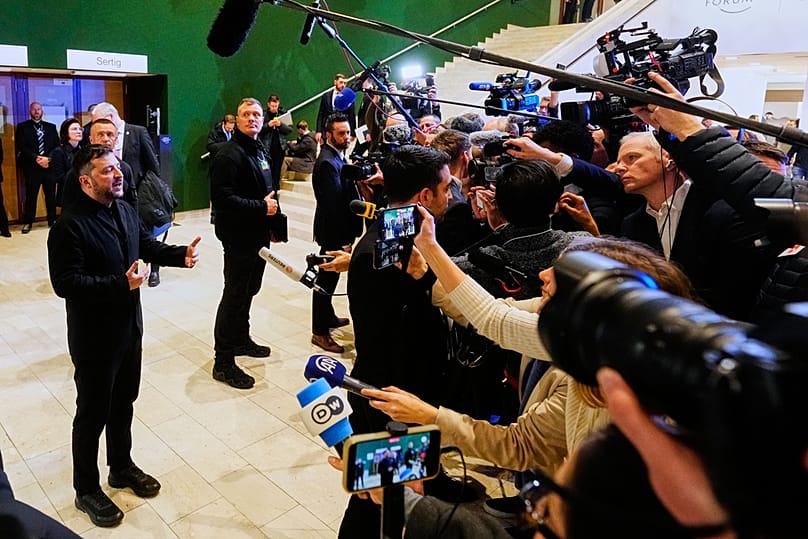
Zelenskyy continued his harsh rebuke of the continent, saying it "still feels more like geography, history, tradition, not a great political power" and "remains a fragmented kaleidoscope of small and middle powers."
"Europe looks lost trying to convince the US president to change. But he will not change," Zelenskyy said. "President Trump loves who he is. And he says he loves Europe but he won't listen to this Europe."
He questioned why Trump could seize shadow fleet tankers and oil while Europe could not, as Russia's oil sales keep funding Moscow's war against Ukraine.
"If Putin has no money, there's no war for Europe," Zelenskyy said.
On the shifting global order
Macron delivered the forum's most widely quoted warning about the shift away from multilateralism in his address the day before.
"It's a shift towards a world without rules, where international law is trampled underfoot and where the only law that seems to matter is that of the strongest," Macron said, summing up European concerns about rising unilateralism.
The French leader, who has been at the forefront of calls for Europe to activate trade defence mechanisms, framed the choice facing democracies in stark terms.
“We do prefer respect to bullies … and we do prefer rule of law to brutality," Macron said.
In a much-referenced speech on Tuesday afternoon, Canadian Prime Minister Mark Carney also spoke of irreversible change.
The world is "in the midst of a rupture, not a transition," and the old world order "is not coming back," Carney said.
“In a world of great power rivalry, the countries in between have a choice: compete with each other for favour or to combine to create a third path with impact,” he said.
“(We) argue the middle powers must act together because if we’re not at the table, we’re on the menu.”
Argentine President Javier Milei delivered his third consecutive Davos address on Wednesday, touting his government's economic transformation and declaring the West must return to its foundational values.
"Since taking office in 2023, we have carried out 13,500 structural reforms," Milei said, describing the process as "Make Argentina Great Again."
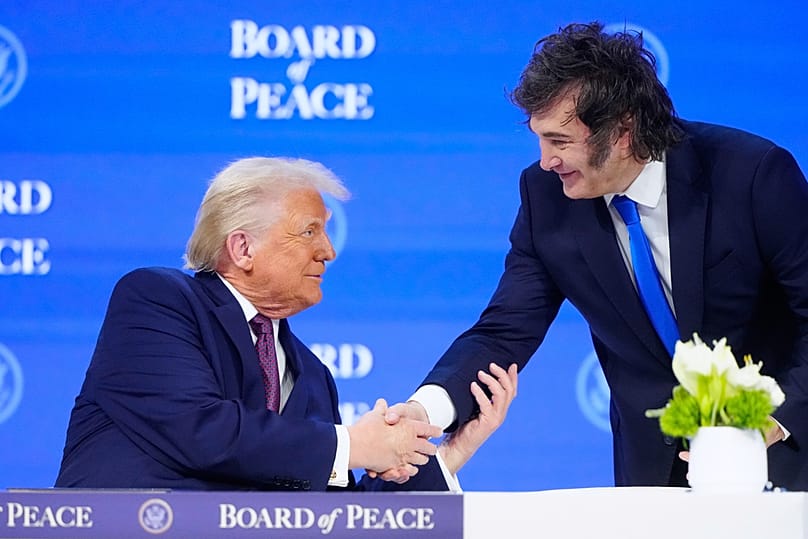
Milei concluded with a fiery ode to the US and Western civilisation in what he said was pushback against "wokeism".
"For some strange reason, the West began turning its back on the ideas of freedom," he said.
"Now I bring you good news: the world has begun to wake up. The best proof of this is what is happening in America with the rebirth of the ideas of freedom."
"America will be the beacon of light that rekindles all of the West," he said, adding this would repay the civilisational debt to "Greek philosophy, Roman law and Judeo-Christian values."
California Governor Gavin Newsom delivered some of the forum's most combative rhetoric on Tuesday, urging European leaders to "stop being complicit" and "have a backbone" in standing up to Trump's demands over Greenland.
"I can't take this complicity. People rolling over," Newsom said. "I should've brought a bunch of knee pads for all the world leaders. I hope people understand how pathetic they look on the world stage."
Newsom is widely seen as positioning himself as an alternative Democratic voice to the Trump administration ahead of a potential 2028 presidential run.
On transatlantic security and trade risks
European Commission President Ursula von der Leyen urged both sides to avoid escalation while warning of the risks to Western cohesion.
"Plunging us into a downward spiral would only aid the very adversaries we are both so committed to keeping out of the strategic landscape," von der Leyen said, echoing concerns that US-Europe trade conflict benefits the likes of Russia.
NATO Secretary General Mark Rutte said that the current turmoil has taken the world's focus away from Moscow's ongoing all-out war in Ukraine.
"The main issue is not Greenland now, the main issue is Ukraine," Rutte said, adding he was "a little bit worried that we might drop the ball focusing so much on these other issues."
"They need our support now, tomorrow, and the day after", he stated. "I need European allies to keep focus on this issue."
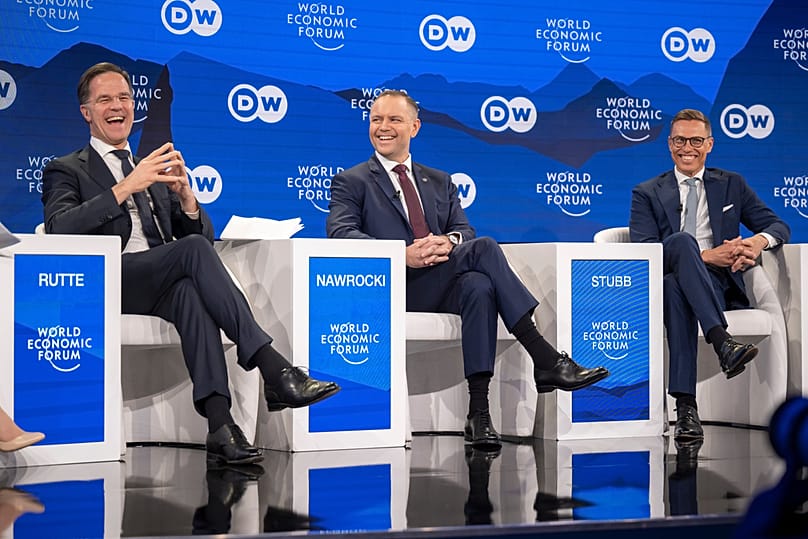
WEF President Børge Brende articulated the economic anxiety pervading the forum as geopolitical tensions overshadowed discussions of innovation and growth.
"We are most worried about major escalations of wars. That can kill global growth," Brende said.
US Trade Representative Jamieson Greer defended the Trump administration's approach in a press briefing on Tuesday, framing tariffs as a legitimate geopolitical instrument.
"The president's view has always been he would much rather work things out with folks, and so a tariff is a lesser measure," Greer told Euronews, positioning trade levies alongside sanctions and export controls in the national security toolkit.
Greer warned European allies against retaliation, stating it would be "unwise". "When foreign countries follow my advice, they tend to do okay," he said.
He also signalled a fundamental shift in US policy on market access. "The US market is never going to be permanently available to everyone all the time forever, like it has been for the past 25 years. We found that was a mistake."
On AI, threats to the workforce and its future
BlackRock CEO Larry Fink, who took over as co-chair of the World Economic Forum, opened the gathering in a self-critical tone.
"For many people, this meeting feels out of step with the moment: elites in an age of populism, an established institution in an era of deep institutional distrust," Fink said. "And there's truth in that critique."
He warned that AI threatens to repeat capitalism's failures of the past three decades, with early gains "flowing to the owners of models, owners of data and owners of infrastructure" while potentially wreaking havoc on white-collar workers as globalisation did to manufacturing jobs.
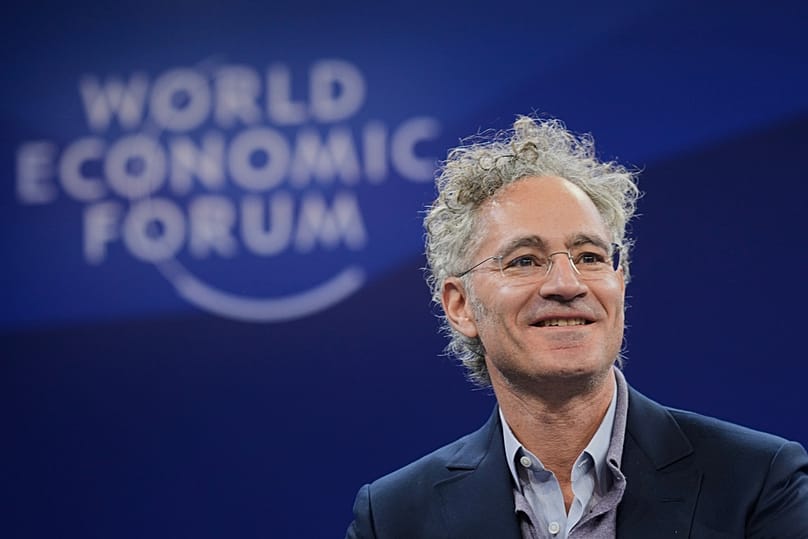
Palantir CEO Alex Karp, speaking in conversation with Fink, delivered a stark prediction about AI's impact on employment. "It will destroy humanities jobs," Karp said.
"You went to an elite school, and you studied philosophy — I'll use myself as an example — hopefully, you have some other skill, that one is going to be hard to market."
He added that "there will be more than enough jobs for the citizens of your nation, especially those with vocational training," while warning that Europe is falling behind the US and China in AI adoption.
Notably, world's richest man Elon Musk made his first-ever appearance at the World Economic Forum on Thursday, predicting robots will eventually outnumber humans and AI will surpass collective human intelligence within five years.
"My prediction is there will be more robots than people," Musk said in conversation with Fink, adding that humanoid robots could help provide elder care in a world where there are not enough young people to care for older citizens.
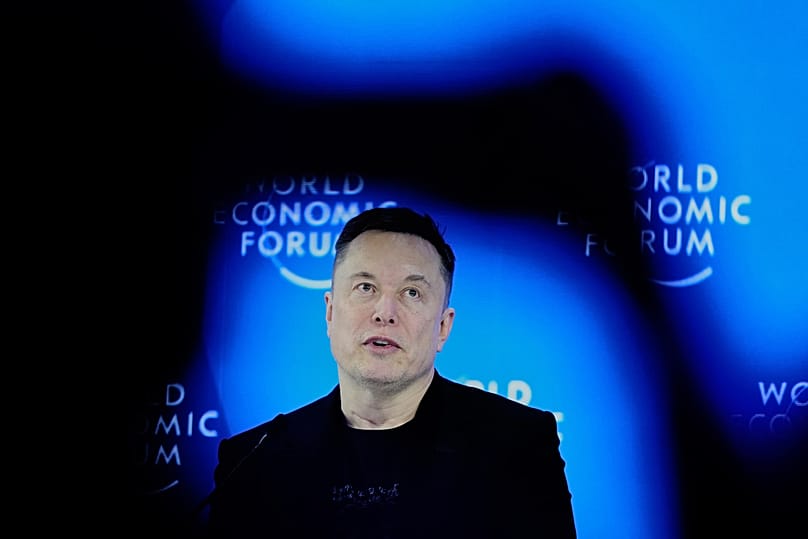
Musk said AI would become "smarter than any individual human" by the end of 2026 and would likely exceed "all of humanity combined" within five years. He announced Tesla would begin selling humanoid robots to the public by 2027.
"By the end of this year, I think they will be doing more complex tasks, and probably by the end of next year, I think we'd be selling humanoid robots to the public,"Musk said.
"That's when we are confident it'll have very high reliability — you can basically ask it to do anything you like."
When asked whether he wanted to die on Mars, Musk drew laughter with his response: "People ask if I want to die on Mars. I say yes, just not on impact."
Musk has repeatedly dismissed the Davos gathering as elitist. In 2023, he called it "increasingly becoming an unelected world government that the people never asked for and don't want."
“It feels much better to be optimistic and end up being wrong than to be pessimistic and end up being right,” Musk pointed out in this year's discussion.